



The Growing Demand for School Speakers Who Can Connect With Both Students and Staff
A Shift Happening Inside Today’s Schools
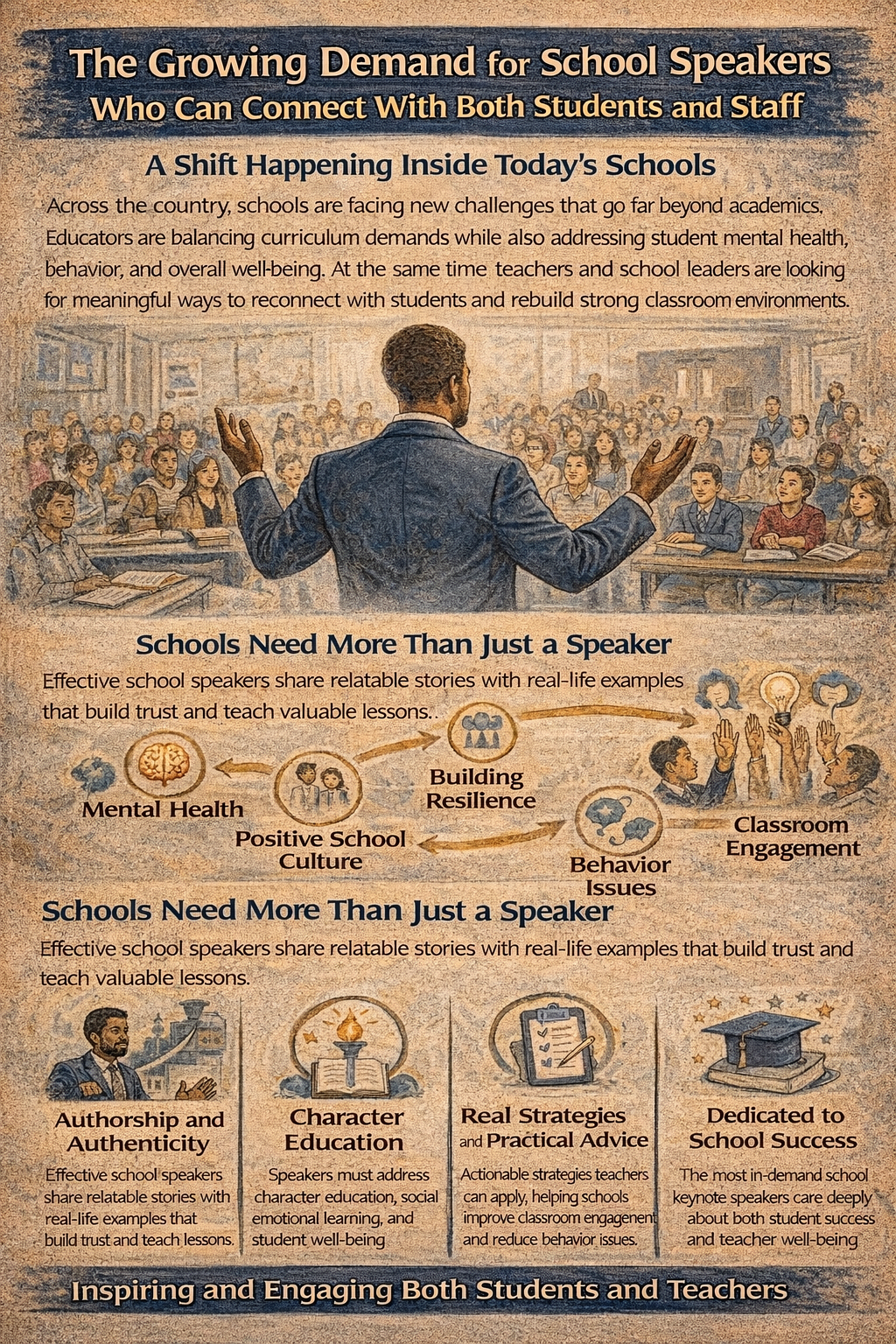
Across the country, schools are facing new challenges that go far beyond academics. Educators are balancing curriculum demands while also addressing student mental health, behavior, and overall well being. At the same time, teachers and school leaders are looking for meaningful ways to reconnect with students and rebuild strong classroom environments.
This is why the demand for a school speaker who can connect with both students and staff has grown significantly. Schools are no longer just looking for someone to deliver a talk. They are searching for an education speaker who can inspire students, engage educators, and contribute to long-term student success.
Why Schools Need More Than Just a Speaker
In the past, many schools brought in guest speakers for short-term motivation. While these presentations were helpful, they often lacked lasting impact. Today’s schools need more than a one-time message. They need an inspiring motivational speaker who understands the realities of modern education.
An effective keynote speaker must connect with students, teachers, and administrators at the same time. This requires more than energy—it requires experience, authenticity, and the ability to deliver practical strategies that schools can actually use.
The Rise of Education Keynote Speakers
Education keynote speakers are becoming essential parts of school programming. Whether it’s a district wide event, student assemblies, or professional development sessions, schools are investing in speakers who can deliver value to multiple audiences.
These speakers are expected to address topics like character education, social emotional learning, and mental wellness. They also need to provide actionable strategies that educators can apply immediately in the classroom.
Understanding Today’s Students
Today’s students face a very different world than previous generations. Social pressures, digital influences, and academic expectations all play a role in shaping their experiences.
To inspire students effectively, speakers must understand these challenges and speak in a way that resonates. This includes addressing issues like self esteem, bullying prevention, and building resilience. A speaker who understands today’s students can create meaningful change that extends beyond a single event.
Connecting With Teachers and Educators
Teachers are at the heart of every school, and their role continues to evolve. Educators are expected to manage classrooms, support student mental health, and maintain high expectations for academic success.
An education speaker who can connect with teachers provides value that goes beyond motivation. By offering practical takeaways and insights, they help educators improve student engagement and enhance learning outcomes.
Why Engagement Matters More Than Ever
Student engagement is one of the most important factors in education today. When students are engaged, they are more likely to participate, learn, and succeed.
A high energy speaker who uses interactive techniques can capture attention and maintain interest. This type of engagement creates a deeper understanding of the material and encourages students to apply what they learn in their daily lives.
The Role of Social Emotional Learning in Schools
Social emotional learning has become a central focus in many schools. It helps students develop skills such as emotional regulation, empathy, and decision-making.
An education speaker who incorporates social emotional learning into their presentations can support both students and educators. This approach contributes to a healthier school culture and improved student outcomes.
Addressing Mental Health and Well Being
Mental health is a growing concern in schools, especially among young people. Students are dealing with stress, anxiety, and other challenges that impact their ability to learn.
Speakers who address mental health and mental wellness provide valuable support. By creating safe spaces for discussion, they help students feel understood and supported.
The Importance of Character Education
Character education focuses on developing values such as integrity, respect, and responsibility. These qualities are essential for both academic and personal success.
An effective keynote speaker can reinforce these values through relatable stories and real-world examples. This helps students build a strong foundation for their future.
What Schools Look for in the Right Speaker
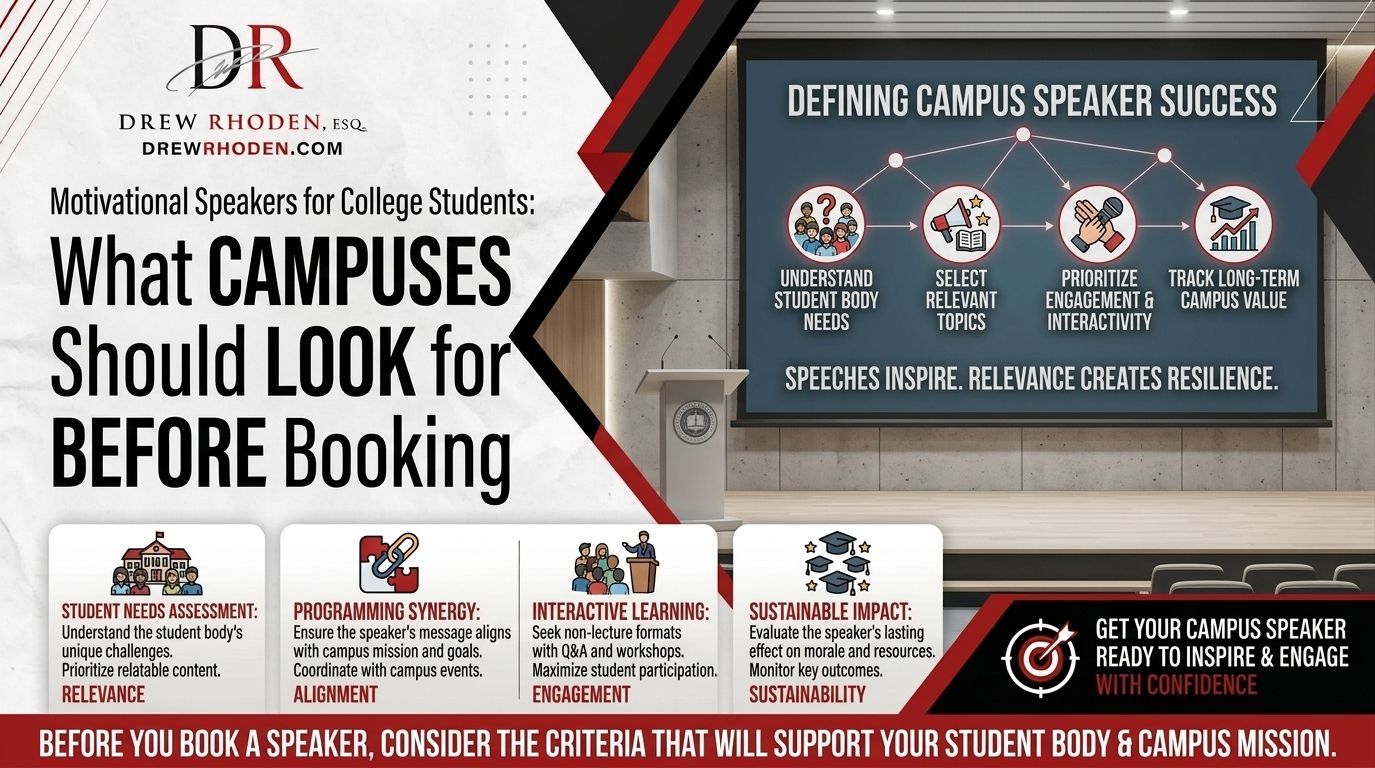
Finding the right education speaker is a critical decision for schools. They need someone who can connect with diverse audiences and align with their event goals.
Schools often look for speakers who offer:
- Relatable stories that resonate with students and teachers
- Practical strategies that can be applied in the classroom
- A focus on student success and personal growth
- The ability to engage both middle school and high school audiences
Choosing the right speaker can make a significant difference in the impact of the event.
The Value of Youth Motivational Speakers
Youth motivational speakers play a unique role in education. They are able to connect with students on a personal level and inspire positive change.
These speakers often share inspiring stories that encourage students to believe in themselves and pursue their goals. This message is especially important for young people navigating challenges in school and life.
Andrew Rhoden: A Speaker Who Connects
Andrew Rhoden, Esq. stands out as an education speaker who truly understands how to connect with diverse audiences. His ability to engage both students and educators sets him apart from other speakers.
As a bestselling author and experienced keynote speaker, Andrew brings a unique perspective to every presentation. His remarkable journey and relatable stories resonate with audiences at every level of education.
Authenticity That Builds Trust
One of the qualities that makes Andrew an effective speaker is his authenticity. He speaks from real experiences and connects with audiences in a genuine way.
This authenticity helps build trust and creates an environment where students feel comfortable engaging. It also encourages teachers to connect with the message on a deeper level.
Engagement Through Interaction
Andrew’s presentations are designed to be interactive and engaging. He uses activities, discussions, and body language to keep audiences involved.
This approach ensures that students and educators are not just listening—they are participating. Active engagement leads to better retention and a more meaningful experience.
Tailored Presentations for Every Audience
Every school is different, and Andrew understands the importance of tailoring presentations to meet specific needs. Whether working with middle school students, high school audiences, or educators, he adjusts his approach accordingly.
This flexibility allows him to align his message with the school’s values and goals. It also ensures maximum impact for every event.
Supporting Professional Development for Educators
Professional development is a key component of school improvement. Teachers need ongoing support to stay effective and inspired.
Andrew’s presentations for educators focus on leadership development, classroom strategies, and enhancing student engagement. These sessions provide practical takeaways that can be applied immediately.
Creating Safe Spaces for Learning
Creating safe spaces within schools is essential for student well being. Students need to feel supported and valued in order to succeed.
Andrew emphasizes the importance of creating safe spaces where students can express themselves and grow. This approach contributes to a positive school culture.
Inspiring Growth Mindset and Self Belief
A growth mindset encourages students to view challenges as opportunities. It helps them develop resilience and confidence.
Andrew’s message focuses on building self belief and encouraging students to recognize their unique gifts. This mindset supports long-term success both in school and beyond.
Reaching Diverse Audiences Across K 12
Andrew’s experience spans K 12 education, including early childhood, middle school, and high school audiences. He understands how to adapt his message to different age groups.
This versatility allows him to connect with a wide range of students and educators. It also makes him a valuable choice for district wide events and school year programming.
Impact Beyond the Classroom
The impact of a strong education speaker extends beyond the classroom. It influences school culture, student behavior, and overall engagement.
Andrew’s presentations are designed to create meaningful change that lasts. His focus on actionable strategies ensures that the message continues to resonate after the event.
Supporting Parents and Community Engagement
Parents and parent groups play an important role in education. Engaging them in the conversation helps create a supportive environment for students.
Andrew’s presentations can also include discussions that involve parents, helping them gain insights into supporting their children’s growth and development.
Bridging the Gap Between Students and Staff
One of the biggest challenges in schools is bridging the gap between students and staff. Miscommunication and misunderstanding can create barriers to success.
Andrew’s approach helps bring these groups together by focusing on shared goals and mutual respect. This strengthens relationships and improves overall outcomes.
A Speaker for Today’s Educational Challenges
Today’s schools need speakers who understand modern challenges and can provide relevant solutions. This includes addressing topics like suicide prevention, mental health, and student engagement.
Andrew’s experience and expertise allow him to deliver presentations that meet these needs. His ability to connect with both students and educators makes him an ideal choice.
Creating Maximum Impact at Every Event
Schools invest time and resources into bringing in speakers, so maximizing impact is essential. Andrew’s high energy presentations ensure that every event delivers value.
From student assemblies to panel discussions, his approach is designed to engage, inspire, and motivate.
A Lasting Influence on Students and Educators
The goal of any education speaker is to create a lasting impression. Andrew’s presentations are designed to influence the lives of students and educators long after the event ends.
By focusing on real-world applications and meaningful connections, he helps audiences carry the message forward.
Bring a School Speaker Who Makes a Difference
If your school is looking for a school speaker who can truly connect with students and staff, now is the time to take action. The right education speaker can transform engagement, support student success, and strengthen your school culture.
Andrew Rhoden, Esq. brings the experience, authenticity, and energy needed to inspire students and educators alike. His presentations are designed to deliver practical takeaways, build confidence, and create meaningful change.
Call (888) 209-4055 today to book a free consultation and learn how Andrew can support your next event. Let’s create an experience that inspires growth, strengthens connections, and leaves a lasting impact on your school community.
This article is for informational purposes only and is intended to highlight speaking services available. Individual results and experiences may vary depending on the audience and event setting.
share this
Related Articles
Related Articles