




Inspirational Business Speakers: What Makes a Speaker Relevant to a Business Audience
Your speaker website has one job: get the right people to your keynote page and make it easy for them to book you. Internal links are the mechanism that makes this happen. Here's how to build a site structure that works like a booking engine for inspirational business speakers.

Answer First: How Internal Links Help You Book More Business Keynotes
Internal links guide decision makers - event planners, bureau partners, corporate clients - to your primary keynote hub page, which is the central page where your flagship business speech lives. When someone lands on any page of your site, internal links create a clear path toward your most important content, your keynote offer, and your inquiry form.
A well-structured internal linking strategy improves user experience and gets more of the right people onto your keynote page. The process is straightforward: you connect every relevant piece of content on your site back to your primary keynote hub with purposeful, contextual links. Most speakers who implement this see a measurable increase in inquiries within 30 to 90 days, because planners no longer get lost in a maze of disconnected pages.
Here's what a solid internal linking strategy delivers:
- Better discovery in Google. Search engines use internal links to understand which pages matter most on your site.
- Smoother navigation for event planners. Decision makers can move from a blog post to your keynote page in one click.
- Fewer buried important pages. Case studies, testimonials, and keynote descriptions stop being invisible.
- Clearer paths to action. Every article or resource points toward "Request speaking availability."
For inspirational business speakers, strong internal links make your flagship keynote and business event topics easier to find, quote, and book.
Foundations: What Are Internal Links (and How Do They Work for Speaker Sites)?
An internal link is any hyperlink on your website that points to another page on the same domain. On a speaking website, this means linking from a blog post about leadership to your primary keynote page, or from a case study to your planner resources page. These links connect the dots across your site, creating a web of related content that both humans and search engines can follow.
The difference between an internal link and an external link is simple. An internal link keeps visitors on your site - for example, linking from /blog/resilient-leadership-2026 to /keynotes/inspirational-business-speaker. An external link sends visitors to a different domain, like a conference host's website or a research source you're citing.
Internal links do two things that matter for your speaking business. First, they help Google understand your site's structure and figure out which pages are most important. A well-structured site helps Google index content effectively, which means your keynote page actually shows up in search results. Second, internal links can pass link equity to important pages - think of it as authority flowing from one page to another, signaling that your keynote hub deserves to rank.
For example, if you publish an article titled "Resilient Leadership in 2026" and include a contextual link to your motivational business speaker hub, you're telling Google that the hub page matters. Internal links help distribute link equity across a site, and internal links indicate which pages are important to Google. Contextual links inside your copy typically carry more SEO value than generic navigation links, especially when the anchor text matches how planners actually search - phrases like "inspirational business speakers for annual meetings" rather than "click here."
Why Internal Linking Matters for Inspirational Business Speakers
Internal links are not just technical SEO. They're how a business audience finds the right motivational business speaker fast. A clear site structure improves user navigation and SEO simultaneously, which means more of the right people land on your keynote page and fewer bounce away confused.
Internal links support audience relevance by connecting stories on leadership, resilience, and decision making back to a single, clearly framed inspirational business speakers page. When your content on related topics all points to one hub, you create topical authority - Google sees depth of knowledge, and planners see breadth of expertise.
Strong internal linking improves business performance metrics that actually matter: more quote requests, better engagement on important pages, and higher conversion from organic traffic. One UK B2B site saw organic traffic rise from roughly 6,400 visits per month to over 22,200 per month - a 247% lift - by restructuring internal links alone, without creating new content or building external links. The same principle applies to your speaker site.
Here's a real-world scenario: a 2025 leadership conference planner searches "inspirational business speakers," lands on your case study about a banking summit you keynoted, follows a contextual link to your keynote hub, and fills out a "Check availability" form - all within two clicks. That's the process working as designed.
For corporate and association buyers, an easy-to-navigate internal structure builds trust and signals professionalism before they ever hear you speak. People tend to evaluate your site the same way they'd evaluate you on stage - if it's clear, confident, and well-organized, they assume your talk will be too.
Designing Your Primary Keynote Hub Page
Your keynote hub page is the core destination your internal links should point to for your flagship business speech. This is the central page where everything converges - the page that does the actual selling.
Here's what this hub page should include:
- Clear H1. Something like "Inspirational Business Speaker for Leadership and Decision-Making" - specific enough to match search intent, broad enough to represent your primary keynote.
- Sharp promise statement. One sentence that tells a planner exactly what their audience will gain.
- Proof. Client logos, named events from 2020 through 2026, and brief outcome statements.
- Short video reel. 60 to 90 seconds showing you on stage with a business audience.
- FAQs planners actually ask. Budget ranges, logistics, customization, and what makes your message different from a generic motivational talk.
- Single dominant CTA. "Request speaking availability" - not five competing buttons.
All internal links related to your main topic clusters - leadership, resilience, strategic judgment, financial performance - should ultimately point back to this hub page. It functions as a given page that anchors your entire content strategy.
This page should be lightweight, fast-loading, and easy to scan on mobile. Many decision makers review speaker options on phones or tablets between meetings. If your hub page takes four seconds to load or requires pinch-zooming to read, you've lost them before they see your reel.
Mapping Site Structure Around Your Keynote Hub
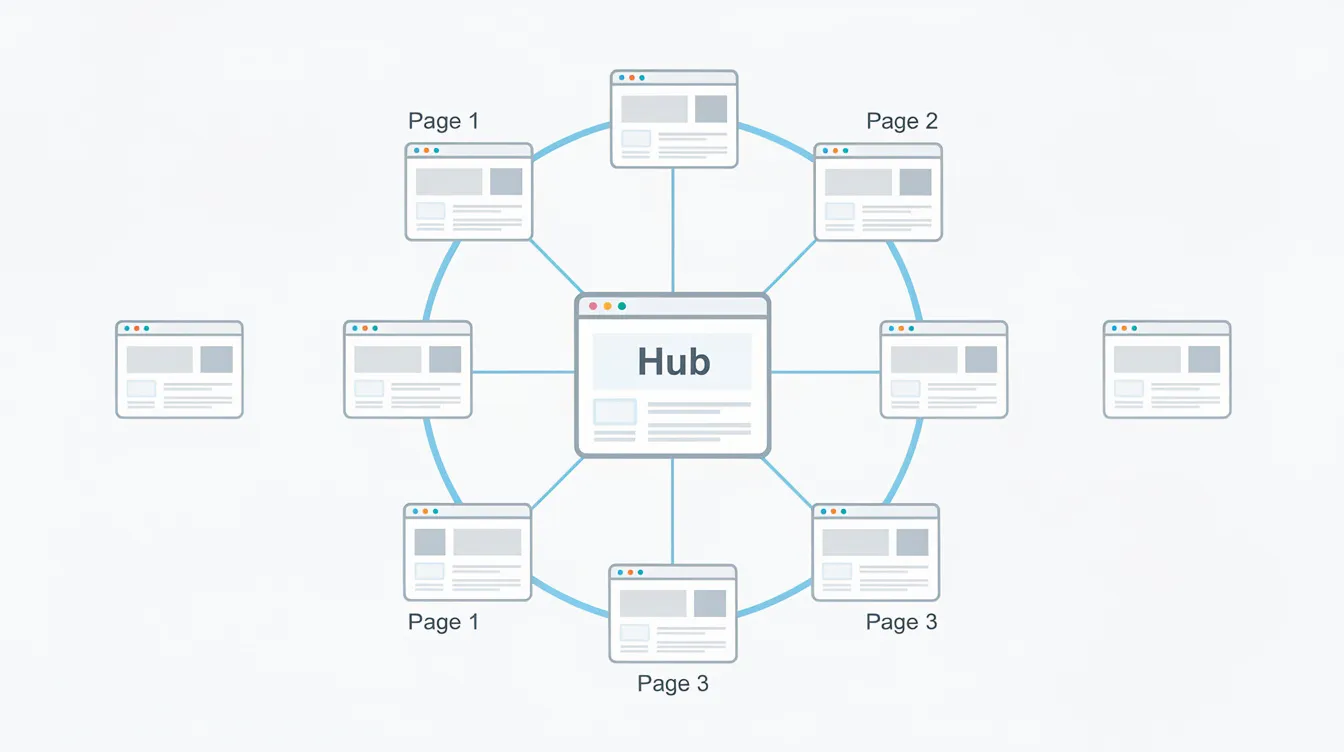
Think of your website structure as a simple pyramid. Your homepage sits at the top. Your primary keynote hub pages live on the second level. Supporting content - blog posts, case studies, resources - fills the levels below each hub.
A pyramid structure minimizes clicks from the homepage to any given page. Sketch your current structure on paper or a whiteboard:
Homepage → "Inspirational Business Speakers" hub → topic pages (e.g., "Decision-Making Under Pressure," "Resilient Leadership After 2020")
Your primary business keynote hub should never be more than two clicks from the homepage. Maintaining a clear hierarchy aids user navigation and ensures that search engines can reach your most important content quickly. Breadcrumb navigation helps users understand their current location within this hierarchy, which is especially useful for planners comparing multiple topics.
Provide multiple navigation paths for efficient content access. Internal links should live in multiple places across this structure: from blog posts, case studies, resources, and even your planner page back up to relevant hub pages. Use a consistent URL structure to avoid indexing issues - keep your URLs clean and logical (e.g., /keynotes/inspirational-business-speaker rather than /page-id-4738).
Keep the number of hub pages small. Three to five main hubs is the right range for most speakers. If you spread your internal link equity and attention across ten hubs, none of them accumulate enough authority to rank well.

Hub Pages vs. Regular Content: What Qualifies as a Keynote Hub?
Hub pages target broader, business-critical topics - like "inspirational business speakers for leadership teams" - rather than narrow subtopics. Hub pages help organize content into topic clusters, and effective hub pages drive significant traffic to websites when they're properly supported.
A narrow post like "Q4 2024 Offsite Breakout Outline" is supporting content, not a hub. It should link to the hub, not replace it. Identifying hub pages requires keyword research and analysis to determine which terms your ideal planners are actually typing into Google.
Your main inspirational business speakers hub should align with your highest-intent keyword and showcase your primary keynote. Hub pages should link to supporting content for context, so include a brief internal table-of-contents section on the hub that links out to cluster articles, creating a clean navigation pattern for both planners and crawlers.
Create Topic Clusters Around Leadership, Resilience, and Performance
Topic clusters are groups of related pages that all connect back to a central hub page. Use a pillar-and-cluster model to strengthen topical authority - this approach helped one company achieve a 250% increase in organic traffic within six months.
Here are concrete cluster examples for a business event speaker:
- Leadership in Uncertain Times cluster. Articles on post-pandemic leadership, navigating economic shifts, leading through organizational change - all linking back to your inspirational business speakers hub.
- Decision-Making Under Pressure cluster. Case studies on high-stakes judgment, research summaries on decision fatigue, posts on cognitive frameworks for executives.
- Resilient Teams After Crisis cluster. Stories from your speaking engagements, thought leadership on rebuilding culture, practical resilience tools for managers.
Each blog post, case study, or article in a cluster should link back to the relevant hub page with contextual links using natural anchor text. Plan at least four to eight supporting pieces around each hub over the course of 2026, so that search engines see depth and decision makers see breadth of knowledge.
Clustering content this way helps both SEO and planners. Google recognizes clear topical authority. Planners find easy pathways to the exact talk that fits their event theme.
Contextual Links: Guiding Planners Through Your Best Ideas
Contextual links are in-body links placed where they naturally help a reader learn more, book, or explore a related idea. They carry more weight than navigation-only links because they appear within meaningful content.
Here are example sentences showing contextual links in action:
- "If your sales team needs a motivational business speaker for kickoffs who can connect inspiration with measurable performance, this keynote was built for that moment."
- "The research on decision making under pressure directly informed the framework behind our leadership keynote for business audiences."
- "Event planners looking for a business inspirational speaker on resilience have found this talk especially relevant for post-2020 audiences."
Contextual links from high-traffic articles are especially powerful because they carry both authority and intent. A 2025 piece on post-pandemic leadership resilience that links to your keynote hub sends a strong signal to Google about what your site is about.
Add two to four contextual internal links per 1,000 words of content, focusing on genuinely helping decision makers find the right talk or resource. Avoid excessive linking to prevent clutter - limit internal links on a page to around 100 for better SEO, though most speaker site pages will naturally stay well below that number. Contextual links should always feel useful to a human planner first, and only secondarily serve search engines.
Choosing Anchor Text That Speaks to Decision Makers and Search Engines
Anchor text is the clickable words in a hyperlink. It tells both humans and Google what they'll find on the linked page. Use descriptive keywords in internal link anchor text so that every link reinforces your topic relevance. Descriptive keyword-rich anchor text improves semantic relevance, and links should be descriptive to avoid ambiguity.
Use buyer-language anchor text that mirrors how planners actually search:
- "inspirational business speakers for leadership teams"
- "motivational business speaker for annual meetings"
- "business inspirational speaker on decision-making"
- "keynote on better decisions for executive teams"
Anchor text variety matters. Mix exact-match phrases with partial matches and natural variations to avoid over-optimization. For example, alternate between "decision-making keynote," "keynote on better decisions," and "business decision making speaker" across different source pages.
Avoid vague anchor text like "click here" or "learn more" when linking to important pages. If you must use a generic phrase, pair it with descriptive wording: "Learn more about our inspirational business speaker keynote on resilient leadership."
Keep anchor lengths short but specific - three to seven words is the right range. Align your anchors with the language you use in H1s and subheads on your hub pages so that everything reinforces the same message.
Auditing Your Internal Links: Fix Broken Links and Orphaned Keynotes
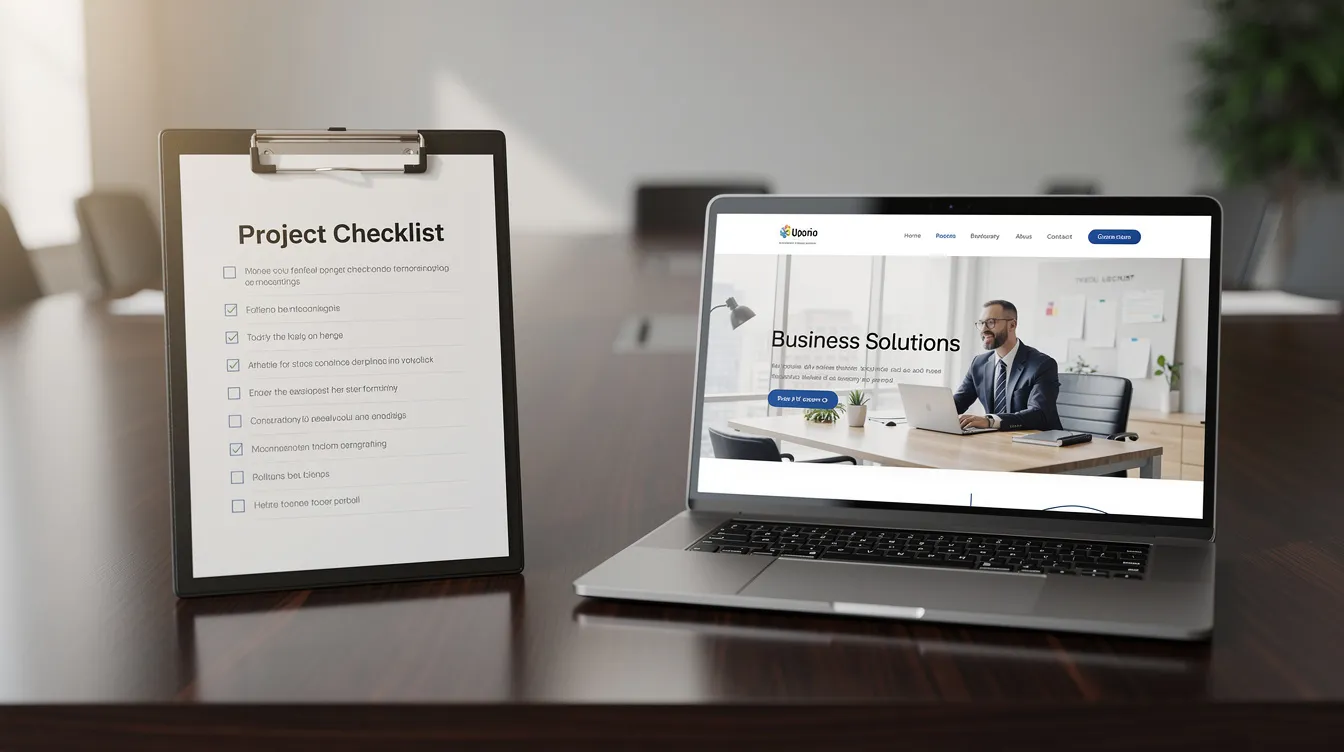
Before building new internal links, audit what you already have. Broken internal links waste authority and frustrate busy planners who expect a professional experience. Orphan pages - pages with no internal links pointing to them - are effectively invisible to both Google and decision makers.
Run a basic audit using tools like Screaming Frog, Sitebulb, Ahrefs, or Google Search Console to find broken links, redirected links, and orphan pages. Internal links help Google understand your site's structure, so when those links are broken, your structure becomes unclear.
Prioritize fixes on your most important pages first:
- Homepage
- Primary keynote hub
- Speaker reel page
- Planner or inquiry page
- Top-performing blog posts
A treatment center case study illustrates the point: after fixing orphan pages and generic anchors without creating any new posts, their organic traffic doubled in six months. The same principle applies to the speaking business - fix what's broken before building what's new.
Monitor user paths for accessibility considerations. If planners are hitting dead ends or 404 pages, you're losing inquiries you'll never know about.
Set aside one working session per quarter - January, April, July, October - to re-run an internal link health check for your site. Consistency here compounds over time.
Putting Important Pages Closer to the Homepage
Click depth is the number of clicks it takes to reach a page from your homepage. High-value pages like your inspirational business speakers hub, planner page, and financial aid or budget guidance resources should be within two to three clicks of the homepage.
Here are typical important pages for a business event speaker that should be shallow in your site structure:
- Main keynote hub
- Speaking topics overview
- Industries served
- Case studies and testimonials
- "Work with us" or planner page
Reduce click depth using internal links from navigation, footer menus, and contextual links in high-traffic pages. Add at least one direct internal link from your homepage hero or primary navigation to your main keynote hub page. Don't bury it under a generic "Services" dropdown.
Reducing click depth supports SEO and reflects how time-pressed decision makers actually browse when comparing speakers. They're not going to click through five pages to find your keynote description. If it's not obvious within two clicks, they'll move to the next person on their shortlist.
Balancing Internal and External Linking for Thought Leadership
Internal links keep visitors moving through your own ecosystem. External links show you're connected to credible sources and partners. Both matter, but for different reasons.
Prioritize internal links from thought leadership pieces back to your keynote page. When you write an article about decision making or resilience, that's a chance to reinforce your primary pages with contextual links. Use external links when citing research - for example, linking to a 2023–2026 study on decision fatigue from a university or linking to the Wikipedia entry on PageRank to explain authority.
Keep external linking lighter on key sales pages like your primary keynote hub. You don't want planners clicking away from your booking page to read a research paper. Save outbound links for deep-dive articles and blog posts where they add genuine value.
Strong external linking from blog content can attract backlinks from other pages and sites, which then flow through your internal links to your hub pages, amplifying your website's authority. Link building works best when your internal structure is already solid - external authority flows through a well-organized site far more effectively than through a disorganized one.
Align all linking - internal and external - with your positioning as a trusted, business-relevant inspirational speaker rather than a generic motivator. Every link should reinforce your message and perspective on leadership, resilience, and performance.
Internal Links, AI Search, and Quote-Ready Content
AI-powered search experiences from 2024 through 2026 favor clear structure, quote-ready content, and strong internal linking to identify your expertise areas. Recent research on web knowledge graphs and semantic cohesion suggests that the relationship between linked pages matters as much as the links themselves.
Linking answer-first sections - short, direct answers to questions like "What does an inspirational business speaker do for our leadership team?" - back to your keynote hub helps AI systems see that page as the primary resource on your site. When Google's AI overview or a planning assistant summarizes your expertise, it pulls from the page with the strongest signals.
Build short Q&A blocks on your hub and planner pages that address practical questions:
- What's the typical fee range for a business event speaker?
- Does the speaker offer financial aid or sponsorship options for associations?
- What decision-making outcomes can our audience expect?
Each Q&A block should be internally linked from related blog posts so that the hub accumulates authority from multiple supporting pieces.
Refresh older thought leadership articles from 2018 through 2022 with updated internal links to your current 2026 keynote hub. An article that still gets organic traffic but links to a dead page is a missed opportunity. Update the links, update the anchor text, and point everything
toward your current positioning.
Practical Workflow: Updating Internal Links as You Add New Talks
Every time you launch a new keynote or refine your positioning, update internal links across your content library. This isn't a one-time project. It's an ongoing process that keeps your site structure aligned with your current focus.
Here's a simple repeatable workflow:
- Identify the new or rebranded keynote hub.
- List 10 to 20 relevant existing pages (blog posts, case studies, older talk descriptions).
- Add or update contextual links from each one to the hub.
- Check that anchor text varies across pages and uses buyer-language keywords.
- Verify that no broken links were introduced.
Avoid creating competing hubs by clearly choosing one primary page per main topic. You want one main "Inspirational Business Speakers" page for leadership audiences, not three pages that cover multiple topics and cannibalize each other's rankings.
Track your five most important hub pages and review their internal link counts and click depth at least twice a year. A visual representation of your link structure - even a simple spreadsheet - makes patterns and gaps obvious.
For busy speakers, delegating this workflow to a VA or marketing partner is absolutely the most efficient way to maintain a strong internal linking structure over time. The tool doesn't matter as much as the consistency.

Turning Internal Links into a Clear Path to "Request Speaking Availability"
The real goal of internal links isn't just SEO metrics. It's guiding decision makers from curiosity to a concrete next step. Every link on your site should ultimately support one outcome: making it easy for the right person to book you.
Every cluster article or case study should include at least one internal link leading to a page where planners can check dates, see fee guidance, and understand logistics. No high-intent page - a testimonial, a case study, a talk outline - should lack a link to your keynote hub or inquiry form. Dead ends kill conversions.
Use consistent CTAs and anchors such as "Request speaking availability for your 2026 leadership conference" when linking to your contact or planner page. In one sentence, tell them exactly what happens when they click - that clarity builds trust faster than any amount of social media presence or body language analysis on a speaker's reel.
A clean internal linking system, anchored by a strong primary keynote hub, makes it significantly easier for the right business audience to find you, trust you, and book you.
The speakers who get booked most consistently aren't always the most famous. They're the ones whose sites make it effortless to say yes. Public speaking success in 2026 depends as much on how your site works as on how you perform on stage.
Ready to turn your speaker site into a booking engine? Request speaking availability for a business audience today.
share this
Related Articles
Related Articles