



Event Planner Support for Drew Rhoden Speaking Engagements
Planning a conference, corporate meeting, leadership summit, university program, association event, or other professional gathering requires more than selecting a speaker. Event planners need to know whether the speaker fits the audience, how the presentation supports the event's goals, what information is needed before the engagement, and how the planning process works.
Is Drew Rhoden a Fit for Your Event?
Drew Rhoden brings experience across executive leadership, business strategy, law, entrepreneurship, higher education, athletics, communication, and organizational development to his presentations. Rather than approaching every audience with the same presentation, the first step is understanding the event, its audience, and what the organization wants attendees to gain from the experience. Relevant experience for event planners should match the event's size and type; the same principle applies when selecting a speaker whose background aligns with the people in the room.
Drew may be a strong fit for organizations planning events centered on subjects such as:
- Executive leadership
- Leadership communication
- Business strategy
- Entrepreneurship
- Organizational growth
- Innovation and change
- Business ethics
- Team building
- Professional development
- Marketing and sales leadership
- Higher education leadership
- Student success
- Sports leadership
- Organizational culture
- Resilience, accountability, and personal responsibility
Presentation topics and emphasis can be discussed according to the objectives and format of the event.
Events Drew Can Be Considered For
Every event has a different purpose. Some require a high-energy opening presentation. Others need a strategic message for executives, a thought-provoking discussion for professionals, or a closing session that gives attendees something meaningful to carry forward.
Event planners may inquire about Drew for:
Corporate Conferences
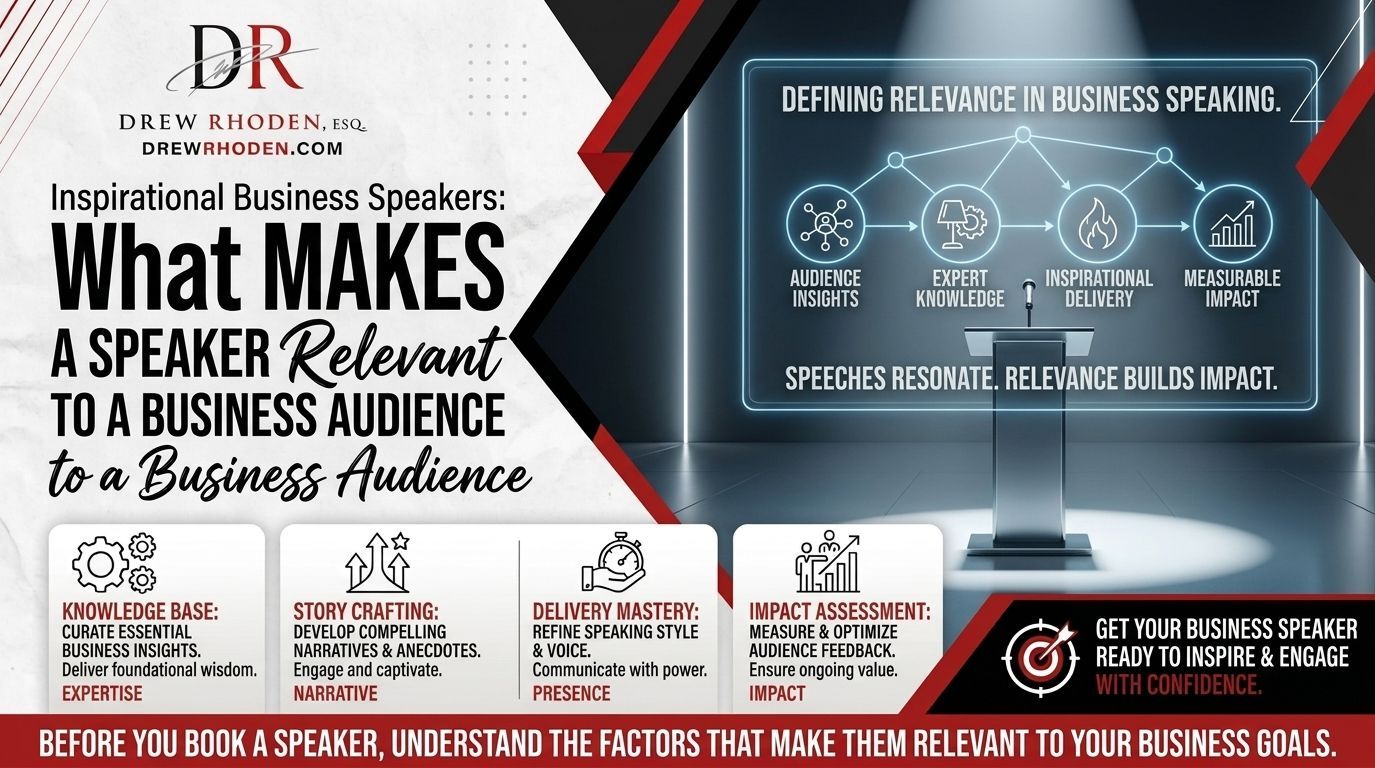
Organizations planning company conferences, annual meetings, executive gatherings, and professional events can discuss presentations focused on leadership, communication, business strategy, innovation, culture, and growth. Drew's background in business operations and organizational development provides a foundation for connecting with corporate audiences interested in real-world leadership challenges. Product launches, award ceremonies, and leadership retreats also fall within this range of corporate engagements.
Leadership Meetings and Summits
Leadership audiences often need more than inspiration. They need ideas that connect to decision-making, accountability, communication, organizational challenges, and the responsibilities that come with leading people. Drew's presentations for leadership summits focus on what leaders are responsible for doing when they return to their teams.
Association and Professional Conferences
Professional associations can explore presentations built around topics that complement their conference theme and audience interests. Whether the convention brings together professionals from one industry or draws attendees across multiple industries, the goal is aligning the speaker's knowledge with what members came to learn.
Colleges and Universities
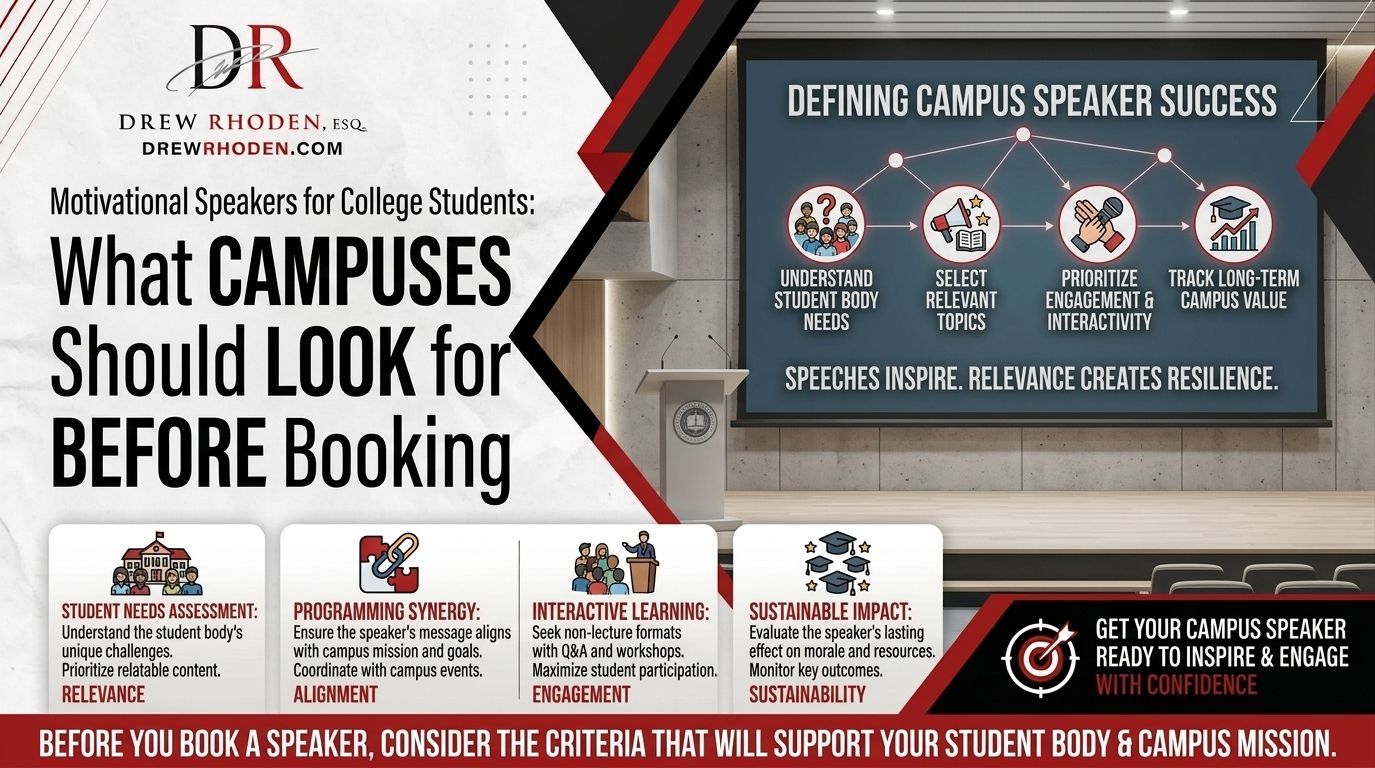
Universities, colleges, academic departments, athletic programs, and student organizations may inquire about presentations addressing leadership, professional development, entrepreneurship, ethics, career preparation, sports, and student success. When students choose a university program or school event to attend, the speaker's relevance to their education and career path matters. Drew's experience in higher education and athletics allows him to engage students directly on topics that prepare them to succeed after graduation.
Sports and Athletic Programs
Drew's experience in athletics, leadership, law, and business provides opportunities for presentations serving coaches, administrators, student-athletes, sports organizations, and related professional audiences. These engagements often focus on discipline, accountability, teamwork, and how lessons from competition create value beyond the playing field.
Business and Entrepreneurship Events
Founder groups, entrepreneur conferences, business organizations, and executive programs may consider presentations involving leadership, strategic thinking, business development, innovation, organizational growth, and decision-making. Attendees interested in building or scaling a business benefit from hearing how leadership skills and critical thinking apply to real business challenges.
Virtual Events
Organizations may also inquire about virtual speaking engagements when an in-person program is not the right format. Virtual events allow organizations to connect with broader audiences, and Drew's speaking work includes virtual presentation capabilities.
Information That Helps Us Evaluate Your Event
You do not need to have every detail finalized before contacting us. Providing the information you already know, however, can make the initial conversation much more productive. Client consultation involves meeting with clients to understand their vision; the same principle applies here.
Event Basics
- Event name
- Organization name
- Event date or proposed date range
- Event location
- In-person or virtual format
- Type of event
- Approximate audience size
Audience Information
Tell us who will be in the room.
Helpful details may include:
- Executives
- Business owners
- Managers
- Employees
- Association members
- Educators
- College students
- Student-athletes
- Coaches
- Administrators
- Entrepreneurs
- Industry professionals
- Mixed audiences
Understanding the audience helps determine whether Drew's experience and presentation approach align with the people attending your event. Clear communication is essential for successful event planning, and describing the audience early reduces misalignment later.
Tell Us What You Want the Audience to Take Away
A strong event starts with a clear objective. Event planning involves setting goals and budgets for events; speaker selection works the same way.
Before selecting a topic, consider what attendees should think, understand, or be prepared to do differently after the presentation.
For example, your organization may want attendees to:
- Communicate more effectively as leaders
- Strengthen accountability across teams
- Navigate organizational change
- Think more strategically about growth
- Develop stronger leadership habits
- Approach challenges with greater resilience
- Better understand the connection between leadership and organizational culture
- Strengthen collaboration
- Take greater ownership of professional development
- Think differently about entrepreneurship or business strategy
You do not have to develop the presentation yourself. Sharing the desired outcome gives the speaking team useful context for the initial discussion.
Selecting a Presentation Topic
Drew's speaking areas span several disciplines, allowing event planners to begin with the needs of the audience rather than forcing an event into a single predetermined category. The best planner combines relevant experience, transparent pricing, and good organization; the best speaker selection starts with audience need, not a generic topic list.
Potential areas include:
Executive Leadership and Decision-Making
Designed for audiences interested in leadership responsibility, decision-making, organizational direction, accountability, and leading effectively in changing environments.
Leadership Communication
Focused on how leaders communicate expectations, establish trust, influence teams, manage difficult conversations, and connect organizational objectives to the people responsible for executing them.
Business Strategy and Organizational Growth
Suitable for audiences exploring strategic thinking, business development, innovation, growth, leadership priorities, and the decisions organizations face as they evolve.
Entrepreneurship
For entrepreneurs, founders, students, business owners, and professionals interested in the realities of building organizations, making decisions, creating opportunities, and remaining accountable for results.
Resilience and Personal Responsibility
A presentation direction for organizations seeking to address discipline, perseverance, leadership mindset, accountability, and the ability to move forward through challenges.
Professional and Student Development
For colleges, universities, schools, and professional development programs seeking a message around leadership, communication, responsibility, career preparation, confidence, and future success.
Sports Leadership
For athletic organizations, coaches, administrators, and student-athletes interested in leadership, teamwork, discipline, accountability, communication, and lessons that extend beyond competition.
For a broader overview of Drew's keynote speaking background and presentation areas, visit the Keynote Speaker page.
Tagline
Preparing Drew for Your Audience
The better a speaker understands the audience, the easier it is to make the presentation relevant to the event. An event planner orchestrates gatherings from concept to completion; the speaker's preparation process works in parallel.
Before the engagement, the planning team may be asked to provide information such as:
- Event theme
- Audience demographics
- Industry or profession
- Organizational priorities
- Current challenges relevant to the presentation
- Other speakers or sessions on the program
- Desired audience outcomes
- Terminology specific to the organization or industry
- Sensitive subjects or areas that should be avoided
- Recent organizational developments relevant to the audience
Planners should identify information that is confidential before sharing it.
Planning Timeline
Every event operates on a different schedule, but early communication can reduce last-minute production issues. Event planners may work many more hours during events; good advance planning distributes that workload more evenly.
01
At the Initial Inquiry Stage
Provide the event date, location, audience, event type, desired presentation direction, expected attendance, and available budget information. Budget management involves allocating funds and tracking expenses; knowing the speaking budget early allows for a more productive first conversation.
02
After the Engagement Is Confirmed
The parties can finalize contractual, scheduling, production, travel, presentation, and promotional details applicable to the event. Clear contracts should specify services, fees, and additional charges. Negotiation skills are important for securing vendor contracts, and the same precision applies to speaker engagement agreements.
03
Before the Event
Confirm the final agenda, arrival instructions, presentation time, venue information, production contact, AV arrangements, approved promotional materials, and other applicable logistics. Vendor sourcing includes researching and coordinating with various suppliers; the speaker engagement is one of those coordination points.
04
Immediately Before the Presentation
Confirm that the on-site contact, production team, microphone, presentation equipment, timing cues, and introduction are ready. Event planners must solve problems under pressure during events; having these details confirmed in advance reduces the number of problems that arise.
Frequently Asked Questions (faqS)
Can Drew Speak at Corporate Events?
Yes. Drew's speaking work includes subject areas relevant to executives, business owners, managers, professionals, and organizational leadership. Corporate events, meetings, and conferences fall within his speaking areas. For additional examples, visit the Business Speaker page.
Does Drew Speak for Colleges and Universities?
Drew's speaking areas include higher education leadership, student success, professional development, entrepreneurship, leadership, and sports-related topics. University and college audiences benefit from speakers whose background connects academic and professional experience.
Does Drew Speak at Sports Events?
Organizations may inquire about presentations for athletic programs, sports organizations, coaches, administrators, and student-athletes. Drew's background in athletics and law provides a foundation for connecting sports leadership to broader organizational skills.
Can We Request a Specific Topic?
Yes. Tell us the subject your organization is considering and, more importantly, what you want the audience to gain from the presentation. The final topic and scope can then be evaluated for fit.
contact us now!
Choosing an event planner involves assessing their organization and experience. The same principle applies to speaker selection. Checking client references is crucial for evaluating planners and speakers alike. Review Drew's
keynote speaking page, consider whether his background aligns with your audience, and submit an inquiry describing your event.
