
Panel Moderator Guide: How to Moderate a Panel
A panel moderator is the person who guides a panel discussion: they introduce the topic and the panelists, ask prepared questions, keep the conversation balanced and on time, bring in questions from the audience, and close the session with clear takeaways. Moderating a panel well depends more on preparation than on stage presence. The best moderators research their panelists, build a question plan with a strong opening and probing questions, and manage the room so every voice is heard and the audience leaves with useful insights.
This is a step by step guide to moderating a panel: what the job includes, how to prepare, a simple panel discussion script, how to introduce yourself and the panelists, how to run a virtual or video panel, how to handle Q&A and silence, and how to close.
What Does a Panel Moderator Do?
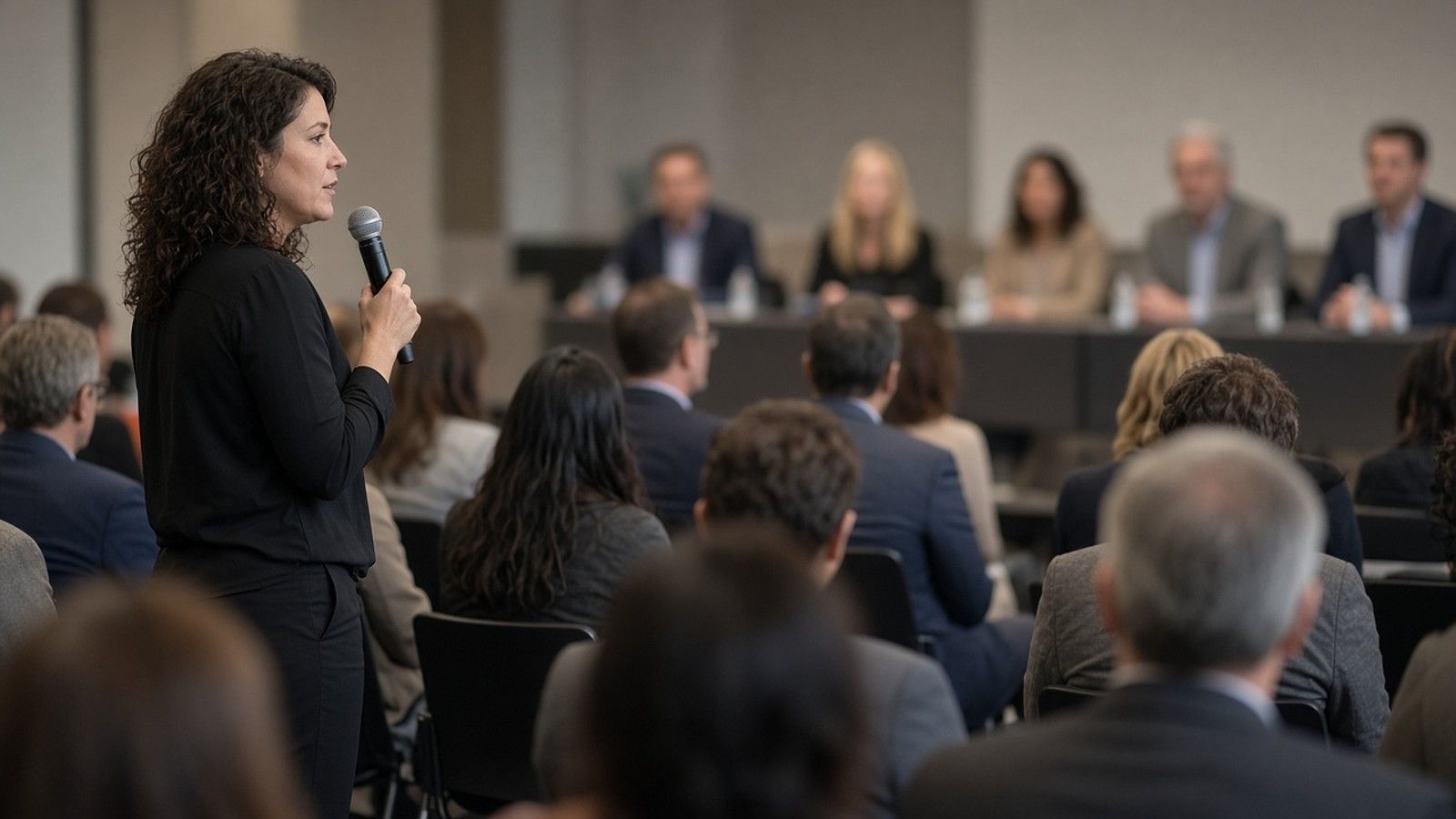
The moderator's job is to turn several experts into one coherent conversation. In practice, that means:
- Framing the discussion topic so the audience knows why the panel matters.
- Introducing the panelists briefly and in a way that explains why each is on stage.
- Asking questions that draw out expertise, contrast viewpoints, and stay relevant to the audience.
- Managing time and balance so no single panelist dominates and the session ends on schedule.
- Involving the audience through audience polls or a short Q&A.
- Closing with takeaways that summarize the key points and point attendees to what is next.
A moderator is not a fourth panelist. The focus stays on the panelists and the audience, with the moderator listening closely and steering the discussion. Think of the panelists as your guests: your job is to make them look good and make the panel discussion useful for everyone in attendance.
How to Prepare for a Panel Event: A Step by Step Guide
1. Clarify the goal with the organizer
Ask what the event organizer wants to achieve: what the audience should learn or feel by the end of the panel session, and what would make it an informative panel discussion for this group. Confirm the length, the panel format, whether there will be a Q&A, and whether the session will be recorded or streamed as video. Ask who is likely to attend, so you understand the context and the level of knowledge in the room.
2. Research each panelist
Read each panelist's bio, recent talks, articles, or interviews. Look for where their views differ, since contrast makes a panel discussion interesting. Keep notes on each person, the points that would be most interesting to this audience, and any topics to avoid.
3. Hold a short prep call
A short call with the panelists in advance helps everyone align on the flow, arrange the order of topics, the opening question, and the order of speakers. It also lets fellow panelists meet before they share a stage. Do not script answers; the goal is a natural conversation.
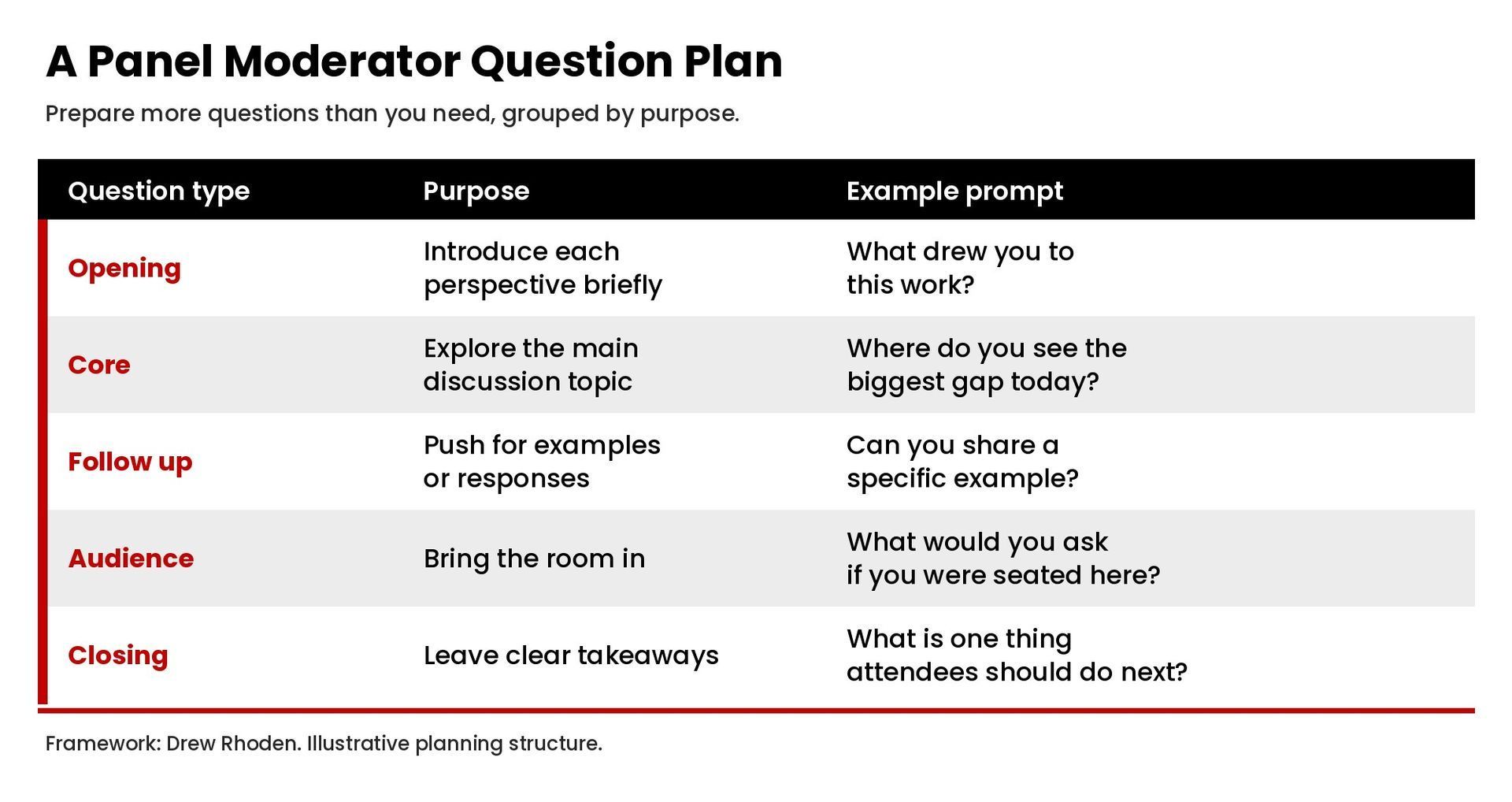
4. Build a question plan
Write more prepared questions than you need, grouped into themes. Include:
- An opening question each panelist can answer briefly, to introduce their perspective.
- Core questions on the main discussion topic, some directed to specific panelists.
- Follow up questions that push for examples, more detail, or responses from other panelists.
- A closing question, such as "What is one thing attendees should do next?"
Order the questions so the panel builds toward the most important point.
5. Plan the logistics
Visit the space if you can. Confirm seating, microphones, a timer or clock, and how questions from the room will be collected, whether by roaming microphone or an app. Know the time cues you will use to keep the session on track.
How to Introduce Yourself as a Moderator
Keep your own introduction short. A simple structure:
- Welcome the audience and name the session.
- Give one or two sentences on who you are and why you are moderating.
- Name the subject and why it matters to this audience.
- Outline the panel format, including when audience questions will happen.
- Introduce each panelist in one or two sentences focused on what they bring to this conversation.
Then move straight into the opening question. Audiences engage faster when the panel discussion starts early.
A Simple Panel Discussion Script
Many first time moderators look for a panel discussion script. You do not need to script the whole conversation, and you should not, but a short script for the opening, transitions, and close keeps the event on track. Adapt the language below to your own voice:
- Opening. "Good morning, and welcome to [session name]. I am [name], and I will be your moderator today. Over the next [length], our panel will discuss [topic], and we will save time at the end for your questions."
- Introductions. "Let me introduce our panelists. [Name] is [role], and she is here because [reason]. [Name] is [role], and he brings [perspective]."
- First question. "To start, I will ask each panelist the same question. In one minute or less, [question]?"
- Transition. "That is a great point, and I want to build on it. [Name], you have seen this from a different angle. What has your experience been?"
- Moving to Q&A. "We have about [minutes] left, so let's open it up. Please keep your question short so we can hear from as many people as possible."
- Close. "Before we finish, I would like each panelist to share one thing the audience should do next. Then please join me in thanking our panel."
Keep the script on a single card or tablet, along with your question plan and time cues.
Running the Discussion
- Listen more than you talk. The best next question often comes from something a panelist just said.
- Balance the voices. If one panelist has spoken several times, invite the other guests in by name so each one has a chance to speak.
- Ask for examples. General answers become memorable when panelists share specific stories and detail.
- Encourage respectful debate. A panel where everyone agrees is less useful than one with different perspectives.
- Watch the time. Use clear cues to move on, and protect time for Q&A and the close.
Moderating a Virtual or Video Panel
Virtual panels and hybrid events add a few tasks to the moderator's job. The same principles apply, but the tools change:
- Test the technology. Run a tech check with every panelist before the event to confirm audio, video, lighting, and screen sharing. Ask panelists to turn off notifications and keep their video on for the whole session.
- Agree on a backchannel. Use a private chat with the producer and panelists for time cues and technical problems.
- Name the next speaker. On video, people talk over each other more easily, so direct questions to panelists by name.
- Bring the online audience in. Ask a producer or co organizer to collect questions from the chat so you can focus on the panel discussion.
- Plan for problems. Decide in advance what you will do if a panelist loses connection, such as moving to another speaker and returning to them later.
If the video will be posted afterward, remember that the recording is part of the event, and many people will watch the panel discussion on video rather than in the room. Clear introductions, names on screen, and a strong close make the recording more useful to people who could not attend.
Handling Audience Questions
Questions from the audience are often the most interactive part of a panel. Open Q&A with enough time left, and engage the audience early by telling them at the start that questions are coming. When an audience member asks a question, repeat or summarize it if the room cannot hear, direct it to the most relevant panelist, and keep answers brief so more questions fit. If a question turns into a speech, politely ask for the question itself.
How to Handle Silence and High Stakes Moments
Awkward silence happens, especially at the start of Q&A. Have one or two audience style questions ready to ask yourself, such as "A question I often hear is...". If a panelist stalls, rephrase the question or invite another panelist to start. A brief pause is fine; the moderator's calm sets the tone.
High stakes moments call for the same calm. If a panelist makes an inaccurate claim, a heated exchange starts, or a question from the room is hostile, acknowledge it, restate the question in neutral language, and give each person a chance to respond briefly before you move on. You do not need to resolve every disagreement on stage; you need to keep the discussion respectful and useful.
Closing the Panel
End on time. Ask a final question that gives each panelist a short closing thought, summarize two or three key insights from the discussion, thank the panelists and the audience, and tell the audience what is next: the next event, where to find resources, or how to connect with the panelists.
Panel Discussion Tips at a Glance
- Prepare more than you need, and use less than you prepared.
- Keep your introduction brief and the focus on the panelists.
- Use follow up questions to get past generic answers.
- Balance airtime deliberately.
- Protect time for Q&A and a strong close.
- For virtual events, test the tools and name each speaker.
Strong moderating draws on the same skills as strong public speaking, and the more often you speak in front of a group, the easier it gets: clarity, presence, and respect for the audience's time. Our article on public speaking tips for leaders covers how to craft a message people still use after the event.
Frequently Asked Questions
What does it mean to moderate a panel discussion?
Moderating a panel discussion means guiding the conversation among panelists: introducing them, asking questions, balancing participation, managing time, and involving the audience.
How do I introduce myself as a moderator?
Welcome the audience, give a one or two sentence introduction of yourself, share the topic and format, introduce each panelist briefly, and move quickly to the first question.
How do you prepare questions for a panel?
Research each panelist, group questions into themes, and include an opening question, core questions, probing questions, and a closing question. Write more than you need.
Is there a script for moderating a panel discussion?
Yes. Script the opening, the panelist introductions, the first question, a few transitions, the move to Q&A, and the close. Leave the middle of the panel discussion unscripted so it stays a real conversation.
How is moderating a virtual panel different?
Test audio and video with every panelist in advance, use a private chat for time cues, direct questions to panelists by name, and ask a producer to collect questions from the online audience.
How long should a panel discussion be?
It depends on the panel event, but plan time for introductions, the main discussion, audience questions, and a closing, and confirm the length with the organizer.
How do you become a panel moderator?
Start by moderating smaller sessions, such as internal meetings, webinars, or community events, and build a reputation for preparation and fair, engaging conversations. The best advice is to watch recorded panel discussion video from conferences you admire and note what the moderator does well. Let event organizers know you are interested in moderating.
Plan a Panel the Audience Remembers
A great panel moderator prepares thoroughly, keeps the focus on the panelists and the audience, and closes with insights people can use. If you are planning a conference, campus event, or leadership program and want a speaker who connects with audiences, learn more about Drew Rhoden as a keynote speaker and college speaker, or contact Drew to discuss your event.
share this
Related Articles
Related Articles