


Fireside Chat: Meaning, History, and How to Host One
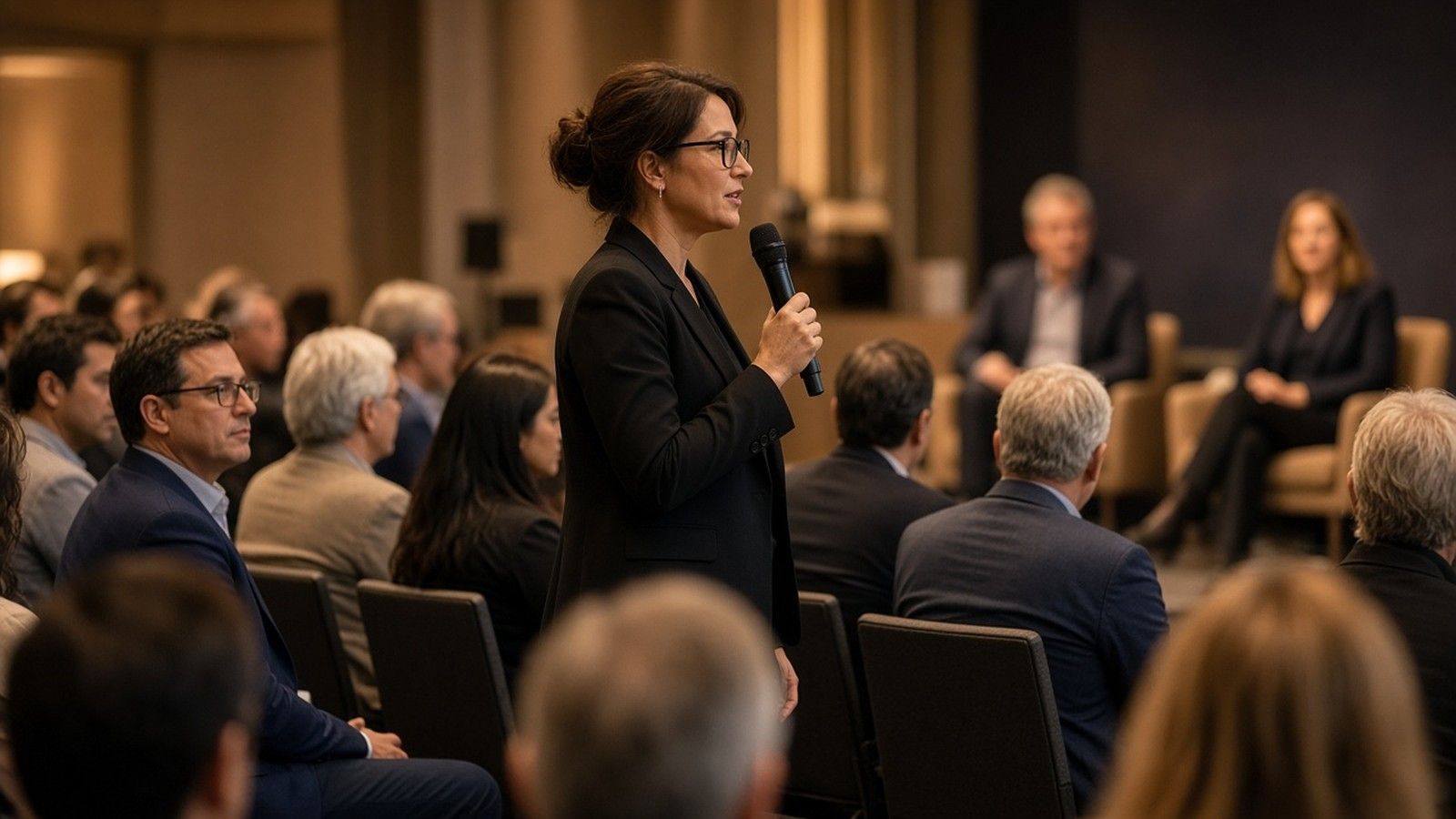
A fireside chat is an informal, conversational event format in which a host or moderator interviews a guest, usually seated in armchairs on a stage, in front of a live or virtual audience. Instead of a speech or a slide presentation, the audience watches a real conversation. The best fireside chats feel relaxed and personal, and they draw out stories and perspectives a guest would rarely share from behind a podium.
I have spent a lot of time on stages and in rooms full of people, as a coach, an attorney, a founder, and a speaker. The conversations people remember are rarely the most polished ones. They are the ones where the guest is honest, the interviewer listens, and the audience feels like it is sitting in on something real. That is the promise of a fireside chat. This guide covers what a fireside chat means, where the name comes from, how it differs from a panel discussion, and how to plan, host, and get value from one.
What Does "Fireside Chat" Mean?
The fireside chat meaning today is simple: an informal, one-on-one conversation between a host and a guest in front of an audience. The format usually includes:
- A host or interviewer who guides the discussion with prepared questions.
- A guest , often a chief executive, founder, author, or industry expert, who shares stories, lessons, and perspectives.
- A relaxed atmosphere , often two armchairs and a small table instead of a podium.
- Audience questions , usually in the last part of the session.
Fireside chats appear at conferences, company all-hands meetings, leadership retreats, university events, and virtual events. Organizers like them because they feel personal and they give the audience access to a leader's thinking in a way a prepared speech does not.
Why Is It Called a Fireside Chat?
The term comes from President Franklin D. Roosevelt. Between 1933 and 1944, Roosevelt gave a series of 30 evening radio addresses that became known as the fireside chats, according to the Wikipedia history of the fireside chats. President Franklin Roosevelt spoke directly to the American people about recovery from the Great Depression, the banking crisis, New Deal programs, and later the course of World War II.
Before the White House
Franklin Roosevelt first used what would become known as fireside chats in 1929, while serving as Governor of New York. Facing an opposing legislature, he occasionally used radio to address the residents of New York directly. He brought the same approach to the White House.
The first fireside chat
President Roosevelt gave his first fireside chat on March 12, 1933, eight days after taking office. The country was in the middle of a banking crisis. Roosevelt had closed the banking system, and on March 9 Congress passed the Emergency Banking Act. In his first radio address, Roosevelt explained in plain language what was happening to the banks and why Americans could trust them when they reopened.
Where the name came from
The name "fireside chat" was coined by CBS executive Harry C. Butcher in a press release before Roosevelt's May 7, 1933 address. Roosevelt's press secretary, Stephen Early, had said the president liked to think of his audience as a few people seated around his fireside. The image stuck: listeners could picture Roosevelt in his study, speaking to them as if they were in the same room.
Why the format worked
The fireside chats were informal and calm at a time of fear and uncertainty. Roosevelt spoke in everyday language, explained his reasoning, and treated the audience as partners. The National Archives notes that the talks made Americans feel as if President Roosevelt was talking directly to them, and its lesson on the Fireside Chat on the Purposes and Foundations of the Recovery Program, given on July 24, 1933, shows how he used radio to explain the recovery program and the role of industry, employers, and workers.
Radio was the new technology of its day, and Roosevelt used it to go around the filter of newspapers and speak to people at home. The chats ran from about 11 to 44 minutes. Every president since has delivered periodic addresses to the country, first on radio and later on television and online.
The fireside chats remain a turning point in the history of political communication. Franklin Roosevelt used them to explain the New Deal, the recovery program, and wartime decisions to the American people in a calm, direct voice, and the American people responded by listening in large numbers. Roosevelt's radio audiences averaged 18 percent during peacetime and 58 percent during the war, according to the same Wikipedia history.
Modern fireside chat events borrow the same spirit: an informal conversation, a trusted voice, and an audience that feels included rather than lectured.
What Is the Difference Between a Fireside Chat and a Panel Discussion?
Both are conversation formats, but they work differently.
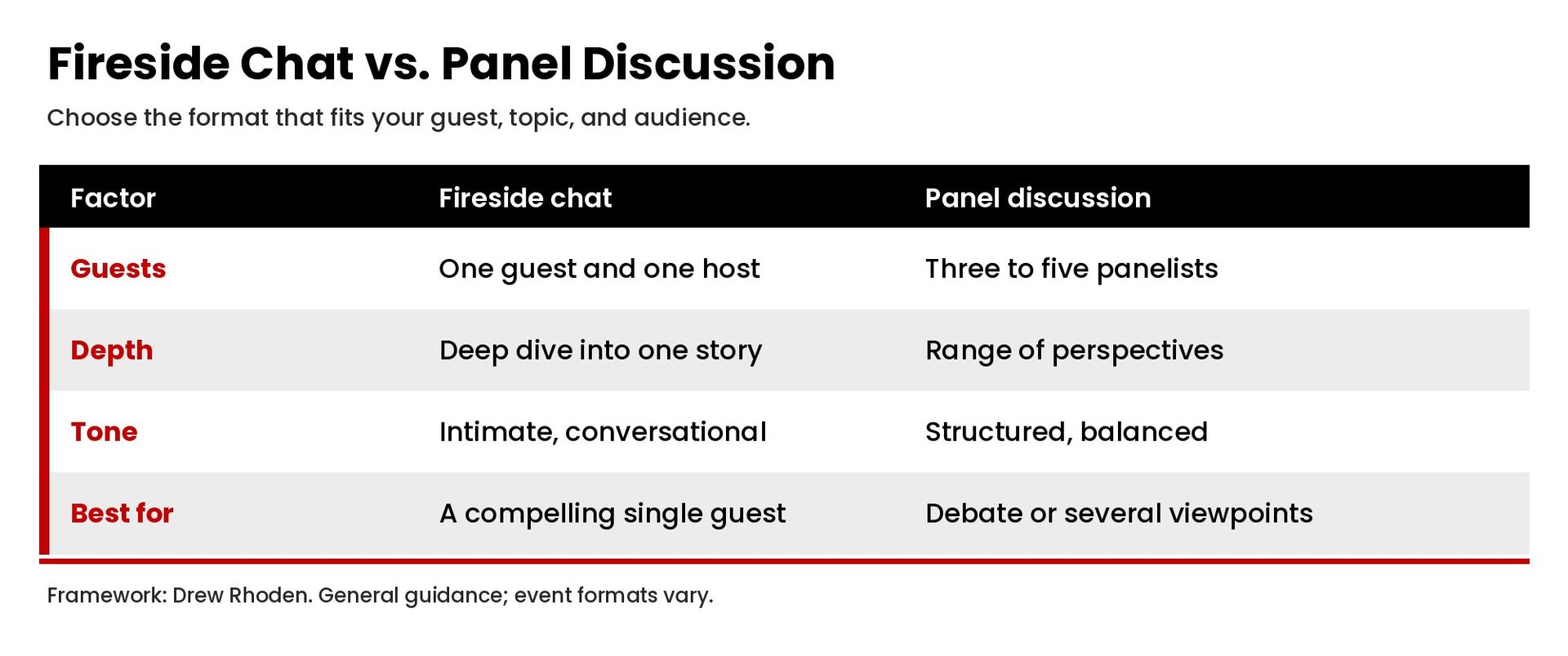
- Number of guests. A fireside chat usually features one guest and one host. A panel discussion features three to five panelists and a moderator.
- Depth. A fireside chat allows a deep dive into one person's experience. A panel offers a range of perspectives but less depth from each person.
- Tone. A fireside chat is intimate and conversational. A panel is more structured, with the moderator balancing time among panelists.
- Best use. Choose a fireside chat when one guest has a compelling story or expertise. Choose a panel when the topic benefits from debate or several points of view.
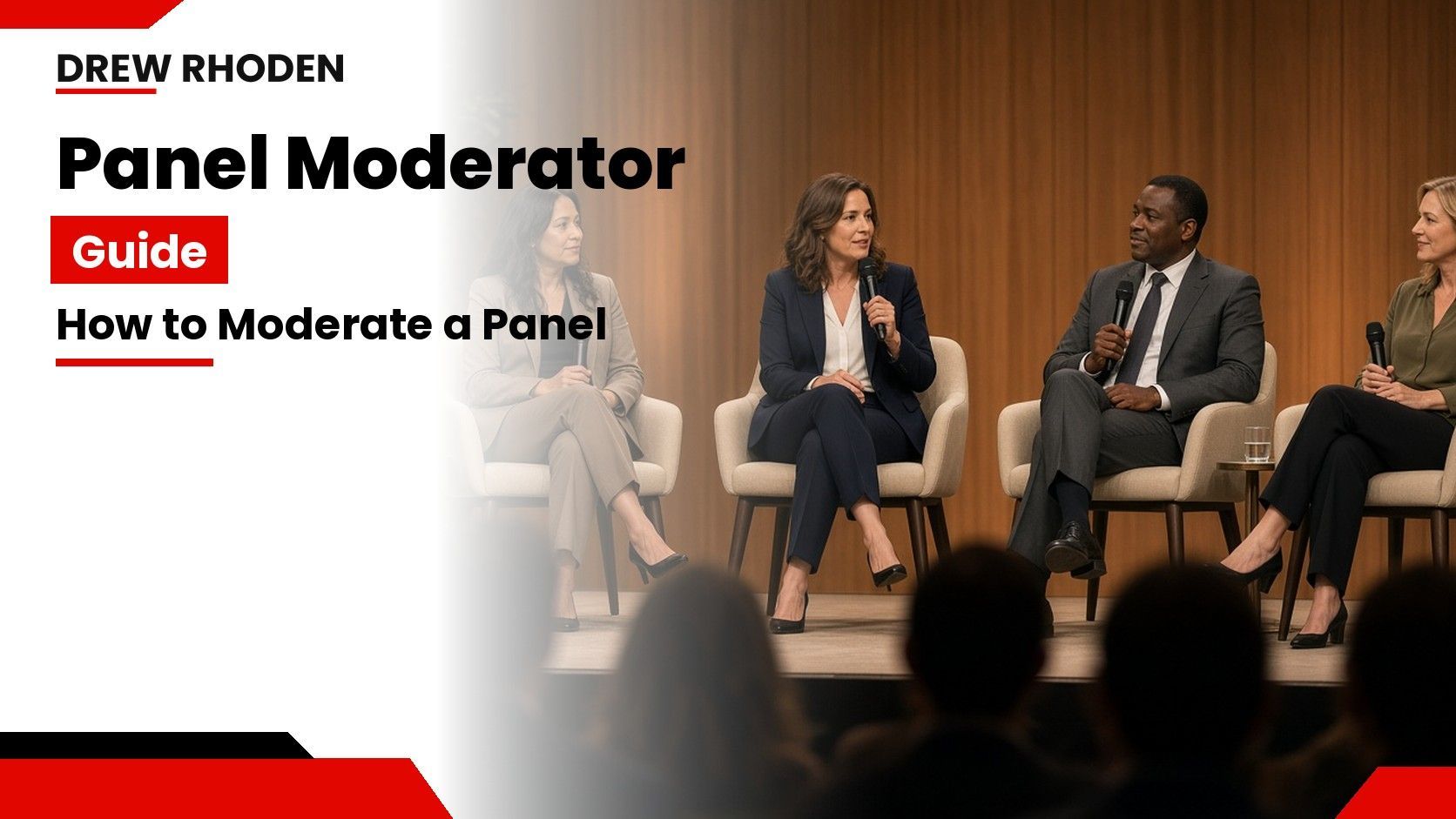
If you are planning a panel instead, my panel moderator guide covers how to run one well.
What Is Another Name for a Fireside Chat?
Depending on the event, a fireside chat may also be called an armchair conversation, an onstage interview, a moderated conversation, a leadership conversation, or simply "a conversation with" the guest. The name matters less than the format: one guest, one host, and a real conversation.
Fireside Chat Formats
Fireside chats work in several formats. Choosing the right format depends on the audience, the budget, and how interactive you want the session to be.
- In-person. The classic format: two armchairs on a conference or company stage, a live audience, and a microphone for questions. In-person fireside conversations create the strongest sense of connection.
- Virtual. The host and guest join by video, and the audience watches online. Use chat, live polls, and a question tool to keep the session interactive. Short breaks for audience questions every 15 minutes help keep attention.
- Hybrid. The conversation happens on stage while a remote audience watches the video stream. Assign someone to collect online questions so remote attendees are included.
- Internal company sessions. Many companies use fireside chats at all-hands meetings so employees can hear directly from a chief executive or leadership team. These sessions work best when the questions are candid.
Whatever the format, the goal is the same: a relaxed, honest conversation the audience feels part of. If a full presentation or keynote is a better fit for your message, choose that instead. The right format is the one that serves the audience.
How to Plan a Fireside Chat
A great fireside chat looks effortless on stage, but it takes preparation.
1. Define the purpose
Decide what the audience should leave with. Is the goal to share a leader's vision, explain a change, celebrate a milestone, or teach a skill? A clear purpose shapes the guest, the host, and the questions.
2. Choose the right guest and host
The guest should have stories and expertise that matter to this audience. The host should be curious, prepared, and comfortable keeping the conversation on track. A strong host is as important as a strong guest.
3. Prepare fireside chat questions
Write questions that invite stories, not one-word answers. Share the general topics with the guest in advance, but avoid scripting the answers.
4. Set the stage
Two armchairs angled toward each other, a small table with water, good lighting, and clear audio create the relaxed atmosphere the format needs. For a virtual fireside chat, use quality cameras and microphones, and position each person so they can make eye contact with the camera lens.
5. Plan audience participation
Decide how audience questions will work. Many events reserve the last five minutes, or the last 10 to 15 minutes, for live questions. Live polls and a question tool can increase audience participation, especially for virtual events.
6. Promote and repurpose the event
Use a short description and guest bio to promote the session. If you are the guest, my guide to writing a speaker bio covers what organizers need. After the event, record the session and create a highlight reel, short video clips, or a written summary so the conversation keeps working after everyone leaves the room.
How to Host a Fireside Chat
The host's job is to make the guest comfortable and the conversation valuable for the audience.
- Open with context. Introduce the guest briefly and explain why this conversation matters to this audience.
- Start with an easy question. A warm opening helps the guest settle in and connect with the room.
- Listen and follow up. The best moments usually come from a follow-up question, not the prepared list.
- Keep it conversational. Avoid long speeches from either person. A fireside chat is a dialogue, not two presentations.
- Watch the time. Leave room for audience questions and close on schedule.
- End with a takeaway. Ask the guest for one piece of advice the audience can use, then thank them.
Good Fireside Chat Questions
Here are fireside chat questions you can adapt for a business, leadership, or industry audience:
- What experience shaped how you lead today?
- What is a decision you made that others questioned, and how did it turn out?
- What is changing in your industry that most people are missing?
- What is a mistake you learned the most from?
- How do you build and keep a strong team?
- What does a typical week look like for you, and what do you protect on your calendar?
- What advice would you give someone in this room starting out?
- What are you working on next?
The best questions invite stories. Stories are what the audience remembers.
How to Be a Great Fireside Chat Guest
If you are invited to be the guest, preparation still matters, even though the format is informal.
- Know the audience. Ask the organizer who will be in the room and what they hope to learn.
- Prepare three or four stories. Have specific examples ready that illustrate your main points.
- Be honest. Audiences can tell when a guest is giving prepared talking points. Candor is what makes the format work.
- Talk to the host, but include the audience. Make eye contact with the host and occasionally turn to the room.
- Keep answers focused. Two to three minutes per answer keeps the conversation moving.
For me, the most useful preparation is thinking about what I wish someone had told me at the audience's stage. Coaching taught me that people remember what you show them through real examples, not what you lecture them about. A fireside chat is a chance to do exactly that. For more on preparing a message that lasts, see my public speaking tips.
Frequently Asked Questions
What does "fireside chat" mean?
A fireside chat is an informal, conversational interview between a host and a guest in front of an audience, designed to feel personal and relaxed rather than formal.
Why is it called a fireside chat?
The term comes from President Franklin D. Roosevelt's radio addresses from 1933 to 1944. The name was coined in 1933 to capture the feeling that Roosevelt was speaking to listeners as if they were seated around his fireside.
What is the difference between a fireside chat and a panel?
A fireside chat usually features one guest and one host for an in-depth conversation. A panel includes several panelists and a moderator for a broader discussion with multiple perspectives.
How long should a fireside chat be?
Many fireside chats run 30 to 45 minutes, including time for audience questions. Shorter sessions work well for virtual events.
Bring a Real Conversation to Your Next Event
A fireside chat works because it is human: a real conversation, honest stories, and an audience that feels included. If you are planning a conference, leadership event, or company gathering and want a conversation focused on leadership, discipline, and building organizations that last, visit my keynote speaker page or contact me to talk about your event.
share this
Related Articles
Related Articles