




Speaker One Sheet: What to Include and How to Create One
A speaker one sheet is a single page that tells an event planner who you are, what you speak about, and how to book you. When a conference organizer is comparing a dozen speakers for one slot on the agenda, the one sheet is often the piece that gets forwarded to the decision maker. It has to answer the right questions quickly, and it often decides whether you get a call in the first place.
I think of the speaker one sheet as the bridge between a speaker website and a booking conversation. If a planner found you through a Google search, a referral, or a talk they saw, the one sheet is what they read next. This guide explains what a speaker one sheet is, what to include, how to create one step by step, the design choices that help it stand out, and the mistakes that make event planners move on to the next speaker.

What Is a Speaker One Sheet?
A speaker one sheet, sometimes called a speaker sheet, a speaker one pager, or simply a one pager, is a one page marketing document that summarizes a speaker's expertise, signature talks, credentials, and booking information. It is usually shared as a PDF, posted on a speaker website, and sent by email when an event planner asks for more information.
The purpose of a one sheet is simple: help a busy reader decide, in a minute or two, whether you are a fit for their audience and their event. A good one sheet does not try to tell your whole story. It gives the event planner enough to say, "Let's talk."
A speaker one sheet is different from other speaker materials:
- Speaker bio: a short biography, written in the third person, that introduces you. See our guide to writing a speaker bio.
- Speaker one sheet: one page that combines your bio, your talks, proof, and booking information.
- Speaker media kit or press kit: a longer packet with multiple bios, photos, videos, and media coverage.
Why a Speaker One Sheet Matters
Event planners and conference organizers review many speakers, and conference organizers often search for speakers months before the event date. Many of them work with committees, so the person who first finds you is rarely the only one who decides. A one sheet gives that first person one piece they can forward, print, or attach to a proposal.
A strong speaker one sheet helps you:
- Get noticed in a crowded field by stating clearly what you offer and the one thing that sets you apart.
- Answer common questions before they are asked: topics, audiences, formats, and how to reach you.
- Show credibility with credentials, past clients, and testimonials in one place.
- Support sales conversations if you are selling your speaking, training, or consulting services.
What to Include in a Speaker One Sheet
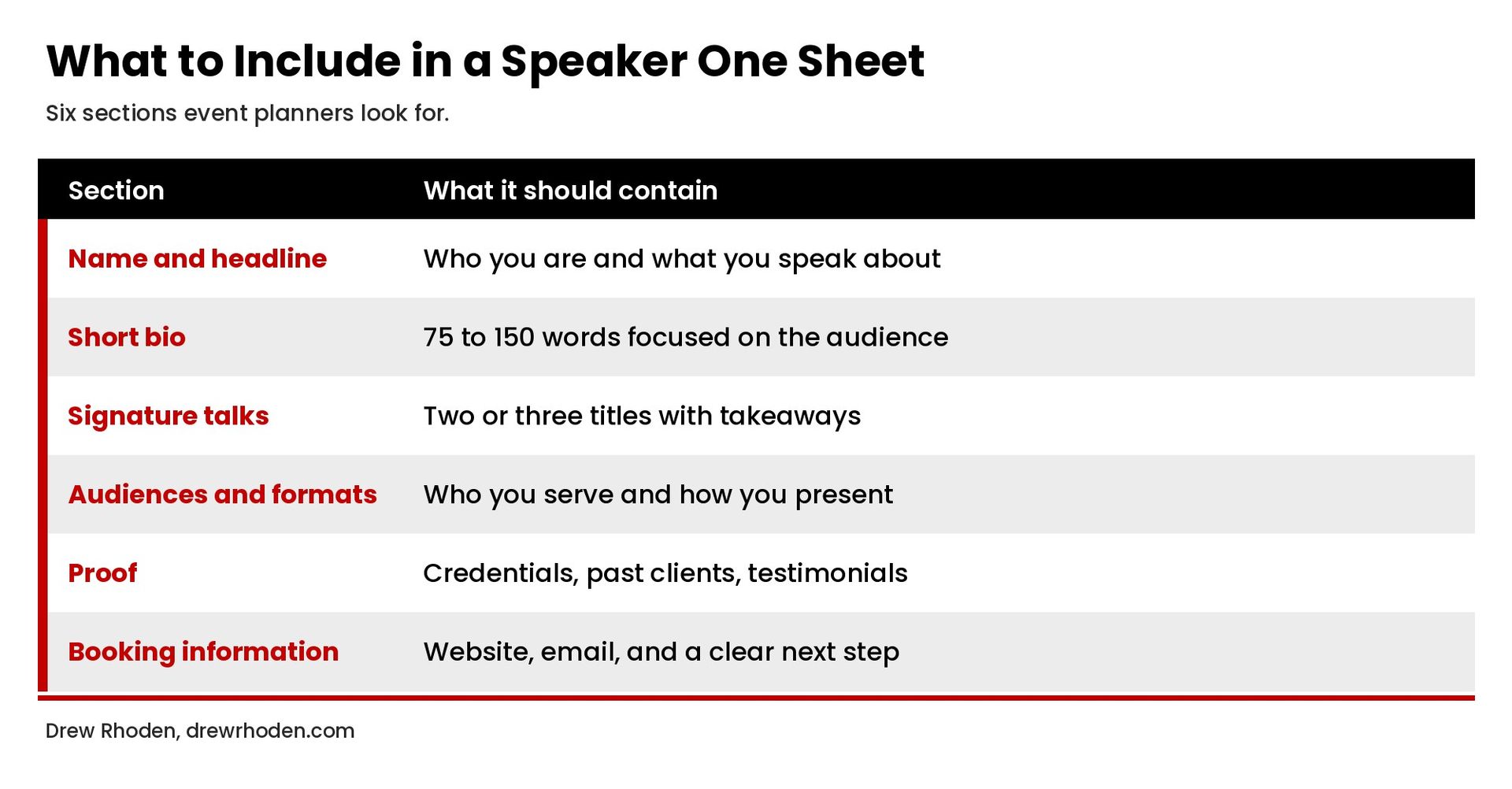
Most effective speaker one sheets include the same core elements. Keep each one concise.
1. Name, headline, and headshot
Start with your name, a professional headshot, and a headline or tagline that tells the reader what you speak about and for whom. A headline such as "Leadership speaker for school and university leaders" is more useful than a generic title.
2. Short speaker bio
Include a short bio of about 75 to 150 words, tailored to the event planners you most want to reach. Focus on the expertise and experience that matter to your target audience. Leave out details that do not help an event planner decide.
3. Signature talks or topics
List two or three signature talks. For each one, include a title, a one or two sentence description, and the key takeaways the audience will leave with. Event planners want to see the value for their crowd, not just a topic. Show what each presentation will deliver and why the audience should want to hear it.
4. Audiences and formats
State who you speak to, such as corporate teams, educators, students, women's leadership groups, or entrepreneurs, and the formats you offer: keynote, workshop, panel, fireside chat, or emcee. If you host conversations, our guide to the fireside chat format explains how that session style works.
5. Credibility and proof
Add the proof points that make you credible. These can include:
- Credentials and education relevant to your topics
- Past clients or organizations you have spoken for, with permission
- Testimonials from event planners or attendees
- Awards or recognition, if they are current, true, and verifiable
- Media appearances , books, or published work
Only include claims you can verify. An event planner may check them.
6. Booking information and call to action
End with clear booking information: your website, email, and a booking link or contact page. Add a simple call to action, such as "Check availability for your event date." Make it easy for an interested reader to take the next step.
How to Create a Speaker One Sheet Step by Step
Here is a simple process to create a speaker one sheet:
- Define your target audience. Decide which event planners and audiences the one sheet is for. If you speak to very different audiences, consider separate versions.
- Write the headline first. In one line, say what you speak about and who it helps.
- Draft the bio and talk descriptions. Write more than you need, then cut until only what matters remains.
- Gather proof. Collect testimonials, client names you have permission to use, and credentials.
- Choose a clean layout. Use a template or work with a designer. Pick images that look like you on stage, not stock photos. Keep generous white space so the page is easy to scan.
- Add your booking details and link. Include your website and a link to a booking or contact page.
- Proofread and test. Print it, view it on a phone, and ask someone outside your field whether it is clear what you speak about.
- Export and post. Save a PDF, post it on your speaker website, and keep the file ready to send.
Design Tips That Help Your One Sheet Stand Out
The design of a one sheet should support the content, not compete with it.
- One page only. If it does not fit on one page, edit the text rather than shrinking the font.
- Strong visual hierarchy. Your name and headline should be the first thing the reader sees.
- Brand consistency. Use the same colors, fonts, and photos as your website so the one sheet feels like part of your brand, whether it is read by a corporate planner or by organizations in education.
- Readable on screen and in print. Many planners read on a phone first, then print for a meeting.
- Clickable links. In the PDF version, make your website and booking link clickable.
Common Speaker One Sheet Mistakes
Avoid these mistakes that cost speakers bookings:
- Writing a resume instead of a sales piece. List the few details that help the reader decide.
- Vague talk descriptions. "Inspiring and motivating" does not tell the planner what the audience will learn.
- Too much text. A crowded page is hard to scan.
- Missing booking information. If the reader cannot find how to reach you, they move on.
- Outdated details. Review your one sheet regularly so testimonials, clients, and talks stay current.
- Unverifiable claims. Credibility matters more than impressive wording. Your success on stage is the best proof, so point to video where you can.
How to Use Your Speaker One Sheet
Once you create it, put the one sheet to work. Here are more ideas to encourage planners to take the next step:
- Post it on your speaker website with a clear download link.
- Attach it to speaking inquiries and proposals.
- Share it with speaker bureaus and event planners you meet.
- Add a link to it in your email signature.
- Bring printed copies to conferences where you are networking with organizers.
If you are an event planner hiring a speaker, the event planner support page explains how the planning process works and what information helps before an engagement. It gives you access to the details that make booking easier.
Frequently Asked Questions
What is a speaker one-sheet?
A speaker one-sheet is a one page document that summarizes a speaker's bio, signature talks, credentials, testimonials, and booking information so event planners can quickly decide whether the speaker fits their event.
How do you create a speaker sheet?
Define your target audience, write a clear headline, draft a short bio and two or three talk descriptions, gather proof such as testimonials, choose a clean one page layout, and add your booking information and link.
What is the purpose of a one-sheet?
The purpose of a one-sheet is to give a busy reader the key information in one place so they can decide quickly whether to take the next step. For speakers, the next step is usually a booking conversation.
How long should a speaker one sheet be?
One page. That limit forces you to focus on what matters most to event planners.
Should a speaker one sheet include fees?
Many speakers leave fees off the one sheet and discuss them after learning about the event, since fees can depend on the format, travel, and scope. This is a personal choice.
Book a Speaker Who Is Prepared
A strong speaker one sheet shows an event planner that you are prepared, focused on their audience, and easy to work with. If you are planning an event and want to learn about my keynote speaking, contact me to check availability.
share this
Related Articles
Related Articles