





How to Introduce a Speaker: Steps, Examples, and Mistakes to Avoid
Knowing how to introduce a speaker is a small skill with a big effect on an event. A good introduction takes about a minute, but it sets the tone for everything that follows. It tells the audience why this speaker, why this topic, and why now. It helps establish credibility before the speaker says a word, and it creates a smooth transition from the host to the stage.
A weak introduction does the opposite. A long list of credentials read word for word, a mispronounced name, or a joke that falls flat can drain the energy from the room before the talk begins. This guide covers how to introduce a speaker step by step, what to include, how long the introduction should be, examples you can adapt, and the mistakes to avoid, whether you are introducing a keynote speaker at a conference or a guest speaker at a team meeting.

Why the Speaker Introduction Matters
A speaker introduction serves three purposes.
- It prepares the audience. People arrive from other sessions, conversations, and emails. The introduction tells them what they are about to hear and why it matters to them.
- It makes the speaker credible. A host who explains the speaker's expertise gives the audience a reason to listen. The speaker does not have to spend the first minutes of the speech proving they belong on stage.
- It builds excitement. A welcoming, confident introduction tells the room that something worth their attention is about to happen.
From the speaker's side of the podium, a well prepared introduction is a gift. It lets the speaker start with the message instead of with their resume. That is the real power of a good introduction: it does two things at once, preparing the audience to listen and giving the speaker a running start.
How to Introduce a Speaker in Five Steps
Whether you are introducing a keynote speaker, a guest speaker, or a colleague giving a presentation to the team, the process is the same. Here is how to introduce a speaker so the audience is ready to listen.
1. Get the speaker's introduction in advance
Ask the speaker for a written introduction or a short speaker bio at least a week before the event. Many speakers keep a version written to be read aloud. Our guide to the speaker bio explains the difference: a bio is written to be read, while an introduction is written to be spoken.
If the speaker sends only a long bio, choose the details that matter most to this audience. Then send your draft back and ask the speaker to confirm it is accurate.
2. Confirm the details
Check the pronunciation of the speaker's name, their title, their organization, and the title of the talk. If you are unsure, ask. Getting a name wrong is the fastest way to undermine an otherwise good introduction.
3. Answer three questions
A strong introduction answers three questions the audience is quietly asking:
- Why this topic? Connect the subject to the audience's work or life.
- Why this speaker? Share two or three key points of expertise or experience that relate directly to the topic.
- Why now? Tie the talk to the event theme, a current challenge, or something the audience cares about this week.
4. Write it to be spoken
Use short sentences, because the audience will hear the introduction, not read it. Avoid long lists of degrees, awards, and dates. Pick the one or two credentials that matter most for this audience, and add a single human detail if the speaker is comfortable sharing it.
5. Practice and hand off with energy
Read the introduction out loud at least twice before the event. Time it. On the day, look at the audience, not just your notes. End by saying the speaker's name clearly, lead the applause, and welcome the speaker to the stage. Wait at the podium until the speaker arrives, then step aside.
What to Include in a Speaker Introduction
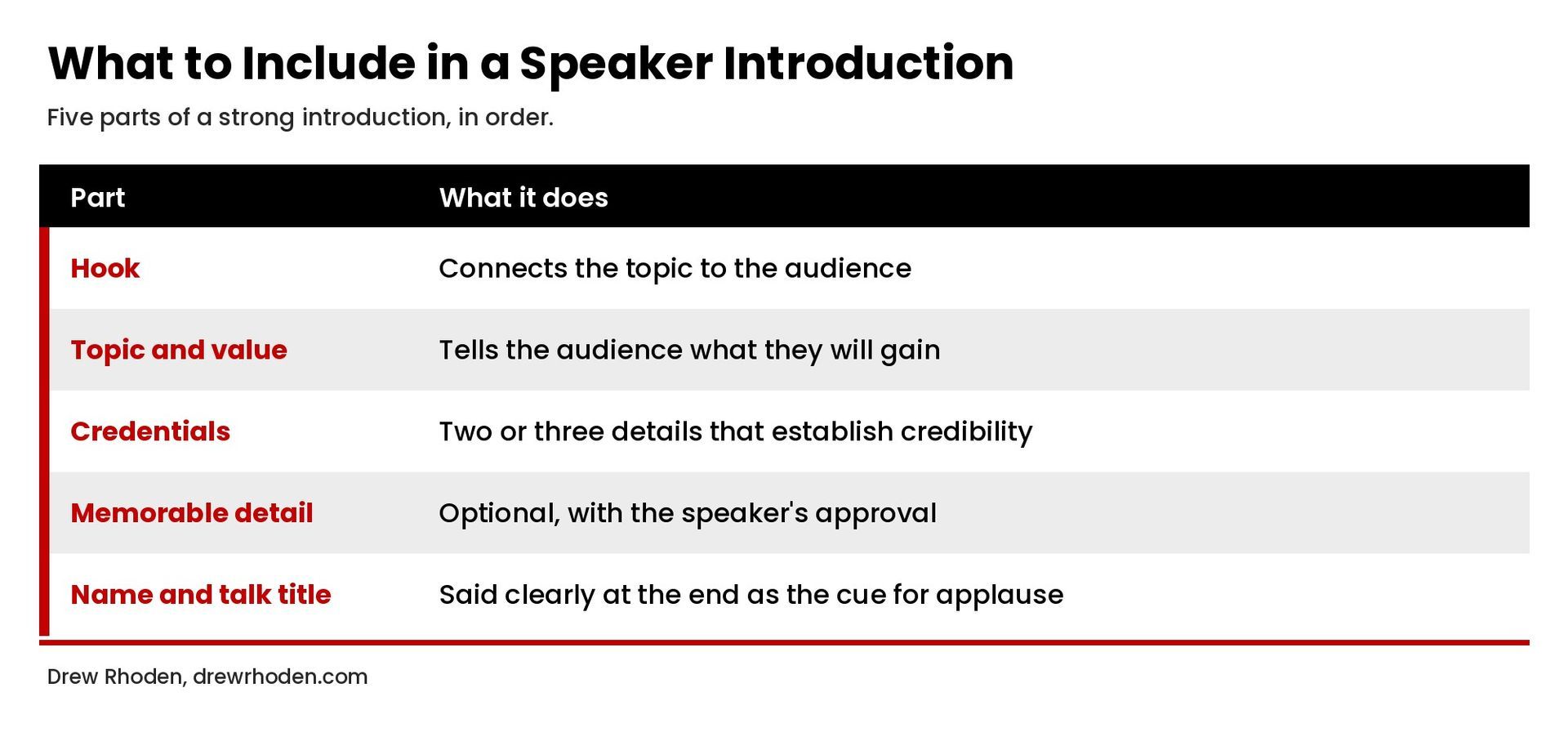
A good introduction usually includes:
- A hook. A short question, fact, or statement that connects the topic to the audience.
- The topic and its value. What the audience will gain from the talk.
- Relevant credentials. The expertise that makes the speaker credible on this subject.
- One personal or memorable detail. Optional, and only with the speaker's approval.
- The speaker's name and talk title. Said clearly at the end, as the cue for applause.
How to Introduce a Speaker With Confidence
Many hosts are more nervous about a one minute introduction than the speaker is about a forty minute speech. A few habits help.
- Know the first and last lines by heart. You can glance at notes in the middle, but a confident opening and a clean handoff are what the audience remembers.
- Slow down. Nerves make most people speak faster. Pause after the hook and before the speaker's name.
- Show that you are excited. If you look forward to the talk, the audience will too. Genuine interest communicates more than any adjective.
- Use humor carefully. A light, kind line can relax the room. Avoid jokes at the speaker's expense or humor that needs explaining.
- Acknowledge the audience. A brief welcome, such as thanking people for joining after lunch, connects you to the room before you introduce the speaker.
Good speaker intros are a communication skill like any other. The best advice is simple: prepare, practice, and keep the focus on the speaker and the audience.
How Long Should a Speaker Introduction Be?
For most events, aim for 30 seconds to two minutes, or roughly 75 to 250 written words. A keynote speaker at a large conference may warrant the longer end. A guest speaker at an internal meeting or a panel needs only a few sentences. The introduction serves the talk and should never compete with it. If you find yourself giving a speech of your own, cut it down.
Speaker Introduction Examples
Here are two speaker intros you can adapt. Replace the details with accurate information from the speaker.
Example: introducing a keynote speaker at a conference
"Every leader in this room has watched a good plan stall between the strategy meeting and the work that follows. Our keynote speaker has spent years helping organizations close that gap. She has advised executive teams across several industries, and her work focuses on turning strategy into decisions people can act on the following Monday. Today she will share three practical ways to keep priorities moving when everything feels urgent. Please join me in welcoming [Speaker Name]."
Example: introducing a guest speaker at a meeting
Shorter speaker intros work well for internal meetings, where the audience may already know the speaker's job but not their expertise on this subject.
"This week we have been talking about how we communicate with clients. Our guest speaker leads client service at [Organization] and has built the process their team uses for every new account. She is here to share what has worked and what she would change. Please welcome [Speaker Name]."
Notice what each good introduction does: a hook, a reason to listen, a clear benefit, and the speaker's name at the end.
Common Speaker Introduction Mistakes
- Reading the full bio. A list of every credential is boring and makes the introduction too long.
- Stealing the speaker's material. Do not summarize the talk or tell the speaker's best story.
- Making it about you. A short personal connection is fine. A long story about yourself is not.
- Overpromising. Phrases like "this will change your life" or "the world's leading expert" set expectations the speaker then has to manage.
- Inaccurate details. A wrong title or outdated role is an easy mistake to avoid with one confirmation email.
- Rushing the name. Say the name slowly and clearly. It is the most important word in the introduction.
Tips for Hosts and Event Organizers
- Coordinate with the speaker on the walk-up. Agree on where the speaker will wait and whether they need a moment to set up slides or a microphone.
- Keep it consistent with your event materials. The introduction should match how the speaker is described in the program and on the event page.
- Plan the transition out. Know what happens after the talk, such as questions, a panel, or a break, so you can return to the stage smoothly.
- Thank the speaker afterward. A brief thank you that mentions one idea or concept from the talk shows the audience you were listening and gives the session a clear close.
- Share helpful tips with other hosts. If several people will introduce speakers during a multi-day event, give them a one page guide so every introduction feels consistent.
If you are hosting a panel rather than a single speaker, my guide on how to moderate a panel covers introductions for multiple panelists. For a conversational format, see my guide to the fireside chat.
Frequently Asked Questions
How do you introduce a speaker?
Get an introduction from the speaker in advance, confirm the pronunciation of their name, explain why the topic matters to the audience, share the credentials that make the speaker credible, and end by saying the speaker's name and leading the applause.
What should you say when introducing a speaker?
Say why the topic matters, why this speaker is the right person to address it, and what the audience will gain. Then welcome the speaker by name.
How long should a speaker introduction be?
Usually 30 seconds to two minutes. Shorter for meetings and panels, a little longer for a keynote speaker at a major event.
How do you establish credibility when introducing a speaker?
Choose the two or three credentials or experiences most relevant to the topic and this audience. Specific, accurate details establish credibility more effectively than a long list of titles.
Should the speaker write their own introduction?
Many speakers provide a written introduction, and hosts should ask for one. The host can then shape it for the audience and confirm the final version with the speaker.
Plan an Event With a Speaker Who Prepares
A good introduction is the first step in a strong session. If you are planning a conference, leadership retreat, or school event and want a speaker focused on leadership, discipline, and practical takeaways, visit my keynote speaker page or contact me to talk about your event.
share this
Related Articles
Related Articles