





Mental Health Topics Every College Speaker Should Address and How Andrew Rhoden Delivers Them
Mental health is no longer a side conversation on college campuses. Across colleges and universities, students are facing academic pressure, social comparison, financial stress, and uncertainty about the future. Administrators and faculty understand the importance of bringing in speakers who can address these realities with honesty and depth. The challenge is finding a college speaker who does more than deliver motivational clichés.
Today’s colleges need engaging speakers who can connect with real life challenges. Students want more than inspiration; they want practical strategies they can apply immediately. They want someone who understands the world they are stepping into and who speaks with authenticity. Andrew Rhoden has built his reputation by meeting that need head-on.
As a keynote speaker, Andrew Rhoden focuses on mental health topics that truly matter. His approach blends personal development, leadership insight, and real-world perspective. He speaks in a way that resonates with today’s students while challenging them to grow. For colleges planning their next event, he consistently stands out as the perfect speaker.
Why Mental Health Must Be Central at Every College Event
Mental health concerns are rising across colleges nationwide. College students often struggle silently with anxiety, depression, and burnout. These challenges impact their education, relationships, and long-term success. A college event that ignores these realities misses an opportunity to create a positive impact.
Universities are recognizing that student success is tied directly to emotional well-being. When students feel supported, they perform better academically and socially. Mental health programming is no longer optional; it is essential.
A keynote speaker who addresses these issues thoughtfully can transform a campus atmosphere. The right voice can spark conversations that continue long after the event ends.
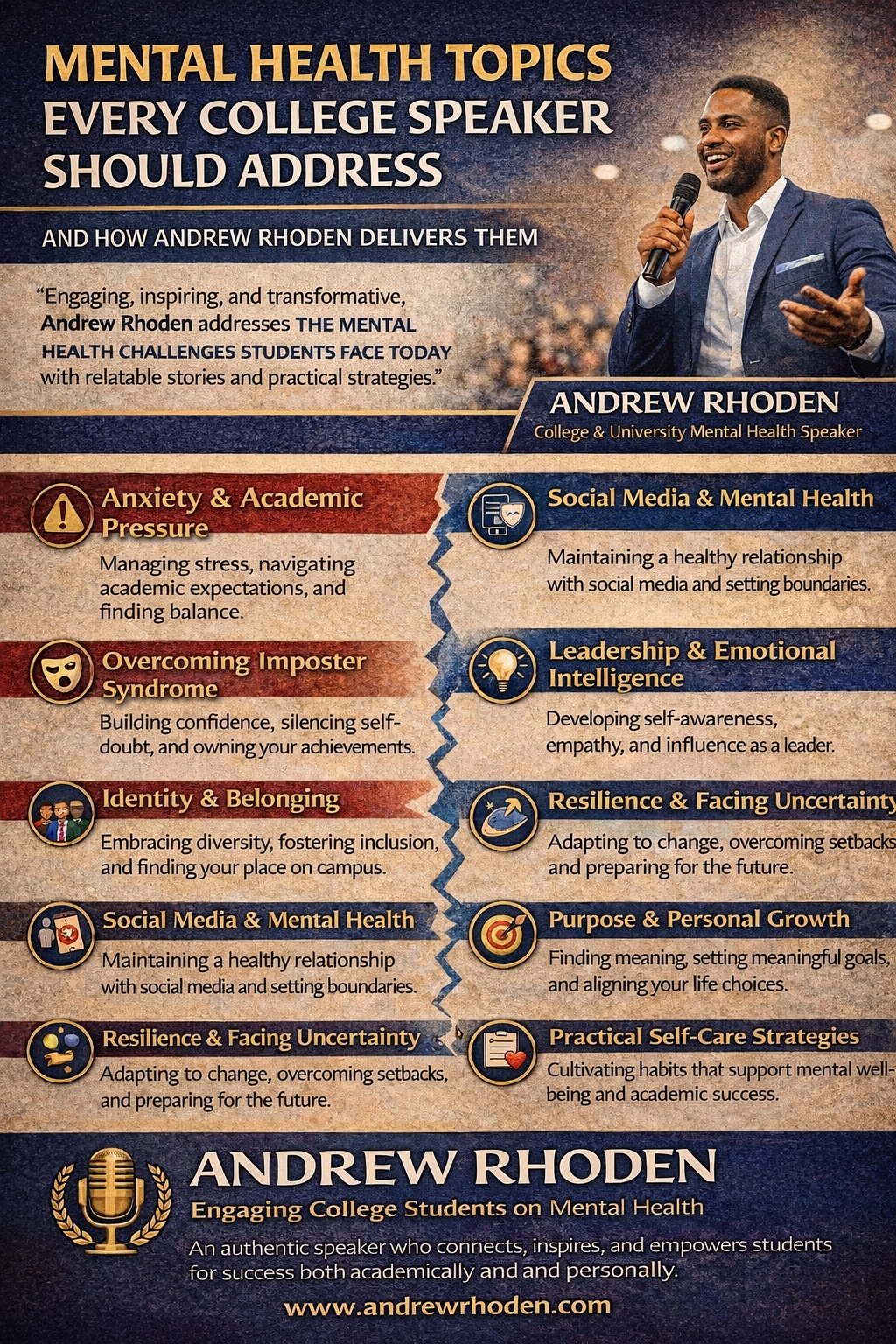
Addressing Anxiety and Academic Pressure
One of the most common challenges on campus is anxiety linked to performance. Many students feel intense pressure to maintain grades, secure internships, and plan for their career. The fear of failure can feel overwhelming.
Andrew Rhoden speaks openly about the power of resilience. He discusses the importance of self-awareness and practical strategies for managing stress. His message reassures students that setbacks are part of growth.
Instead of presenting success as a straight path, he reframes it as a process. This approach empowers students to navigate pressure without losing confidence.
Overcoming Imposter Syndrome in University Life
Imposter syndrome affects students at every level. Whether they attend a large public university or a smaller school, many doubt their own abilities. Even high achievers feel like they do not belong.
As an inspiring keynote speaker, Andrew addresses these hidden insecurities directly. He shares relatable stories and offers tools for building self-trust. His message helps students find their voice and own their accomplishments.
By normalizing doubt and reframing it as growth, he helps students move forward with confidence. This approach has created a lasting impact on many campuses.
The Importance of Identity and Belonging
Colleges are diverse communities with students from different backgrounds, cultures, and experiences. Questions about identity and belonging often shape the college experience. Students want to feel seen and understood.
Andrew Rhoden recognizes the importance of inclusion and empowerment. As a leader and founder, he emphasizes community and shared humanity. He highlights the power of embracing one’s story.
His talks encourage students to lead with authenticity. This message resonates deeply in today’s world.
Navigating Social Media and Mental Health
The digital world adds another layer of pressure. Students compare their lives to curated online images. This constant comparison affects self-esteem and mental health.
Andrew addresses these challenges directly. He speaks about the difference between online perception and real life. His practical strategies encourage students to protect their mental space.
By helping students understand the influence of social media, he provides tools for balance. His message supports healthier engagement in a connected world.
Leadership and Emotional Intelligence
Leadership is not only about titles. It is about self-awareness, empathy, and accountability. Colleges aim to develop the next generation of leaders who can make a positive impact.
Andrew Rhoden emphasizes leadership rooted in emotional intelligence. As a visionary leader and co founder of initiatives focused on growth, he shares lessons that apply beyond campus. His talks inspire students to lead with integrity.
He demonstrates that true leadership begins with personal development. This perspective prepares students for future success.
Resilience in the Face of Uncertainty
The world is constantly changing. From economic shifts to global events, students are entering an unpredictable future. Many feel uncertain about their career path and long-term goals.
Andrew speaks about resilience as a life skill. He draws on his experience as an award winning communicator and professional leader. His message encourages adaptability and innovation.
Students leave his sessions feeling ready to face challenges rather than fear them. That mindset shift can shape their entire future.
The Role of Purpose in Personal Development
Purpose gives direction to life. Without it, students may drift through their education without clarity. Finding purpose can feel overwhelming.
Andrew helps students identify what truly matters to them. His approach combines reflection with action. He encourages them to align their education with their passion.
By connecting purpose to daily choices, he inspires students to take ownership of their journey.
How Andrew Rhoden Connects With Today’s Students
Many speakers attempt to motivate through impressive resumes. Some highlight awards such as an academy award, tony award, or grammy award. Others reference connections to figures like president barack obama or president joe biden.
Andrew Rhoden’s credibility is rooted in authenticity. While he is a respected leader, founder, and co host in professional circles, his strength lies in connection. He speaks in a way that feels personal and relatable.
Students do not feel lectured. They feel understood.
A Different Kind of College Speaker
Andrew Rhoden is not just another name on a curated list of speakers. He understands the campus environment and the challenges students face. As an inspiring keynote speaker, he prioritizes connection over performance.
He has worked alongside organizations that value education and empowerment. His commitment to inspiring students is evident in every event. Colleges seeking engaging speakers often discover that his presence elevates the entire experience.
He does not simply deliver a speech. He creates a shared moment.
Inspiration Backed by Practical Strategies
Motivation fades if it lacks direction. Andrew balances inspiration with action. He provides practical strategies that students can apply immediately.
From goal setting to communication skills, he offers clear steps forward. His sessions are structured to ensure students leave with tangible tools. This balance between inspiration and practicality sets him apart.
Students walk away with more than emotion; they leave with a plan.
Creating a Lasting Impact on Campus
The true measure of a speaker is the lasting impact they create. Faculty and administrators often report continued conversations after Andrew’s events. Students reflect on his message in classrooms, residence halls, and student organizations.
His ability to lead meaningful discussions fosters ongoing growth. The campus community benefits long after the event concludes.
Colleges looking for a speaker who inspires and transforms will find that Andrew Rhoden consistently delivers.
Learning From Award Winning Journalists, Authors, and Thought Leaders
When colleges search for speakers, they often look at individuals who are an award winning journalist, a york times bestselling author, or even a york times bestseller recognized by the New York Times for cultural impact. While credentials such as bestselling author or best selling author status can attract attention, what truly matters is how those experiences translate into meaningful conversations for students. Influential voices—from a harvard professor analyzing current affairs to a political commentator discussing politics on national platforms—shape public dialogue, but campuses need speakers who can make those insights accessible and practical.
Whether someone has spoken at georgetown university, collaborated with a national association, worked as a writer, activist, director, or educator, or even drawn inspiration from figures like angelina jolie and other leaders in social justice, the goal is connection. Stories about overcoming adversity—such as a deaf superhero redefining possibility, a first woman breaking barriers, or athletes earning silver medals—carry power because they are rooted in real history and lived experience. In a digital age where ideas can generate billion views across platforms, students still value authenticity above titles, and colleges benefit most when a speaker transforms recognition into relevance.
Your College Speaker to Inspire and Motivate Inspiring Students
Andrew Rhoden’s mission is simple: to inspire students to unlock their full potential. His talks go beyond motivation, offering practical guidance and relatable stories that resonate with today’s students. Whether addressing aspiring leaders at a large university or welcoming freshmen at a smaller school, he ensures every audience feels seen.
He understands the challenges colleges face in supporting student mental health. His passion for empowerment and leadership shines through every presentation. When planning your next event, choosing a speaker who can truly connect makes all the difference.
Contact us at (888) 209-4055 to book a free consultation. Let us discuss how Andrew Rhoden can bring inspiring, meaningful impact to your campus and help your students step confidently into their future. This article is provided for informational purposes only and does not constitute professional advice.
share this
Related Articles
Related Articles