





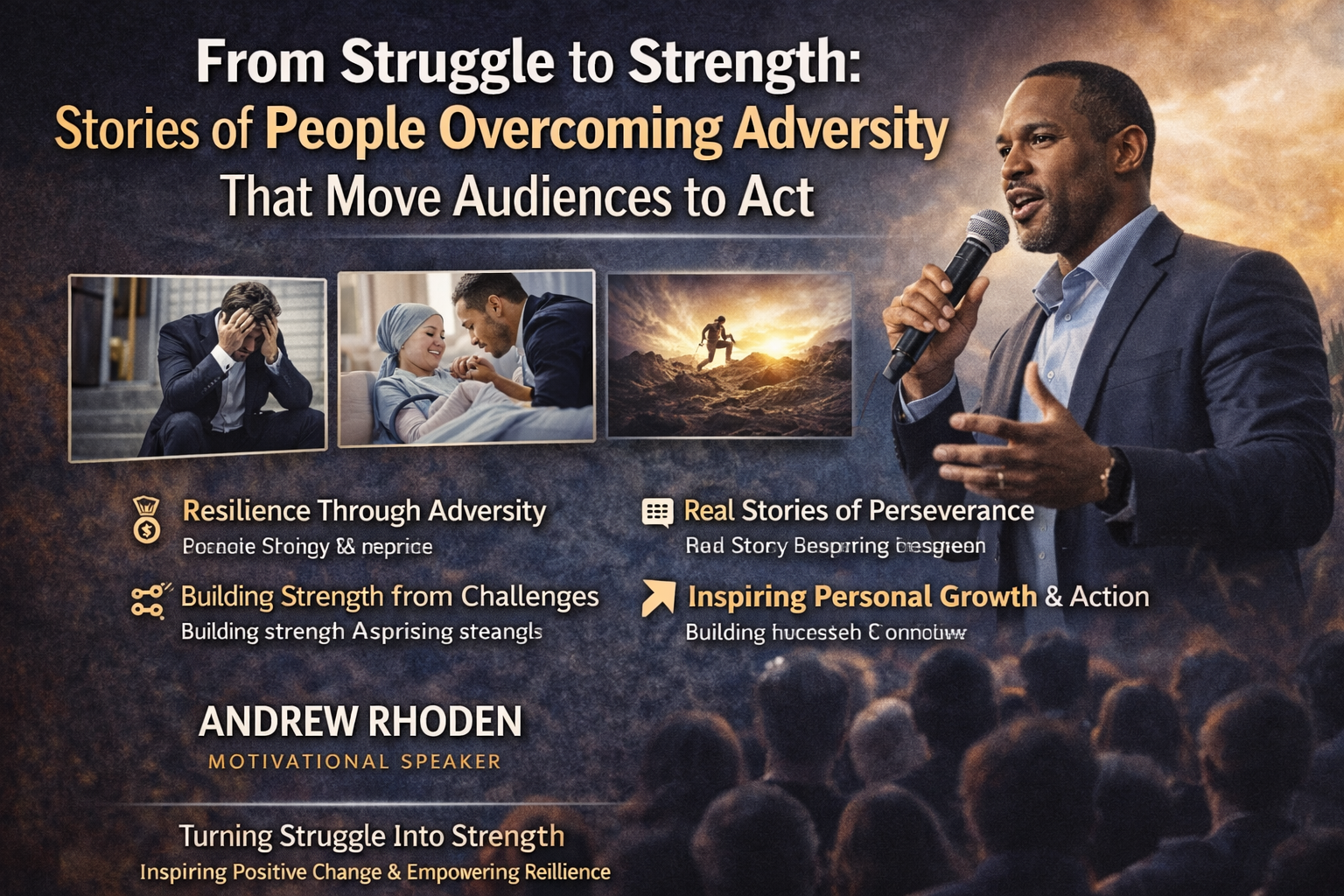
From Struggle to Strength: Stories of People Overcoming Adversity That Move Audiences to Act
There are moments in life when everything seems to shift without warning. A job is lost, a diagnosis is delivered, a relationship ends, or an unexpected hardship reshapes the future. In those moments, adversity feels heavy and personal. Yet it is also in those moments that the seeds of overcoming adversity begin to grow.
Audiences do not connect to polished perfection. They connect to real stories of challenge, perseverance, and growth. When people hear authentic accounts of overcoming adversity, something inside them changes. They begin to believe that if one person can overcome a difficult situation, they can too.
Emotionally charged storytelling has the power to move human beings beyond passive listening. It creates a sense of shared experience and reminds us that adversity is part of the human condition. When speakers share how they overcome obstacles in their own life, audiences listen differently. They lean in, reflect, and often take action.
Why Stories of Overcoming Adversity Resonate So Deeply
Stories about overcoming adversity resonate because they reflect everyday life. Most people have faced a challenge that tested their courage and confidence. When adversity strikes, it can make even the strongest person feel overwhelmed. Hearing how others navigate life’s challenges creates connection and understanding.
Research shows that storytelling activates emotion and memory in powerful ways. Instead of simply presenting facts, stories allow listeners to step into another person’s journey. This creates empathy and encourages a mindset shift. Audiences begin to see their own difficulties from a new perspective.
Stories of overcoming adversity also highlight the strength of the human spirit. They show that even when circumstances seem impossible, resilience can develop. In the right moment, a story becomes more than entertainment. It becomes a catalyst for change.
The Emotional Journey From Adversity to Resilience
Every story of overcoming adversity follows a process. There is the initial challenge, the struggle, and eventually the growth that comes from perseverance. This journey is not smooth or predictable. It is often filled with doubt, fear, and destructive thinking.
When speakers openly acknowledge what happened in their past, audiences trust them more. They do not pretend that adversity was easy. They share the emotions, the setbacks, and the moments when they nearly gave up. That honesty builds credibility.
Building resilience is not about ignoring pain. It is about learning to respond differently. Through resilience and perseverance, a person can move from hardship to strength. That transformation inspires others to develop their own resilience in the face of adversity.
Overcoming Adversity in Everyday Life
Overcoming adversity is not limited to dramatic events. It shows up in everyday life through workplace stress, family conflict, financial pressure, or health concerns. Chronic stress can quietly erode well being and confidence. Yet even small victories over daily obstacles contribute to growth.
When people overcome adversity in ordinary settings, they develop practical skills that serve them in the future. They learn to focus on solutions rather than problems. They become more prepared for the next challenge. Over time, these experiences shape a resilient mindset.
Successful people are not those who avoid adversity. They are individuals who learn from difficult times and grow wiser. They understand that each challenge presents an opportunity to develop strength and perseverance.
Building Resilience Through a Growth Mindset
A growth mindset plays a crucial role in overcoming adversity. Instead of viewing a challenge as a permanent failure, resilient individuals see it as a temporary setback. This mindset shift allows them to maintain control over their response.
Building resilience requires intention and practice. It involves recognizing destructive thinking patterns and replacing them with constructive beliefs. When adversity strikes, the ability to pause and choose a new perspective can change the entire outcome.
Speakers who share how they developed resilience often provide practical steps for audiences. They discuss the right tools and strategies that helped them overcome obstacles. This combination of story and strategy empowers listeners to apply the lessons in their own life.
Practical Strategies That Help People Overcome
Emotionally powerful stories are most effective when paired with actionable strategies. Audiences want to know how to overcome adversity, not just that it is possible. They seek guidance on how to navigate life’s challenges with courage and confidence.
Some of the most impactful strategies include:
- Developing a strong support system and social support network
- Seeking professional help when needed
- Practicing reflection to understand emotions
- Setting small goals to regain a sense of control
- Focusing on building resilience through daily habits
When these strategies are woven into stories of overcoming adversity, they feel attainable. Listeners realize that growth is not abstract. It is the result of deliberate effort and perseverance.
The Role of Support in Facing Adversity
No one overcomes adversity alone. Support from family, friends, mentors, or colleagues plays a vital role in building resilience. Social support provides encouragement during tough times and helps individuals maintain hope.
When speakers acknowledge the people who supported them, it reinforces the importance of community. It reminds audiences that asking for help is not weakness. It is a strategic step in overcoming adversity.
Organizations that host speakers focused on resilience often see a shift in workplace culture. Employees feel more connected and willing to support one another. This strengthens both individual well being and team performance.
Andrew Rhoden: Speaking From Experience
Andrew Rhoden is more than just a speaker. He is a motivator who speaks from experience, offering real-world insights that resonate deeply. His journey of overcoming adversity in his own life reflects perseverance, courage, and unwavering focus.
Through his speeches, Andrew shares how adversity shaped his perspective and strengthened his resilience. He does not avoid discussing difficult times, including moments of hardship and loss. Instead, he highlights how each challenge prepared him for greater success.
With an impressive career as a professional speaker, Andrew Rhoden has become recognized as a thought leader in motivational speaking. His ability to inspire audiences to take bold action is rooted in authenticity. He connects because he has lived the struggle and learned from it.
Turning Struggle Into Strength
Andrew’s message centers on the idea that overcoming adversity is a process of transformation. When a difficult situation arises, it tests not only skill but character. Through perseverance and building resilience, individuals can discover hidden strength.
He often shares examples of how facing adversity led to unexpected growth. These stories demonstrate that even painful moments can create new opportunities. By reframing adversity as a test rather than a defeat, audiences gain a powerful mindset shift.
His speeches encourage listeners to step outside their comfort zone. Growth requires courage, and courage often emerges during difficult times. When people hear how Andrew overcame obstacles, they begin to believe they can overcome their own.
Inspiring Action Through Emotion and Focus
The most inspiring speakers do more than motivate temporarily. They drive real behavior change. Andrew Rhoden focuses on helping audiences develop the skills needed to overcome future challenges with confidence.
He challenges attendees to reflect on what happened in their past and how it shaped them. Instead of allowing hardship to define their identity, he encourages them to take control of their narrative. This sense of empowerment builds resilience.
By combining emotional storytelling with clear strategies, Andrew ensures that audiences leave prepared. They do not just feel inspired in the moment. They feel equipped to navigate life’s challenges with renewed focus and determination.
Lessons Learned From Difficult Times
Difficult times often teach lessons that success alone cannot provide. When adversity strikes, it forces a person to confront fears and limitations. In doing so, they often discover new abilities and deeper understanding.
Andrew emphasizes that overcoming adversity requires perseverance and patience. Growth does not happen overnight. It develops through consistent effort and reflection.
He reminds audiences that most people underestimate their own ability to overcome. With the right mindset, support, and strategies, even the most overwhelming obstacles can become stepping stones toward a stronger future.
Moving Forward With Strength and Purpose
When a speaker shares authentic stories of overcoming adversity, the impact extends beyond the stage. Attendees leave with a renewed sense of hope and purpose. They realize that adversity does not signal the end of possibility.
Instead, adversity can mark the beginning of transformation. With resilience, perseverance, and courage, individuals can develop skills that carry them through future challenges. They can live life with greater confidence and clarity.
Stories that move audiences to act are those that acknowledge pain while highlighting possibility. They inspire human beings to believe in their power to overcome, to grow, and to build a meaningful future.
Invite Inspiration Into Your Organization
If you are seeking a speaker who can connect deeply with your audience and drive meaningful change, Andrew Rhoden delivers more than motivation. He delivers understanding, practical strategies, and real examples of overcoming adversity.
Andrew’s presentations are designed to inspire resilience, build confidence, and empower individuals to overcome obstacles in both personal and professional life. His focus on building resilience and navigating life’s challenges creates lasting impact.
Contact us at (888) 209-4055 to book a free consultation. Let us discuss how Andrew Rhoden can inspire your team to transform adversity into strength and take bold action toward a brighter future.
share this
Related Articles
Related Articles