




How a School Speaker Helps Students Build Leadership Skills That Last Far Beyond Graduation
The impact of a powerful message can stay with a person long after the applause fades. In schools across the country, educators are looking for meaningful ways to equip students with leadership skills that extend far beyond the classroom. Academic instruction is essential, but real-world leadership, character development, and emotional resilience require something more.
That is where a dynamic school speaker can make a lasting difference. When guest speakers for schools are chosen carefully, they do more than motivate for a day. They influence mindsets, shift school culture, and empower students to take ownership of their own lives.
Andrew Rhoden, an experienced and passionate school speaker, delivers impactful presentations tailored for high school students, middle school students, and educators. Known for his engaging style and deep understanding of student challenges, Andrew inspires positive change and motivates young people to reach their fullest potential.
The Long-Term Value of Leadership Development in Schools
Leadership is not a single skill. It is a combination of self discipline, communication, emotional awareness, and the ability to influence others positively. When schools invest in youth motivational speakers who focus on student leadership, they invest in long-term student outcomes.
Students who develop leadership skills early often perform better academically and socially. They demonstrate higher levels of self belief, resilience, and responsibility. These traits follow them into higher education and future careers.
Schools that prioritize leadership development strengthen their entire community.
Why Guest Speakers for Schools Matter
Guest speakers for schools bring a fresh voice into the building. Teachers work tirelessly every school year to guide students, but an outside perspective can reinforce key lessons in a new way.
Motivational speakers introduce stories, insights, and practical tools that students may not hear in their regular classes. This outside influence can spark a deeper understanding of personal responsibility and purpose.
The right guest speaker does more than entertain; they create meaningful reflection.
Andrew Rhoden’s Approach to Student Leadership
Andrew Rhoden is more than a keynote speaker. He is a co founder of initiatives focused on empowering the next generation. With extensive experience working with diverse age groups, Andrew delivers high energy presentations that resonate with today’s students.
His personal journey, including overcoming adversity and navigating childhood trauma, allows him to connect authentically. Students feel seen and understood, not lectured. That connection creates lasting impact.
Andrew’s presentations are carefully tailored to match specific grade levels and school goals.
Building Confidence and Self Esteem
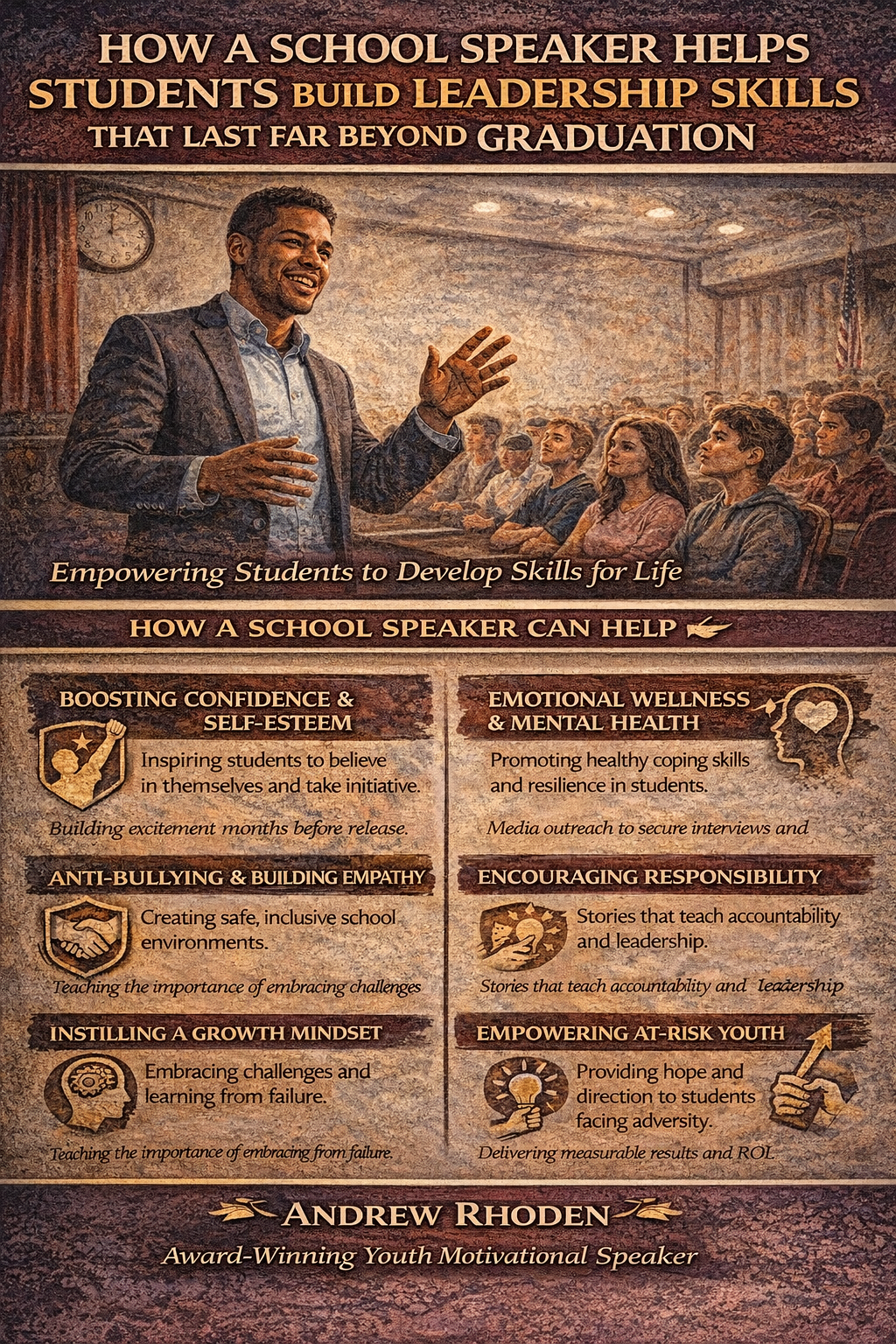
Self esteem is at the core of leadership. Students who believe in themselves are more likely to take initiative and support others. Youth motivational speakers like Andrew focus on strengthening self belief through relatable stories and interactive engagement.
By addressing peer pressure, social emotional learning, and mental health awareness, Andrew helps students recognize their value. He empowers students to see themselves as leaders within their own circles.
Confidence built in middle school and high school often shapes future success.
Addressing Mental Health and Emotional Wellness
Mental health is a growing concern for schools nationwide. Student mental health directly affects academic excellence, attendance, and overall well-being. Motivational speakers who understand mental health awareness help create safe spaces for open dialogue.
Andrew integrates emotional wellness and suicide prevention discussions into his presentations in an age-appropriate way. Students feel encouraged to seek help and support one another.
Creating safe spaces strengthens school culture and reduces stigma.
Bullying Prevention and Anti Bullying Leadership
Bullying prevention and anti bullying education are essential for safe learning environments. Youth motivational speakers who address bullying prevention can shift how students interact with one another.
Andrew emphasizes character education, empathy, and accountability. He challenges student leaders to model respect and inclusion.
When students become advocates for kindness, schools see a decrease in school violence and risky behaviors.
Empowering AT-RISK Youth
At risk youth often struggle with feelings of isolation or limited opportunity. A powerful school speaker can provide hope and direction.
Andrew’s message of overcoming adversity speaks directly to at risk students. His life story demonstrates that circumstances do not define destiny.
By providing students with encouragement and practical tools, schools can transform negative narratives into positive change.
Developing Growth Mindset in Students
A growth mindset teaches students that effort and persistence lead to improvement. Student leadership speakers frequently emphasize this principle because it shapes long-term success.
Andrew encourages young people to view setbacks as learning opportunities. This perspective builds resilience and self discipline.
Students who adopt a growth mindset carry that belief into college, careers, and personal relationships.
Strengthening School Culture Through Leadership
School culture reflects the collective mindset of students and staff. Motivational speakers who align with school values can positively influence that culture.
Andrew collaborates with administrators and teachers to ensure presentations support character education and leadership initiatives.
When students feel connected to a shared mission, engagement increases.
Interactive Student Workshops and Assemblies
Student assemblies create shared experiences across grade levels. Student workshops allow for deeper exploration of topics like leadership and emotional intelligence.
Andrew’s interactive style encourages participation rather than passive listening. Students respond to discussions, activities, and real-life examples.
This engagement increases retention and inspires students to apply lessons immediately.
Supporting Teachers and Staff
Teachers are the backbone of education. Motivational speakers can also provide staff training focused on student engagement and emotional wellness.
Andrew works with educators to reinforce leadership themes throughout the school year. His collaboration ensures consistency between assemblies and classroom practices.
When staff and students share common goals, progress accelerates.
Addressing Current Challenges Facing Young People
Today’s students face unique challenges, from social media pressures to mental health concerns. Youth motivational speakers must address these current challenges authentically.
Andrew speaks openly about peer pressure, body language, communication, and personal responsibility. He meets students where they are rather than ignoring difficult topics.
That honesty builds trust and credibility.
Creating Safe Spaces for Honest Conversations
Safe spaces allow students to speak openly about struggles. Creating safe spaces requires intentional leadership and compassionate communication.
Andrew’s presentations encourage dialogue around mental health, anti bullying efforts, and emotional resilience.
When students feel safe, they are more willing to lead.
Long-Term Benefits Beyond Graduation
Leadership skills learned in high school and middle school extend into adulthood. Students who learn communication, empathy, and accountability become stronger employees and community members.
Youth motivational speakers who focus on long-term impact shape the future workforce. Schools that invest in leadership development contribute to the growth of the next generation.
These benefits ripple outward into families and communities.
Why Schools Choose Andrew Rhoden
Schools choose Andrew because of his authenticity and ability to connect. He is recognized by educators as an award winning teacher advocate and engaging education keynote speaker.
His presentations are tailored for different age groups and school environments. From middle school to high school assemblies, Andrew adjusts his approach to maximize impact.
He is known for inspiring positive change and leaving a lasting impression.
Engaging and Relatable Content
Andrew’s storytelling style is both relatable and impactful. His use of real-world examples keeps students engaged.
Students appreciate hearing from someone who understands their experiences. This relatability strengthens student engagement and leadership growth.
Engagement is the foundation of transformation.
Proven Expertise and Extensive Experience
With extensive experience speaking in schools, Andrew understands the educational environment. He collaborates with administrators to ensure alignment with school initiatives and education policy goals.
His background allows him to connect theory with practice.
This expertise positions him among the best youth motivational speakers working with schools today.
Tailored Presentations for Every School
No two schools are identical. Andrew customizes his presentations to align with each institution’s mission and needs.
Whether focusing on student leadership, bullying prevention, or mental health awareness, he adapts content accordingly.
This flexibility ensures relevance and effectiveness.
Accessibility and Virtual Options
Schools across the country can book Andrew as a guest speaker through in-person or virtual sessions. Virtual options make it possible for schools to stay connected even during unexpected changes like winter break adjustments or scheduling challenges.
Accessibility ensures that every school community has the opportunity to benefit.
Leadership development should not be limited by geography.
Invest in Leadership That Lasts
When schools bring in motivational speakers with purpose, they invest in the future. Leadership skills built during formative years influence career paths, relationships, and civic engagement.
Andrew Rhoden’s message empowers students to lead with integrity and confidence. His presentations encourage self belief, resilience, and personal growth that continues long after graduation.
These are lessons that shape lives.
Book Andrew Rhoden as Your School Speaker
If you are looking for guest speakers for schools who genuinely connect with students and create lasting impact, Andrew Rhoden is ready to serve your community. As one of today’s trusted youth motivational speakers, he brings authenticity, high energy, and meaningful insight to every presentation.
Contact us at (888) 209-4055 to book a free consultation. Let’s discuss how Andrew can support your school’s leadership goals, strengthen school culture, and inspire students to rise beyond expectations.
share this
Related Articles
Related Articles