




Leadership and Public Speaking Training That Helps Leaders Inspire Action and Overcome Resistance
When Leadership Meets Resistance
Every leader eventually faces a moment when their message does not land the way they expected. The room is quiet, the team seems disengaged, and even the strongest ideas struggle to gain traction. This is where leadership and communication truly matter—not just what you say, but how you say it and how it is received.
Leadership is not simply about direction; it is about influence. The ability to inspire action, guide a team, and overcome resistance requires more than authority. It requires presence, clarity, and a deep understanding of people. This is why leadership training and public speaking development are essential for anyone who wants to lead with impact.
Why Leadership and Communication Are Deeply Connected
The Power of Effective Communication in Leadership
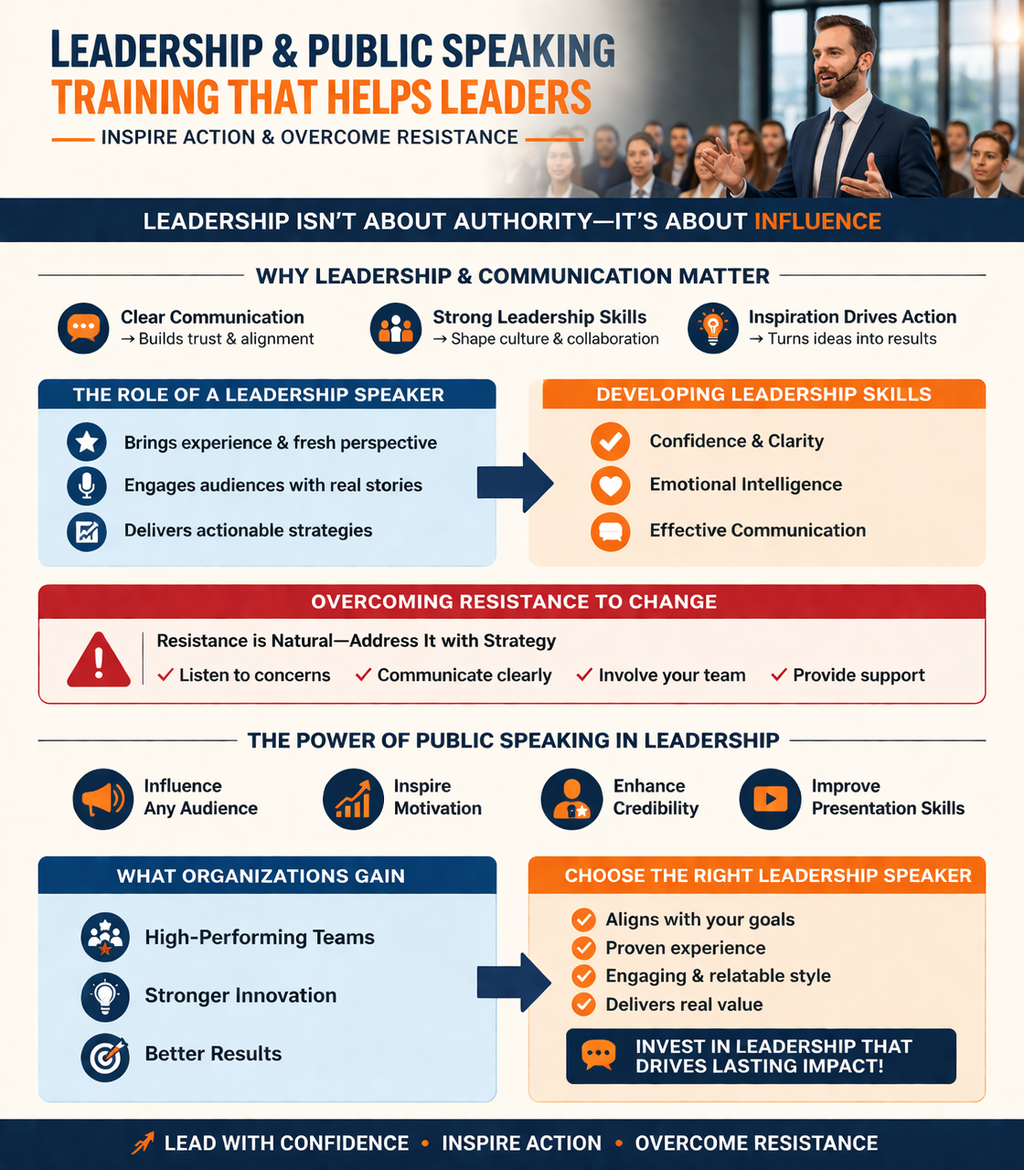
At the core of effective leadership is effective communication. Leaders who can clearly express their vision are more likely to build trust and alignment within their team. Without strong communication skills, even the best strategies can fall flat.
A leadership keynote speaker often emphasizes that communication is not just about speaking—it is about connecting. Leaders must be able to adapt their message to their specific audience, ensuring that it resonates and motivates action. This connection is what transforms ideas into results.
How Leadership Skills Shape Organizational Culture
Leadership skills directly influence organizational culture. When leaders communicate with clarity and purpose, they create an environment where people feel valued and understood. This leads to stronger team dynamics and increased collaboration.
Organizations that invest in leadership development often see a shift in how teams operate. There is a greater sense of accountability, motivation, and shared vision. These changes create a lasting impact across the entire organization.
The Role of a Leadership Speaker in Driving Change
What Makes a Leadership Speaker Effective
A leadership speaker brings more than knowledge—they bring experience, insight, and the ability to inspire. The right leadership speaker understands how to engage an audience and deliver valuable insights that can be applied immediately.
Top leadership speakers combine storytelling, practical strategies, and real-world examples to create an engaging approach. Their ability to connect with audiences sets them apart from other keynote speakers. This connection is what drives meaningful change.
Why Organizations Seek Leadership Keynote Speakers
Organizations often turn to a leadership keynote speaker when they need to address challenges, improve performance, or inspire their teams. These speakers provide fresh perspectives and actionable strategies that help leaders overcome obstacles.
Whether it is a corporate event, a leadership event, or a professional conference, the right leadership keynote speaker can set the tone for success. Their message can influence how teams think, act, and perform.
Developing Leadership Skills That Inspire Action
Building Confidence and Clarity
Leadership training focuses on helping individuals develop confidence and clarity in their communication. Leaders who speak with confidence are more likely to gain the trust of their team. This trust is essential for inspiring action and achieving results.
Through structured training, leaders learn how to present ideas clearly, handle questions effectively, and maintain composure under pressure. These skills are critical for effective leadership.
Strengthening Emotional Intelligence
Emotional intelligence is a key component of leadership development. Leaders who understand emotions—both their own and others’—are better equipped to navigate complex situations.
This skill allows leaders to connect with their team on a deeper level. It also helps them manage conflict, build relationships, and create a positive work environment.
Overcoming Resistance Through Strategic Communication
Understanding Why Resistance Happens
Resistance is a natural response to change. Team members may feel uncertain, overwhelmed, or disconnected from the proposed direction. Leaders must recognize these feelings and address them effectively.
A leadership keynote speaker often highlights that resistance is not a barrier—it is an opportunity. By understanding the root cause, leaders can adjust their approach and build alignment.
Practical Strategies to Overcome Resistance
- Use clear and consistent messaging
- Address concerns openly and honestly
- Involve the team in decision making
- Provide actionable advice and support
These practical tools help leaders turn resistance into cooperation.
The Impact of Public Speaking on Leadership
Why Public Speaking Matters for Leaders
Public speaking is one of the most important skills a leader can develop. Whether addressing a small team or speaking at a large corporate event, the ability to communicate effectively is essential.
Leaders who excel in public speaking can influence their audience, inspire motivation, and drive action. This skill is especially important for leaders in high demand roles.
Enhancing Presentation Style and Delivery
A strong presentation style can make a significant difference in how a message is received. Leaders learn how to use tone, pacing, and body language to enhance their delivery.
This engaging approach ensures that the message is not only heard but remembered. It also helps leaders connect with their audience on a deeper level.
The Value of Real-World Experience in Leadership Training
Learning From Proven Leadership Experts
Leadership experts bring valuable insights based on real-world experience. They understand the challenges leaders face and provide practical strategies that can be implemented immediately.
This experience allows leaders to learn from others who have successfully navigated similar situations. It also provides a unique perspective that goes beyond theory.
The Role of Personal Stories in Leadership Development
Personal stories are a powerful tool in leadership training. They make concepts relatable and memorable. A motivational speaker who shares personal experiences can create a deeper connection with the audience.
These stories help leaders see how strategies can be applied in real situations. They also inspire confidence and motivation.
Creating High Performing Teams Through Leadership
Building Strong Team Dynamics
Leadership training focuses on improving team dynamics and collaboration. High performing teams are built on trust, communication, and shared goals.
Leaders learn how to create an environment where team members feel valued and motivated. This leads to better performance and increased productivity.
Encouraging a Growth Mindset
A growth mindset is essential for continuous improvement. An innovative culture is produced by leaders who welcome change and inspire their team to follow suit.
This mindset helps teams adapt to challenges and pursue new opportunities. It also supports long-term success.
Selecting the Right Leadership Speaker for Your Event
Factors to Consider
Choosing the right leadership speaker requires careful consideration. Organizations should evaluate the speaker’s experience, expertise, and ability to connect with the audience.
Important factors include:
- Alignment with event goals
- Ability to deliver actionable strategies
- Strong communication skills
- Relevant industry experience
Selecting the perfect speaker ensures that the event delivers value.
Understanding Fee Range and Value
The fee range for keynote speakers can vary based on experience and demand. While cost is an important factor, the value delivered should also be considered.
Top leadership speakers provide insights that can lead to measurable results and lasting impact. Investing in the right speaker can benefit the entire organization.
Inspiring Future Leaders and Lasting Change
Developing Future Leaders Within Organizations
Leadership training is not just for current leaders—it is also for future leaders. Investing in development helps prepare individuals for leadership roles and responsibilities.
This approach ensures that organizations have a strong pipeline of talent. It also supports long-term growth and stability.
Creating a Lasting Impact
The goal of leadership training is to create a lasting impact. Leaders who apply what they learn can drive positive change within their organization.
This impact extends beyond the workplace, influencing professional lives and personal growth.
Moving Forward With Purpose and Confidence
Leadership is a journey that requires continuous learning and growth. By investing in leadership development and public speaking training, leaders can enhance their ability to inspire action and overcome resistance.
The most effective leaders understand that people matter. They prioritize communication, build strong relationships, and lead with purpose. These qualities create a greater sense of connection and drive meaningful results.
Work With Andrew Rhoden for Your Next Event
Join the journey with Andrew Rhoden, a celebrated keynote speaker and legal luminary known for his expertise in leadership, business development, and empowering organizations to achieve success. As a leadership keynote speaker and motivational speaker, Andrew Rhoden delivers powerful presentations that combine real-world experience with forward-thinking strategies.
Andrew has worked with organizations across industries, providing keynote speaking services for corporate leadership events, business seminars, and academic conferences. His engaging approach, combined with actionable strategies, helps leaders embrace change, strengthen their leadership style, and build high performing teams.
If you are looking for the right leadership speaker for your next event, Andrew Rhoden is ready to help your organization create a profound impact.
Contact us today at (888) 209-4055 to book a free consultation and discover how a dynamic leadership keynote speaker can elevate your team and drive lasting success.
share this
Related Articles
Related Articles