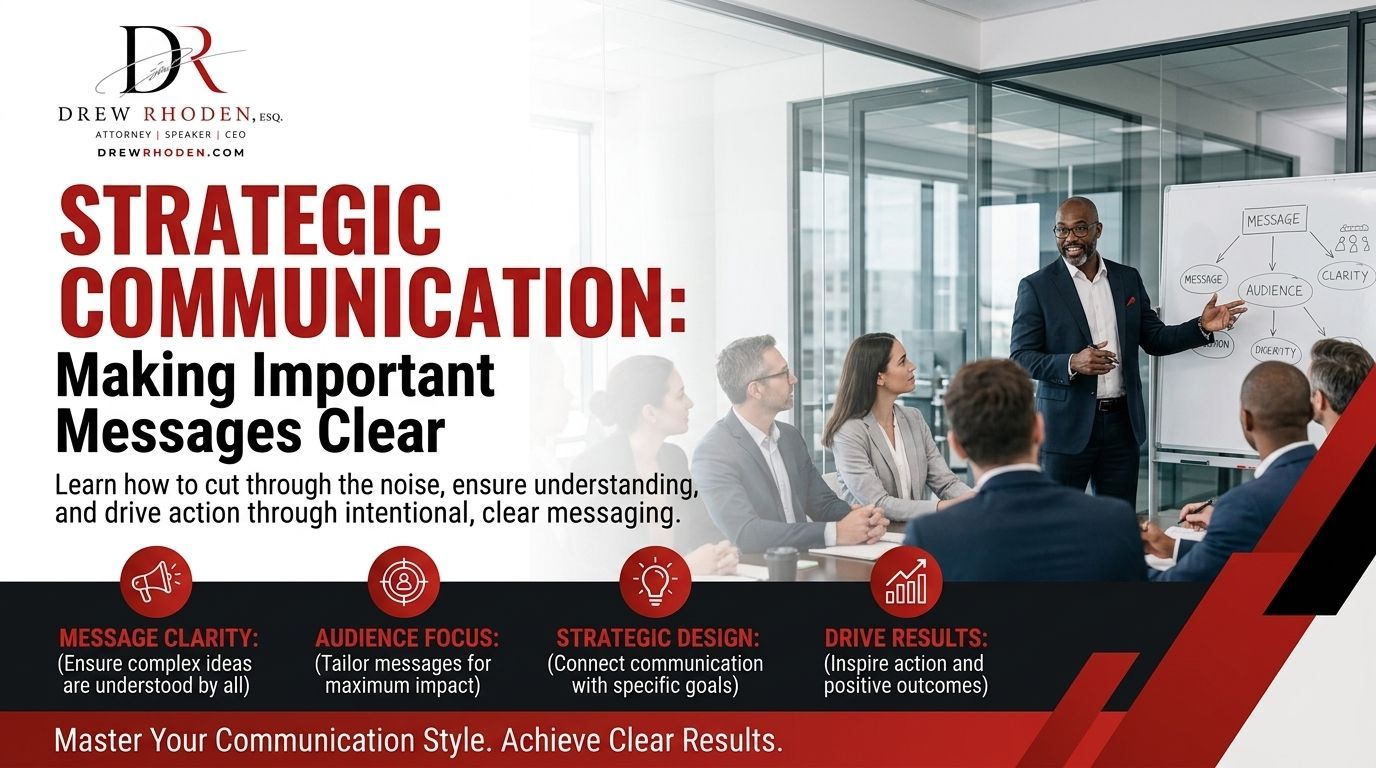





Corporate Leadership Speaker: What Companies Should Expect From a Practical Keynote
Introduction: What a Corporate Leadership Speaker Really Delivers
A corporate leadership speaker is not a celebrity speaker who flies in, tells a few stories, and disappears. A corporate leadership speaker should have real-world experience and proven success-someone who has managed teams, owned a P&L, and navigated the same pressures your leaders face every quarter.
This article is written from the perspective of DrewRhoden.com, where practical keynote speaking serves companies, associations, and executive teams looking for substance over spectacle. In 2026–2027, leadership topics for 2026 include leading through uncertainty, and organizations are dealing with hybrid work challenges, strategy execution gaps, and change fatigue from overlapping initiatives. The right speaker can transform an event's impact by driving real behavior change, sharper decision making, and tangible business outcomes.
Here is what you should expect from a practical leadership keynote:
- A speaker with genuine corporate experience-not just theory or consulting credentials
- Clear alignment between the keynote and your business objectives, defined before the event
- Content built on behavior-based frameworks and actionable strategies leaders can use immediately
- Customization for your industry, culture, and audience level
- A delivery style combining storytelling, data, interactivity, and humility
- Follow-up mechanisms that sustain momentum after the event
- Indicators for measuring impact on engagement, execution, and retention

Why Choosing the Right Corporate Leadership Speaker Matters
Choosing the right leadership speaker is not a branding exercise. It directly shapes your organization's culture, decision quality, and strategic alignment for months after the event. Leadership speakers influence workplace behavior over time, and the difference between a forgettable keynote and one that sticks comes down to whether leaders leave with clear next steps or just a vague sense of inspiration.
Leadership speakers help align leaders across departments, break silos, and clarify ownership. Speakers can strengthen company culture by emphasizing collaboration and trust. When that alignment is missing, the consequences show up fast: missed product launches, high turnover, and stalled digital transformation.
Consider a 2024 leadership offsite case study where 60 marketing leaders aligned around measurable goals after a practical keynote. The result: 300 people on their teams gained clarity, cross-functional collaboration improved, and decision rights were clarified. That is what hiring a corporate leadership speaker supports organizational change during transformation looks like in practice. Leadership speakers can create lasting impacts on organizational culture when their message reinforces accountability and ownership.
Key impact areas:
- Culture: Trust, psychological safety, clear norms
- Performance: Faster execution, fewer delays, less rework
- Decision quality: Reduced cognitive bias, sharper prioritization
- Alignment: Consistent vision, honest communication, role clarity
According to the 2026 Keynote Speaking Trends Report, there has been a 29% year-over-year rise in briefs for leadership and change keynotes, with clients explicitly requesting content on trust, decision making, and communication through uncertainty.
Core Qualities of an Effective Corporate Leadership Speaker
Not every talented speaker belongs on your stage. Here is what separates great leadership speakers from generic business conference speakers: depth of leadership focus and direct relevance to real corporate pressures.
Top leadership speakers have corporate experience for credibility. Authenticity and storytelling ability are important qualities in a corporate leadership speaker. And great speakers balance storytelling with research-backed credibility and humor appropriate for senior audiences.
Core qualities to prioritize:
- Practitioner credibility: Has the speaker served as a former director, former CEO, corporate board director, or operating executive with P&L responsibility? A former executive or co founder who built something from scratch carries weight that a visiting professor or bestselling author alone cannot.
- Clarity: Can the speaker cut through complexity and deliver a clean set of leadership concepts and frameworks?
- Humility: Do they share failures and lessons, not just wins? Speakers should openly discuss challenges to build trust and credibility.
- Emotional intelligence: Can they read the room, address stress, and navigate sensitive topics like underperformance or organizational change?
- Bias for execution: Do they provide "do this first" actions, or just abstract theory?
- Ethical communication: No overpromising overnight transformation, no recycled clichés, no unrealistic guarantees.
The difference between a great leadership keynote speaker and a fame keynote speaker or celebrity speaker is substance. The best leadership speakers tie every story to a business outcome your leadership team can act on.
Corporate Experience: Why Practitioner Background Beats Theory
An executive leadership speaker earns credibility through the roles they have held, not just the books they have written. Audiences of business leaders respond differently when a keynote speaker can say, "Here is how we navigated our 2019 margin crisis," versus summarizing someone else's case study.
External speakers can present strategic messages with fresh credibility that internal leaders sometimes cannot. External speakers provide fresh perspectives and actionable strategies precisely because they have lived through similar pressures-quarterly earnings, board scrutiny, talent shortages, and regulatory demands.
Backgrounds that resonate with executive audiences:
- A former CEO who led a multi-year transformation across markets
- A co founder of a SaaS startup that went from seed to acquisition
- A former director who owned a global product line through integration and scaling
- Former executives who managed layoffs, turnarounds, or rapid growth

Questions planners should ask to verify real corporate experience:
- What senior leadership roles has this speaker held, and when?
- What specific strategy execution challenges did they personally lead?
- Which industries and audience sizes have they served since 2015?
- Can they provide examples of lasting impact from past keynotes-behavior changes, not just applause?
Do not settle for titles like "consultant" or "coach" without digging into what the speaker actually ran.
Behavior, Psychology, and Emotional Intelligence in Leadership Keynotes
The best leadership keynote speakers use behavioral science and organizational psychology to explain why even effective leaders make poor decisions under pressure. This is not an abstract lecture on neuroscience. It is a practical breakdown of human behavior patterns that derail execution.
Leadership speakers provide frameworks for long-term behavior change. They address real challenges like accountability and communication. And the best speakers create frameworks that audiences reference long-term-not just during the event.
Key psychological themes a strong speaker might cover:
- Cognitive bias in decision making: Confirmation bias, anchoring, and status quo bias that slow down leadership teams
- Stress and team dynamics: How chronic pressure impairs judgment and erodes trust
- Psychological safety: Its direct link to innovation speed, risk-taking, and execution quality
- Self awareness and emotional regulation: Managing conflict, delivering feedback, staying composed during crisis
Leadership speakers help leaders model accountability and empathy, which cascades through every level of the organization. A practical example: a 3-step model for resetting team norms during rapid change-identify what norms are broken, co-create new norms with team input, and reinforce through rituals and accountability.
Meta-analytic research on leadership interventions shows a combined effect size of d≈0.65, meaning well-designed leadership development significantly outperforms chance in producing positive outcomes. That is the case for grounding keynotes in evidence, not just charisma.
Customization for Your Industry, Culture, and Event Goals
Customized content increases audience engagement and relevance. Customization ensures relevance to the audience's specific challenges. And customized messages from speakers resonate more with audiences than generic content ever will.
Leadership speakers can tailor their presentations to align with company values-but only if the preparation process supports it. Genuine customization means the speaker conducts pre-event discovery calls, reviews your internal strategy decks, interviews two or three leaders, and adapts language to match your industry.
What superficial customization looks like: dropping your logo into slides, swapping a few buzzwords, and using generic examples that could apply to any company.

Inputs planners should provide to support real customization:
- Event objectives tied to strategic priorities
- Current metrics, recent wins, and recent failures
- Culture and values statements
- Sensitive or off-limit topics
- Demographics: roles, seniority, geography of attendees
- Whether the event is a leadership conference, a sales kickoff, an executive retreat, or a leadership event tied to a specific audience
A concrete example: a strategy execution speaker who delivered a 2022 tech conference keynote adapted that content for a 2025 healthcare leadership retreat by changing scenarios from churn and growth metrics to patient outcomes and compliance frameworks. Same principles, completely different resonance.
Delivery Style: How Great Leadership Keynotes Keep Executives Engaged
Presentation style matters as much as substance when you are addressing senior leaders who sit through dozens of corporate events each year. Charismatic speakers engage their audience through an interactive style that earns attention rather than demanding it.
High-quality keynote speakers can become highlights of corporate events when their delivery combines these elements:
- Clear structure: Executives want a roadmap-tell them where you are going
- Concise storytelling: Real stories with vulnerability and real world examples, not polished fables
- Relevant data: Industry benchmarks, KPIs, and metrics familiar to the room
- Well-paced interaction: Live polling, short reflection prompts, brief pair discussions that boost retention without turning the keynote into a workshop
According to keynote industry statistics, in-person keynotes retain about 65% of attendees' attention versus roughly 45% for virtual formats. Storytelling and interactive elements can nearly double retention and active participation compared to lecture-style delivery.
Delivery formats to consider:
- Classic 60-minute keynote for large audiences
- 30-minute "power talk" for time-constrained agendas
- Fireside chat pairing the speaker with your CEO or internal leader
- Interactive executive session for smaller groups with deeper discussion
When reviewing past videos from the best keynote speakers, look for whether the audience is similar in seniority, whether the speaker uses data and real world examples, evidence of audience engagement, and quality of high energy storytelling and emotional connection.
Practical Takeaways: Turning Inspiration into Monday-Morning Actions
The best leadership keynote speakers leave leaders with a short set of practical tools, not a notebook full of theory. Effective speakers provide practical tools for immediate application. Effective speakers also provide practical takeaways for immediate application that show up in calendars and dashboards within days.
The best speakers inspire action and create momentum for change. Leadership speakers help organizations achieve clarity and accountability by giving leaders something specific to do, not just something to feel.
Typical takeaways from top leadership speakers:
- A decision-making framework executives can apply in their next meeting
- A 30-day leadership experiment to test a new behavior with their team
- A meeting reset checklist covering agenda, roles, purpose, and follow-up
- Three to five reflective questions for teams: What is blocking execution? What does holding ourselves accountable look like?
These practical tools can be delivered as one-page PDFs, digital playbooks, short follow-up videos, or integration into existing leadership development programs.
A strong "first 72 hours" plan keeps the keynote alive: Day one, the leadership team reviews the framework and selects one or two behaviors to improve. Day two, managers share their plan with their teams. Day three, themes get embedded into the next recurring leadership meeting.
Encourage your speaker to design takeaways for multiple levels-the executive team, people managers, and emerging leaders-so the message cascades and scales.
Corporate Leadership Speaker vs. Motivational Speaker: Key Differences
This is the most common question planners get wrong. Motivational speakers focus primarily on inspiration and emotional uplift. Leadership speakers focus on behavior, decision making, communication, and accountability tied to measurable business outcomes.
Motivational speakers may create temporary enthusiasm without practical guidance. They are effective for all-hands celebrations, sales rallies, or moments where you need to motivate audiences and boost energy. But for executive retreats, strategy offsites, and leadership summits, you need a speaker who addresses real organizational pressures.
Effective leadership speakers support practical shifts in communication, ownership, and execution that outlast the event. Here is how the two compare:
- Topics: Motivational speakers cover mindset, energy, and personal stories. Leadership speakers cover team building, accountability, workforce culture, organizational health, and growth mindset tied to business results.
- Success measurement: Motivational talks are judged by applause and survey scores. Leadership keynotes are judged by changed behavior, clearer decisions, and business results months later.
- Impact duration: A motivational keynote may fade in days. A leadership keynote, reinforced with follow-through, can shape culture for quarters.
Deciding which you need comes down to the event's purpose. If you need a culture reset, strategy execution, or alignment across leaders from diverse backgrounds-choose a leadership speaker.
How to Select and Vet a Corporate Leadership Speaker
Companies commonly hire leadership speakers for annual meetings and retreats, but the selection process often starts too late or focuses on the wrong criteria. Here is a practical step-by-step process:
- Clarify objectives: Define what success looks like 30, 60, and 90 days after the event-not just on the day itself
- Build a shortlist: Prioritize speakers with practitioner experience over thought leaders with name recognition alone
- Review footage: Request unedited full-length talks from a recent business conference, not just polished reels
- Interview candidates: Ask about specific corporate roles, outcomes, and strategy execution challenges they personally led
- Check references: Contact organizations similar to yours in industry or size

Vetting questions to ask:
- What leadership roles has this speaker held (title, team size, P&L)?
- What industries and audience types have they served?
- Can they share long-term impact stories, not just event-day feedback?
- How do they handle sensitive topics like underperformance or organizational change?
- What does their preparation process look like?
On budget: speaker fee ranges scale with depth of experience, preparation, and brand recognition. The cheapest option is often the most expensive in terms of wasted opportunity. An award winning author or york times bestselling author or new york times bestselling author or wall street journal featured speaker may carry a premium, but the real question is whether their content drives lasting change.
Consider fit with your leadership culture: direct straight talk versus gentle challenge, data-heavy versus story-driven, and comfort with topics your specific audience needs to hear. A visionary entrepreneur may bring energy but miss your industry context. Careful consideration of fit prevents regret.
Designing the Overall Leadership Session for Lasting Impact
A keynote is not a standalone event. It is one element of a larger leadership journey. Hiring a corporate leadership speaker boosts employee morale and motivation, but only if the message gets reinforced. Leadership speakers can improve employee engagement and performance when their ideas are embedded into the organization's operating rhythm.
Embedding strategies:
- Pair the keynote with breakouts: Immediately after, run executive sessions, panel discussions, or facilitated action-planning where leaders commit to specific changes
- Distribute content fast: Share summary notes, slides, or video within 48 hours while content is fresh
- Schedule reviews: Set 30-day and 90-day check-ins to assess what has been implemented
- Integrate into existing systems: Weave frameworks into leadership scorecards, 1:1 agendas, and performance reviews
Extended speaker involvement can multiply impact: virtual follow-ups, Q&A sessions with the leadership team, or short video refreshers for global offices. Helping leaders at every level internalize the message is what separates a lasting impression from a forgettable one.
A concrete example: after a 2024 leadership offsite, the participating organization produced playbooks and next-quarter priorities directly from the keynote frameworks, sustaining alignment across 300 team members for two full quarters. That is the difference between peak performance as a concept and sustainable performance as a practice.
Conclusion, Next Steps, and CTA
A corporate leadership speaker should function as a practical partner in behavior change and strategy execution-not just a charismatic guest who disappears after the applause. The right keynote speaker delivers diverse perspectives grounded in real experience, giving your leaders actionable insights and actionable advice they can use the following Monday.
The three selection criteria that matter most:
- Real corporate leadership experience (not just consulting or coaching)
- Behavior-based frameworks rooted in behavioral science and emotional intelligence
- Clear, practical takeaways designed for multiple leadership levels
Review your upcoming company leadership event calendar. Whether it is a Q4 2026 sales kickoff, a 2027 executive retreat, or a leadership
conference focused on crisis-ready leadership that develops rapid response capabilities during disruptions, hybrid leadership excellence that focuses on managing distributed teams, sustainable performance that emphasizes preventing burnout and promoting well-being, or purpose driven leadership that aligns organizational mission with employee values-identify where a focused leadership keynote would create the most value.
Availability for the right speaker for your event is often set three to nine months in advance for major conferences and executive meetings. To explore fit and possible topics, request speaking availability and a brief discovery call through DrewRhoden.com.
FAQs About Corporate Leadership Speakers
What is a corporate leadership speaker? A speaker with credible leadership experience who focuses on actionable growth in behavior, decision making, alignment, culture, and execution. Unlike motivational speakers who primarily uplift mood, leadership speakers deliver frameworks that leadership experts and leaders across the organization can apply to real challenges. The right leadership speaker and right keynote speaker will have held meaningful leadership roles, not just studied leadership skills from the outside.
How far in advance should we book a speaker? Typically three to nine months for major events. More lead time allows for deeper customization, internal promotion, and alignment with your leadership needs and organizational strategy.
How much customization should we expect? Significant. A professional keynote speaker should conduct pre-event discovery, interview leaders, review your strategy, and adapt stories and metrics. Surface-level logo swaps are not customization.
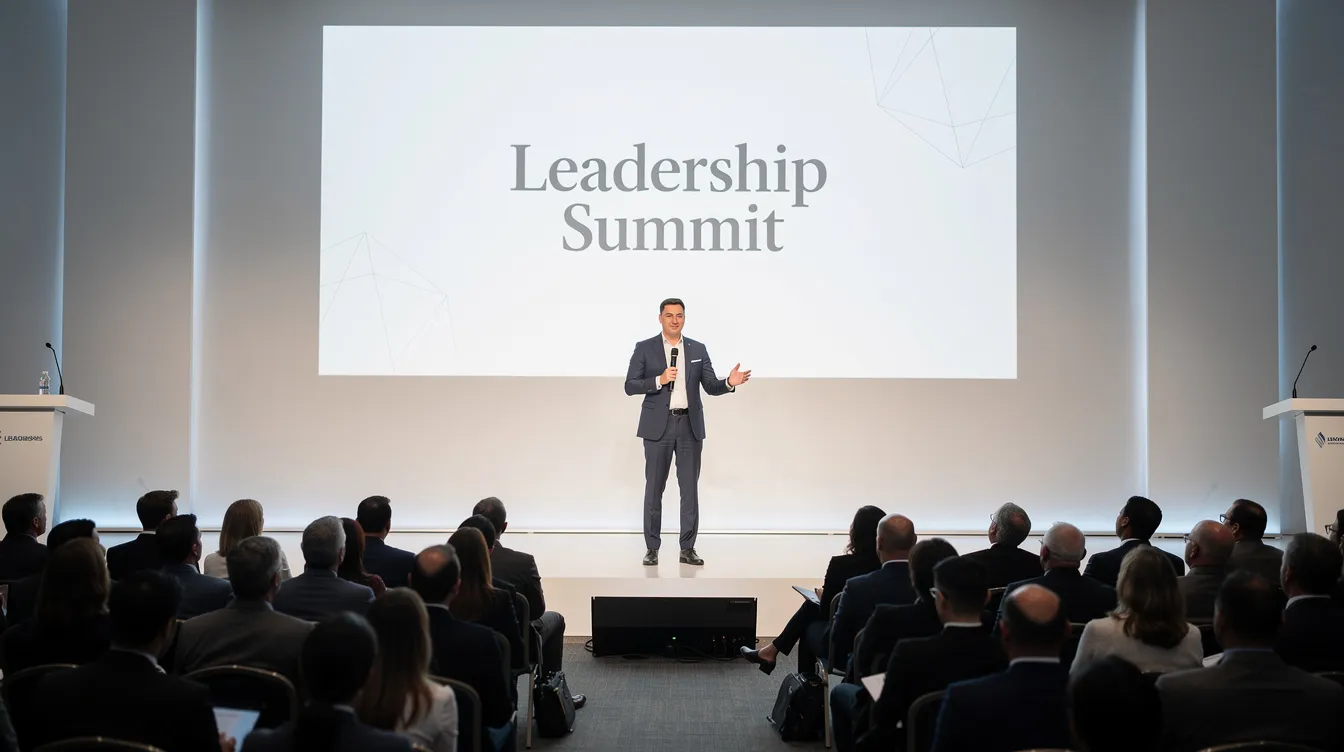
Can a speaker run both a keynote and a smaller executive session? Yes. This is common at leadership summits and executive retreats. The keynote inspires the broader group, and the executive session allows deeper interaction, fresh perspectives, and personalized application for top leadership.
What indicators should we track to measure impact? Leading indicators include immediate feedback surveys, recall of key messages, and employee engagement pulses. Mid-term indicators include execution of strategic priorities, behavior changes in meetings, and decision clarity. Longer-term measures include retention rates, performance metrics, and promotion rates.
How does a leadership speaker coordinate with internal HR or L&D? The best leadership speakers work directly with internal teams to avoid duplicating initiatives and to align messaging with ongoing leadership development programs.
What about international or virtual events? Adjustments include time zone scheduling, cultural norms, hybrid delivery formats, and interactive technology. Virtual refreshers can extend reach to global offices. The right speaker will adapt for these contexts without losing impact.
share this
Related Articles
Related Articles