





Convocation Speaker: What Campuses Should Consider
A convocation speaker is the person a university or college hires to address a convocation ceremony. The event may mark the opening of the academic year, a college or division gathering, or a ceremony in which degrees are recognized. The talk has to fit that room, not a generic campus slot.
This article is for a campus host who is booking that talk. It is not a guide to commencement, and it is not a second essay about education speakers in general. For a school or conference keynote, see what hosts should evaluate before an education keynote. For a broader student-facing booking, see bookings for a college audience, speakers for schools, and education speakers who help students build resilience. This article does not discuss fees.

Table of contents:
- What a convocation ceremony asks of the speaker
- How this differs from a graduation ceremony
- What university hosts should consider
- After the date is set
What a Convocation Ceremony Asks of the Convocation Speaker
A convocation is a formal campus gathering. What is called convocation depends on the campus. Some ceremonies open the year for incoming students and the wider university community. Other ceremonies are held by a college or academic division when graduates are recognized. A few campuses use the word for both. Ask which kind you are hosting before you write the brief.
The purpose is usually to bring people together around a shared message: welcome, responsibility, or the work ahead. Faculty, parents, and students will listen for different points. A useful talk leaves a few clear ideas, not a long list of names or a career lecture that does not fit the day. Keep the brief specific so the person on stage can prepare.
How This Differs From Undergraduate Commencement
Campuses often ask about the difference between convocation and graduation. Usage varies. Commencement is often the university-wide ceremony. A college convocation may be smaller and closer to one set of degrees. If your event is originally a welcome, do not brief it as a graduation talk. If it is a degree ceremony, say so. Do not wait until the week of the event to sort this out.
What University Hosts Should Consider
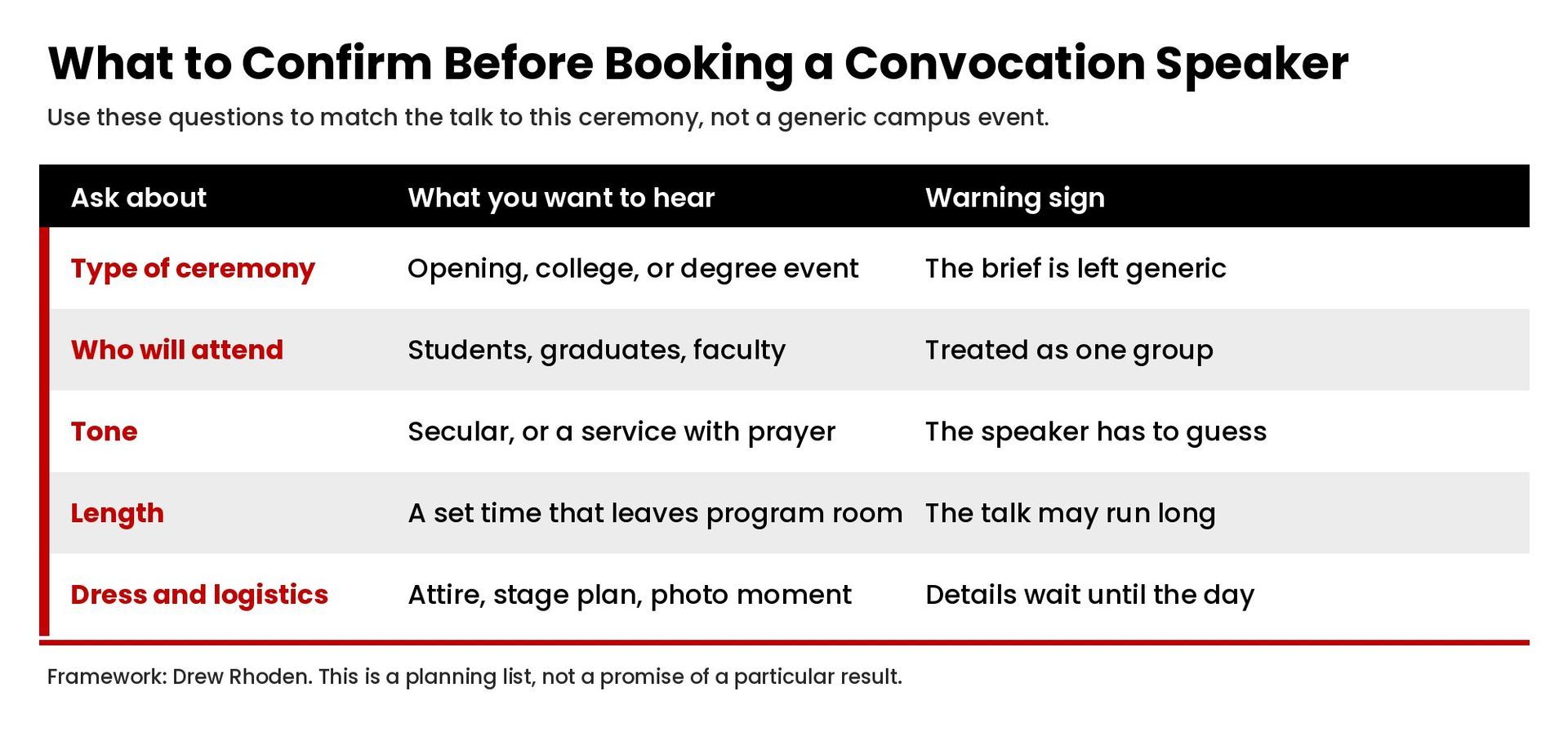
Ask for a recording of a similar ceremony. Watch whether the person can work in a formal setting, stay on time, and leave room for the rest of the program. Some ceremonies include a prayer or a reading that mentions God. Others are entirely secular. Say which kind you are running, and say what to wear.
Hosts often comment that a good talk felt short and clear. They also comment when a talk ignored the community in the room. A third comment worth asking for is how the stage, a photo moment, and the hands of the clock will be handled. Those are practical points, not decoration.
Look for someone who can move the day forward without making the talk the only thing on the program. The people in the seats should feel the talk was prepared for them. The rest of the ceremony still has to happen. Students, graduates, and parents should be able to follow the ideas. A school of the university may also want a career note that fits their degrees, but that should stay brief.
The event may be open to the public, or it may be limited to the campus community. Say which it is. If more than one school will attend, say that too. Convocation ceremonies work better when the host and the speaker share a simple standard: respect the room, leave a few ideas, and stop on time.
After the Date Is Set
Put who will attend, the length, the tone, and the order of the program in writing. Give enough context about this university and this school, including prior experience with formal campus ceremonies, so the talk can be prepared for this campus: who will be there, what matters this year, and what you do not want said. Then let the work get done.
If you want to discuss a convocation speaker for your campus, contact Drew Rhoden or call (888) 209-4055.
share this
Related Articles
Related Articles