




Thought Leadership Strategy That Helps CEOs Become the Trusted Voice in Their Industry
Your Expertise Has Value, but It May Not Be Reaching the Right Audience
A strong thought leadership strategy is a structured approach for turning executive expertise into visible authority through speaking, executive communication, and strategic visibility that builds trust and strengthens business reputation. For CEOs, founders, executives, subject-matter experts, and organizations that want their leadership team to become the trusted voice in their market, that structure helps convert knowledge into business opportunities. Many leaders have years of experience, but their expertise is not consistently visible to clients, partners, investors, or the media, so competitors often become the recognized voice in the marketplace.
Drew Rhoden helps organizations build a professional thought leadership strategy grounded in a clear marketing rationale and supported by evidence, so executive knowledge becomes credible public expertise and useful thought leadership content. Through speaking, leadership communication, authority building, content strategy, and thought leadership marketing aligned with broader business objectives, he helps leaders educate first and sell second—strengthening client confidence, earning media opportunities, and reinforcing long-term brand trust that supports growth. Thought leadership is a distinct strategic discipline, not a generic content marketing tactic.
Why Thought Leadership Matters for Business Growth
Organizations often compete on expertise rather than price. Clients want confidence that the people leading a company understand their industry, anticipate challenges, and provide reliable guidance.
A well-planned thought leadership marketing approach helps decision-makers share valuable insights before a sales conversation ever begins. It includes high-level education, trend analysis, and solving audience pain points for the target audience the messaging is designed to reach. When executives consistently demonstrate expertise through speaking engagements, interviews, articles, leadership communication, and industry events, they build trust with audiences who may later become clients, partners, or advocates.
Research also shows that 37% of decision-makers read one to two hours of thought leadership weekly.
Thought leadership is not about self-promotion. It is about becoming a dependable source of information that people respect and remember. In addition, 55% of decision-makers use thought leadership to vet prospective vendors.

Thought Leadership Strategy Supports Long-Term Business Reputation
A company's reputation is often closely connected to the visibility of its leadership team. Executives who communicate clearly and consistently help strengthen confidence in the organizations they represent. Companies with strong thought leadership often see faster growth and higher billing rates.
An effective thought leadership strategy supports:
- Greater executive credibility
- Stronger client confidence in company leaders
- Better media opportunities
- Increased industry recognition
- Improved recruiting efforts that help attract top talent
- More meaningful business relationships
- Long-term brand trust rooted in company culture
Organizations that invest in executive visibility often create stronger connections with audiences because people naturally relate to knowledgeable, authentic leaders, and leaders' public presence on social media correlates with stronger brand recognition.
Executive Thought Leadership Creates Confidence Before the First Meeting
Many business relationships begin long before an introduction. Prospective clients—many of them buyers and c suite executives—often review company websites, LinkedIn profiles, interviews, keynote presentations, podcasts, published articles, and conference appearances before scheduling a conversation.
Professional executive thought leadership allows decision-makers to demonstrate expertise in ways that help potential clients understand their experience, judgment, and leadership style, and formats like profiles, interviews, and thought leadership articles help prospects assess that expertise before a first meeting.
In fact, 60% of C-suite executives read thought leadership articles to support decision-making.
Effective thought leadership content can increase conversions by 47% for C-suite executives.
When executives become recognized voices within their industry, organizations benefit from greater visibility and stronger professional credibility.
Authority Building Through Professional Speaking
Every presentation represents an opportunity to strengthen a company's reputation.
Effective authority building happens when executives communicate practical insights that key audiences can trust, and strong speaking engagements help them gain credibility over time. Whether speaking to business leaders, industry leaders, professional associations, universities, industry conferences, or executive retreats, the goal is to leave audiences with confidence in both the speaker and the organization behind them, with high-visibility roles as keynote speakers further strengthening authority.
Drew Rhoden brings executive leadership, legal experience, education, business ownership, and organizational strategy together to deliver presentations that connect business challenges with practical leadership solutions.
His presentations are designed to help organizations educate audiences while reinforcing leadership credibility.
A Speaking Platform That Supports Business Objectives
Speaking engagements should accomplish more than filling time on an event agenda and should support broader marketing goals.
A professional speaking platform supports larger organizational goals, especially for professional services firms that compete on expertise, by helping executives:
- Introduce new ideas
- Build trust with stakeholders
- Strengthen organizational reputation
- Increase executive visibility
- Support recruiting initiatives
- Encourage leadership development
- Reinforce company values
- Position the organization as an industry resource
Each presentation becomes an extension of the organization's overall communication strategy rather than an isolated event, helping leaders build influence over time and build credibility with stakeholders.
Executive Visibility Builds Lasting Relationships
Business decisions often depend on confidence. Organizations want to work with leaders they recognize, understand, and trust.
Strategic executive visibility allows leaders to remain present in important conversations across conferences, professional organizations, business publications, trade publications, podcasts, interviews, executive forums, and media coverage, with added reach through placements in industry publications.
Instead of relying only on advertising, organizations can build recognition through consistent leadership communication that demonstrates expertise over time.
Showing up in the right places also helps executives become trusted go to sources for commentary and expertise.
This long-term visibility often strengthens relationships with customers, partners, employees, and industry peers.
Content Strategy Extends the Value of Every Speaking Engagement
One presentation can create opportunities far beyond the event itself.
A professional content strategy allows organizations to repurpose executive insights into articles, white papers, video content, podcasts, newsletters, social media posts, linkedin posts, executive communications, and educational resources to distribute thought leadership content across channels. Personal LinkedIn posts can receive up to 561% more engagement than company posts. Employee posts receive 7 times more impressions than company content. Deloitte’s corporate influencer reached an average of 840,000 people.
This creates consistent messaging across multiple platforms while helping organizations continue building authority long after a presentation has ended.
Rather than creating new content from scratch each time, leaders can maximize the value of their existing expertise when repurposed assets reflect original thinking and a unique perspective instead of repeating existing industry news.

Why Organizations Choose Drew Rhoden
Organizations looking for a business speaker want more than an engaging presentation. They want someone who understands executive leadership, organizational decision-making, and professional communication.
Drew Rhoden works with companies, universities, associations, nonprofit organizations, executive teams, and leadership groups seeking presentations that align with broader organizational goals.
His background combines executive leadership, legal practice, education, business ownership, consulting, and organizational development, allowing him to turn complex topics into engaging content with clear key points for executive audiences, present ideas through design thinking across formats, and make them practical and relatable through a good story.
Every engagement is designed to support the organization's objectives while strengthening leadership credibility.
Thought Leadership Strategy Is More Than Public Speaking
Professional speaking is only one part of a successful thought leadership strategy, and effective programs rely on audience research, original content, and measurable outcomes.
Organizations often need guidance that connects executive communication and leadership content with broader business objectives, including:
- Leadership communication
- Executive messaging
- Conference presentations
- Industry panels
- Board presentations
- Executive interviews
- Brand positioning
- Organizational storytelling
- Strategic communication planning
These efforts are most effective when aligned through leadership best practices. Avoid promotional content disguised as thought leadership or inconsistent publishing. Success should be measured against business outcomes rather than vanity metrics.
By connecting these elements, organizations create a stronger and more consistent public presence.
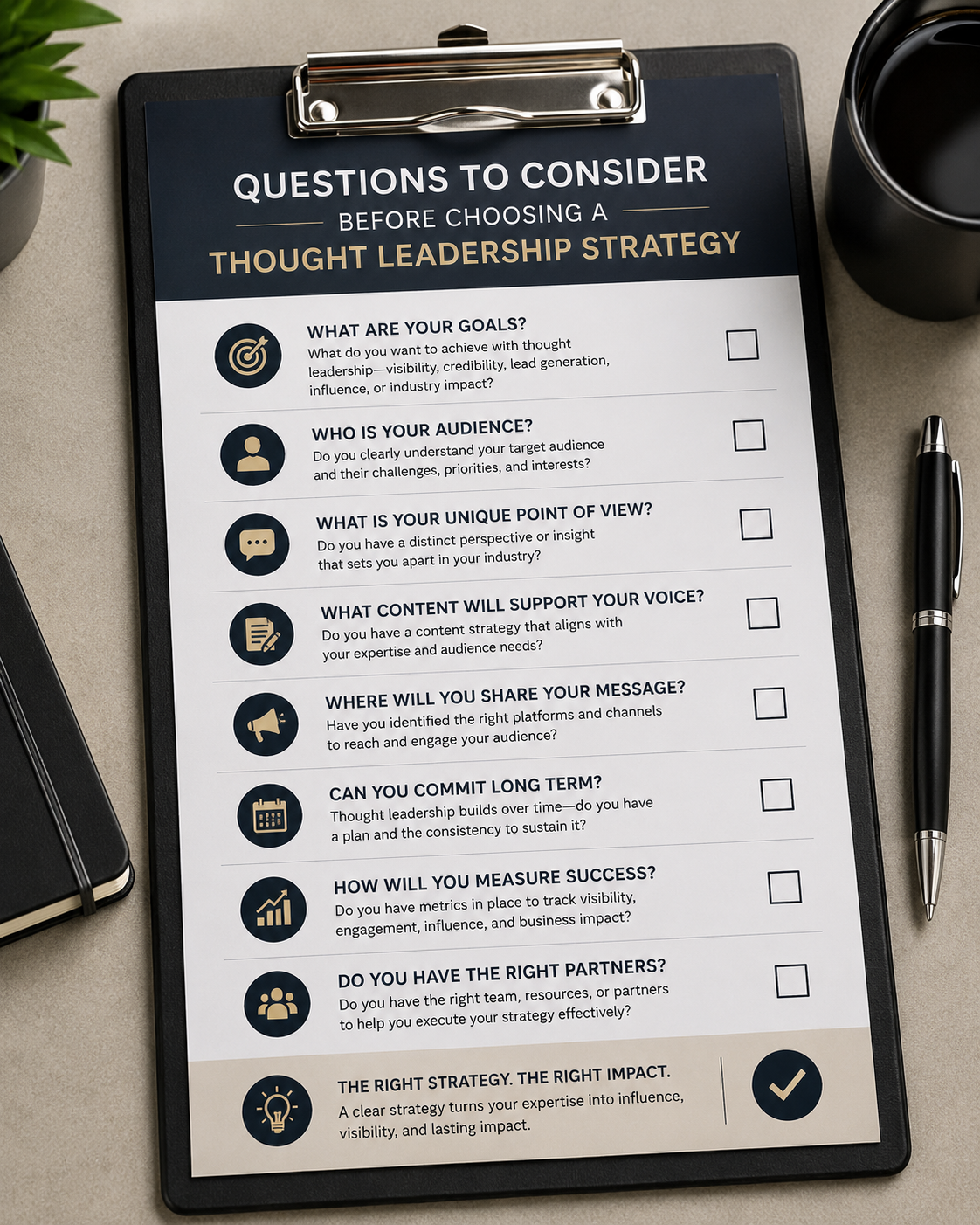
Frequently Asked Questions
What is a thought leadership strategy?
A thought leadership strategy is a structured approach that helps executives and organizations share their expertise through speaking, communication, and professional visibility to build trust and strengthen business reputation; it can take many forms, but its purpose is to create valuable content for a defined target market. When executed well, those executives or experts become thought leaders.
How does thought leadership marketing help organizations?
Thought leadership marketing works by creating insightful content aligned to the needs of potential customers before they make purchasing decisions, while also strengthening relationships with existing customers. It supports credibility, brand awareness, and long-term relationship building. Research also shows that 37% of decision-makers read 1-2 hours of thought leadership weekly. Executives can spend up to five hours a week reading thought leadership content.
What is executive thought leadership?
Executive thought leadership focuses on positioning CEOs and senior leaders as trusted industry voices through presentations, interviews, published content, and strategic communication, often strengthening their personal brands alongside the company’s reputation.
Can a speaking engagement support our broader business goals?
Yes. A professional presentation can support authority building, executive visibility, recruiting, client confidence, and organizational reputation when it aligns with your overall communication strategy and fits into a broader thought leadership campaign with a coordinated visibility plan. After the event, you can create thought leadership content by repurposing the talk into articles or web posts, which helps extend great insights into follow-on materials your audience can keep engaging with.
Thought Leadership Efforts That Support Long-Term Business Success
Achieving lasting business success requires more than offering excellent products or services. Organizations that invest in consistent thought leadership efforts create stronger credibility, earn greater trust, and remain visible to the audiences that matter most. A successful strategy often combines modern marketing, meaningful communication, and valuable insights from industry experts to position leaders as trusted voices. By using interactive elements such as live presentations, panel discussions, executive workshops, and audience engagement opportunities, organizations can build relationships that extend well beyond a single event. Working alongside a skilled PR team also helps amplify executive visibility across media and industry channels while identifying opportunities to identify gaps in messaging, strengthen communication, and maintain a consistent leadership presence that supports long-term growth.
Request a Thought-Leadership Strategy Consultation
If your organization wants to strengthen its reputation through a proven thought leadership strategy, Drew Rhoden provides executive speaking and strategic guidance as a go-to resource for organizations building a clear, credible plan.
Whether you are planning a leadership conference, executive retreat, association meeting, corporate event, university program, or industry summit, Drew Rhoden helps organizations align thought leadership with broader marketing strategies, shape topic ideas around executive expertise and industry trends, and use original research to develop unique insights that lead to meaningful business outcomes through professional speaking and strategic leadership communication with a consistent brand voice.
A distinct perspective also helps organizations avoid repeating existing industry news.
Request a thought-leadership strategy consultation today.
Drew Rhoden Website: https://www.drewrhoden.com/
Phone: (888) 209-4055
share this
Related Articles
Related Articles