




How to Choose a Leadership Keynote Speaker for an Executive Audience
Conference planners, associations, universities, and corporate hosts routinely invest five to six figures in a leadership keynote speaker, and the choice can define or derail an executive-level event. This guide focuses specifically on selecting the right keynote speaker for executive audiences: C-suite leaders, senior VPs, board members, and emerging executive cohorts.
A generic motivational talk rarely holds up in front of business leaders who manage P&Ls, navigate regulatory complexity, and make high-stakes decisions daily. What executive audiences expect is a strategic leadership keynote that advances leadership strategy, professional development, and concrete event outcomes. This article walks you through a practical, step-by-step process, from clarifying goals and evaluating content depth to reconciling fee range, presentation style, and fit. Along the way, you will see why criteria like emotional intelligence, digital transformation fluency, and communication skills matter when assessing a great leadership keynote speaker.
What a Leadership Keynote Speaker Does for Executive Events
A leadership keynote speaker is a professional speaker, often a former commander, co founder, CEO, or best selling author, who delivers a mainstage address that frames the event's leadership themes and expected actions. Choosing a leadership keynote speaker requires matching expertise with event goals, not simply filling a time slot with charisma.
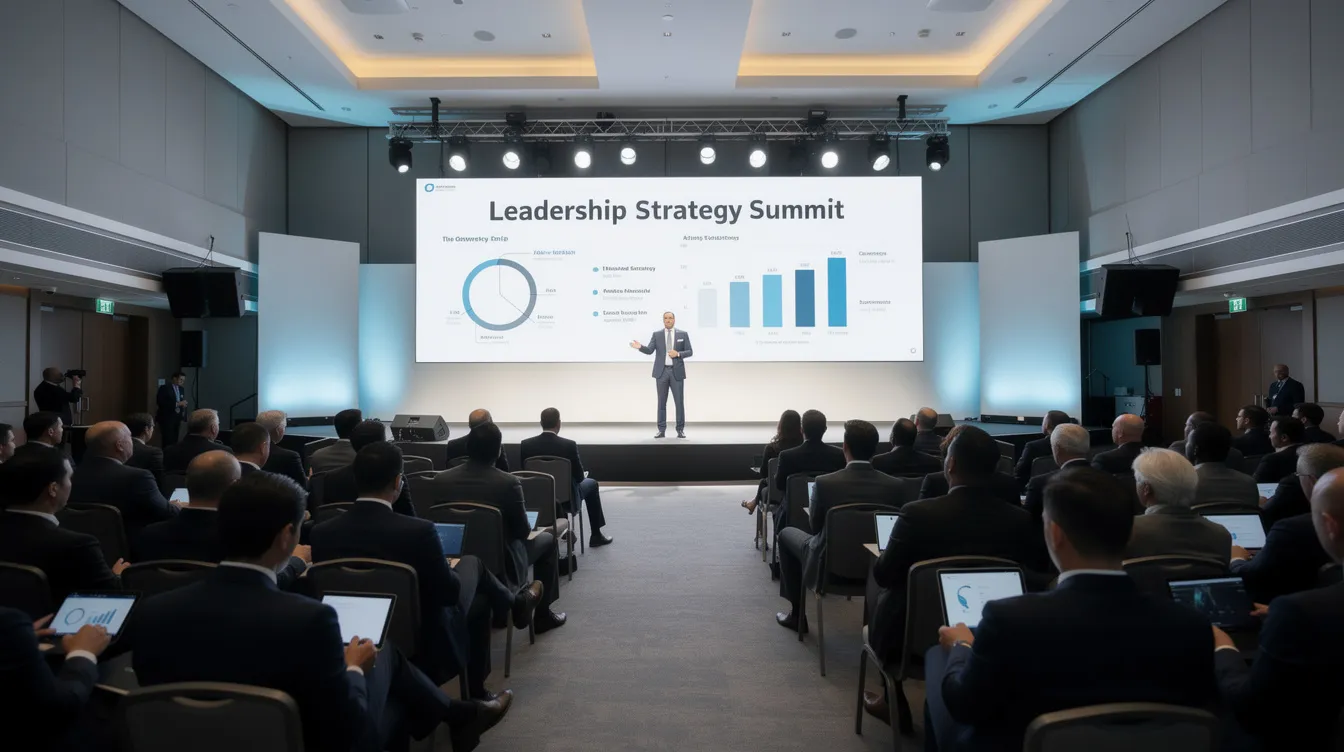
In executive settings, the keynote is expected to connect strategy, culture, and performance. Leadership topics include leading through uncertainty and crisis management, areas where credibility in a speaker comes from real-world leadership experience. Top speakers have led teams or organizations themselves, and that operating credibility is what separates them from general motivational speakers.
For leadership conferences and board offsites, the executive keynote speaker often sets strategic context at the opening session, synthesizes actionable insights at a closing session, or leads an extended interactive session. Many top leadership keynote speakers publish in outlets like Harvard Business Review, advise Fortune 500 boards, or have delivered Ted talks that demonstrate depth beyond a single narrative. Keynote speakers can transform organizational culture significantly when their content maps to real business challenges.
Clarify Your Event Outcomes Before You Contact Any Speaker
Define your event goals before selecting a speaker. Planners should answer three questions before building any shortlist:
- What specific leadership behaviors should change?
- What business metrics or event outcomes should improve?
- What time horizon, whether 90 days, 12 months, or multi-year, are you targeting?
Consider a March 2027 global leadership summit that needs alignment around a new digital transformation roadmap. The executive team needs faster decision making across regions and stronger ownership of the technology agenda. Or consider a September 2026 university executive education program focused on cross-functional collaboration and emotional intelligence among new deans and provosts.
Success might look like higher executive engagement scores, more effective cross-region communication, faster decision cycles, or better succession and professional development pipelines. Purpose driven leadership aligns organizational mission with employee values, and ethical leadership addresses AI integration and data privacy concerns, so planners should also ask whether these themes belong on the agenda.
Clear objectives allow you to judge whether a keynote speaker's framework, stories, and case studies are relevant, or just entertaining. Without that clarity, even talented speakers deliver content that gets applause but produces no measurable shift in team performance or team morale.
Match Speaker Background to Executive Audience Expectations
Executive audiences quickly evaluate who is "one of us." A former commander of an elite military unit, a co founder who scaled a unicorn, a new york times bestselling author with real operating experience, or a turnaround CEO all signal credibility in different ways. Research potential speakers to understand their past engagements and whether they have operated at the level your audience respects.

Common leadership keynote speaker profiles for executives include former C-suite or board-level leaders who have led large P&Ls or global teams, operators from high-pressure domains such as military veterans or a former nfl player turned leadership expert, academic-practitioners whose research is widely cited and field-tested with companies, and founders or social entrepreneur leaders who navigated fast-growth scaling, layoffs, and culture rebuilds. Speakers from diverse backgrounds bring fresh perspectives and unique insights that challenge executive assumptions.
Map speaker background to your current challenges. For a strategic reset, a former CEO or transformation leader brings direct relevance.
For resilience and accountability, a former commander or special-operations veteran offers a unique perspective built in high-stakes environments. For culture and inclusion, leaders known for people-first transformations and workforce culture shifts are the right fit. Next-generation leadership development bridges generational gaps in communication, so consider whether your audience includes future leaders who need that bridge.
Collecting references from organizations similar to yours helps verify speaker quality. Ask for contacts at companies in your sector who have booked the same speaker and probe for specifics on impact.
Assess Content Focus: Strategy, Culture, or Personal Leadership
A great leadership keynote speaker is clear about which layer of leadership they primarily address: enterprise strategy and competitive positioning, organizational culture and team dynamics, or personal leadership habits, mindset, and emotional intelligence.
Match content to your event themes. A 2026 financial-services summit seeking insight on leadership strategy in an AI-rich regulatory environment needs a speaker fluent in the digital age and strategic risk. A 2027 healthcare leadership conference wanting to reduce burnout and improve communication skills across hospital systems calls for content on organizational health and sustainable performance, which focuses on preventing burnout and promoting well-being. A university executive program focused on resilience and authenticity needs personal leadership and growth mindset work.
The best leadership conference speaker can weave all three layers together, but planners should know which one must dominate for their event outcomes. Leadership speakers can ignite passion and purpose in audiences, but only when the content matches the room. Check whether a speaker's signature keynote descriptions and case studies mirror the leadership challenges on your executive agenda. Look for evidence of peak performance frameworks, team building methodologies, or purpose driven leadership models that align with what your leaders need to act on.
Evaluate Thought Leadership, Research, and Use of Evidence
Executive audiences expect substance: original frameworks, data, and case studies, not recycled quotes. Thought leaders in the leadership space distinguish themselves through verifiable contributions, not just stage presence.
Credibility signals planners should check include articles or case studies in respected outlets such as Harvard Business Review or MIT Sloan Management Review, books that have influenced leadership practice beyond mere bestselling author status, documented client results like post-program increases in engagement or retention, and participation in advisory boards or executive programs at leading universities.
Speakers grounded in organizational psychology and behavioral science bring evidence that executives trust.
A strong executive keynote speaker shares stories but anchors them in repeatable models. Effective speakers distill complex concepts into actionable advice, and effective keynotes often include practical tools that attendees can apply afterward. The best speakers leave behind frameworks for future reference, giving leadership teams something to operationalize in the weeks following the event.
Reviewing full-length presentation videos is crucial for evaluating speakers. Highlight reels show polish; full-length recordings reveal depth, pacing, how the speaker handles a live Q&A, and whether they function as a trusted advisor to the room. Ask for recent slide decks or sample frameworks to confirm content goes beyond a single personal story.
Key Qualities of a Great Leadership Keynote Speaker
Several non-negotiable qualities distinguish great leadership speakers at the executive level from merely good ones.
Communication skills tailored to senior leaders matter enormously. The right leadership keynote speaker can speak the language of strategy, capital allocation, and risk. They handle unscripted questions from a C-suite Q&A with straight talk and confidence. They simplify complex ideas for cross-functional executive teams without condescending.
Emotional intelligence is central. A meta-analysis of 98 studies covering roughly 27,000 participants found that emotional intelligence correlates with leadership effectiveness at r ≈ 0.39, with stronger effects at senior levels. Effective speakers demonstrate emotional intelligence and adaptability, reading the room in real time, balancing challenge with psychological safety, and knowing when to adjust tone for sensitive topics like layoffs, restructuring, or cultural failures.
Delivery style also separates top leadership speakers from the rest. Executive keynote speakers should hold a 500-person ballroom as well as facilitate a 20-person board retreat. Great speakers engage audiences through storytelling and humor without undermining gravitas. Great leadership speakers customize content for specific audiences rather than delivering the same deck to every room. Effective speakers provide actionable strategies for immediate implementation, which is why high engagement levels predict speaker impact better than celebrity status alone.
Many top leadership keynote speakers are also a york times bestselling author, recognized co founder, or leadership expert who brings tested frameworks, not just charisma, to every speaking engagement.
Budgeting and Fee Ranges for Leadership Keynote Speakers
Fee range is one of the first practical constraints planners must reconcile with their ambitions for a leadership event. Speaker fees range from $12,500 to $200,000+ in 2026, and understanding the tiers helps you allocate wisely.

Realistic 2026–2027 ranges for in-person leadership keynote speaker fees break down as follows. Mid-market speaker fees typically range from $12,500 to $30,000 for emerging or niche-focused speakers. Established authors and former executives charge $15,000 to $50,000, with strong corporate track records and proven frameworks. Global brand-name keynote speakers command $75,000 to $150,000 or more. Celebrity speakers can charge $50,000 to $250,000 or more depending on profile, production demands, and travel.
Virtual event fees are typically 30–50% lower than in-person fees, though high-production setups with multiple cameras and interactive Q&A segments narrow that gap. Plan for ancillary costs: travel and accommodation (often business-class for international speakers), on-site rehearsal time, customization work, and any additional executive coaching days or breakout sessions.
Weigh the speaker fee against expected event outcomes. If the keynote anchors a multi-million-dollar digital transformation program or directly influences retention of top leaders across geographically dispersed leadership teams, even a six-figure investment can deliver outsized returns. The right speaker for a leadership summit is not the cheapest option; it is the one whose impact justifies the investment.
Customization, Format, and Interactivity for Executive Audiences
Executives expect a leadership keynote speaker to understand their organization, language, and current pressures. Customization is key for impactful keynote presentations, and customized keynotes outperform generic presentations in impact. Logo swaps on slides are not sufficient.
Request a discovery call with key stakeholders six to ten weeks before the event. High-quality speakers often conduct pre-event research about audience needs, reviewing recent strategy decks, employee engagement data, or transformation roadmaps. Agree on two or three measurable behavior shifts the keynote should reinforce, linking the content directly to your leadership development priorities.
Formats that resonate with executive audiences include a classic 45–60-minute keynote plus a 15-minute moderated Q&A, a fireside chat style conversation with the CEO for board meetings, and hybrid formats where a mainstage keynote is followed by an executive workshop or roundtable. For speaking engagements at leadership summits, the combination of mainstage delivery and smaller-group application sessions consistently produces stronger outcomes.
Interactivity can include live polling, short reflection exercises, or case-based discussions that move beyond passive listening. These methods are particularly effective for diverse perspectives within a specific audience, ensuring that the content connects across functions, regions, and leadership levels. The goal is for attendees to leave with valuable insights they can act on, not just inspiration they forget by Monday.
Checklist: How to Shortlist and Select Your Leadership Keynote Speaker

From budget approval through final contracting, maintain a consistent evaluation process. Start by aligning internally on leadership strategy priorities and event outcomes. Draft a brief outlining your audience profile, whether senior executives, association leaders, or university provosts, along with timing, location, and primary leadership topics.
Request recommendations from trusted bureaus, peers, and internal networks. Watch full-length videos, not only highlight reels, of two to four finalist speakers. Evaluate each candidate against a consistent set of filters: relevance to your industry and leadership challenges, demonstrated impact on similar executive groups, balance between inspiration and practical takeaways, and ability to address sensitive topics like restructuring or workplace culture issues with maturity and emotional intelligence.
Interview candidates to gauge their passion for your topic. Ask how they would customize content for your leadership conference, how they measure event outcomes, and their willingness to coordinate with other agenda elements like panels or internal speakers. Probe for actionable advice they have delivered to audiences of similar seniority. The right leadership speaker will welcome careful consideration and detailed questions, not resist them.
High engagement levels predict speaker impact better than celebrity status, so prioritize evidence of audience transformation over name recognition alone. The best leadership speakers motivate audiences and leave behind actionable strategies, not just applause.
Integrating the Keynote into a Larger Leadership Development Journey
For executive audiences, a leadership keynote is most effective when it anchors a broader professional development arc. Attendees often leave inspired and motivated after keynotes, but without reinforcement, that energy fades. Design pre- and post-event touchpoints to sustain momentum across the whole organization.
Send pre-reads such as a speaker's Harvard Business Review articles or book chapters two to three weeks before the event. After the keynote, run a post-keynote action planning session where executives commit to 30-day experiments. Schedule follow-up virtual sessions 60 to 90 days later to maintain momentum and measure whether leadership skills have translated into changed behavior.
Consider a 2026 leadership conference where a keynote on digital transformation is followed by functional deep-dive labs on AI, data ethics, and customer experience. Or a university executive program where a keynote on communication skills leads into small-group coaching circles focused on team dynamics and team building. These approaches create lasting impact rather than a single-day event.
The same leadership conference speaker can sometimes deliver the main keynote, facilitate a closed-door C-suite session, and record a shorter video message for broader employee audiences. This layered approach turns one engagement into a leadership development catalyst that shapes workplace culture well beyond the event itself.
When to Book and How to Manage Logistics Smoothly
Top-tier speakers often require booking 6–12 months in advance. For a May 2027 leadership conference, begin outreach no later than September 2026. For smaller executive retreats, strong options may still be available 8–12 weeks out, though flexibility on dates helps secure the right keynote speaker.
Clarify logistical details early: exact date, time slot, and time zone; room setup (theater, crescent rounds, boardroom); AV requirements including confidence monitors, countdown timers, and interpreter needs; and recording and internal distribution rights.
A well-structured agreement should clearly state the fee, payment schedule, and travel arrangements; customization commitments including pre-event calls and slide review; and contingency plans for illness, travel disruptions, or shifts to virtual delivery. Lock these details in writing so both sides can focus on content quality rather than operational surprises.
Next Steps: Request Speaking Availability and Program Options
You have moved from understanding what effective leaders look for in a keynote to having a practical framework for selection. The next step is straightforward: prepare your event details and begin outreach.

Before reaching out, gather your event date and location, executive audience profile and approximate size, primary leadership themes such as digital transformation, emotional intelligence, communication skills, or strategy execution, and your desired event outcomes and budget range for a leadership keynote speaker.
Request multiple program options to find the right fit: a mainstage keynote only, a keynote plus executive workshop, or an ongoing leadership development series linked to your strategy cycle. Effective leaders invest in programs that build sustainable performance across their organizations, not just single-day events.
Request speaking availability and program options as a low-risk discovery step. The right leadership keynote speaker will welcome the conversation, ask sharp questions about your audience, and demonstrate from the first interaction the same depth, diverse perspectives, and actionable insights they will bring to your stage.
share this
Related Articles
Related Articles