




The Hidden Mental Health Challenges Every College Speaker Should Address on Campus
College Students Are Facing More Pressure Than Ever Before
For many people, college is viewed as one of the most exciting chapters of life. It represents independence, opportunity, personal growth, and the beginning of a future career. Yet behind the excitement, many students are silently carrying burdens that few people fully understand. Academic demands, financial concerns, social pressures, and uncertainty about the future can create significant emotional strain.
Many students arrive on campus expecting to thrive, only to discover that the transition is more difficult than anticipated. Some struggle to balance coursework with employment. Others battle feelings of loneliness despite being surrounded by thousands of peers. These hidden challenges can affect academic performance, relationships, and overall well-being.
This growing reality is one reason colleges and universities are increasingly seeking a college speaker who can connect with students in a meaningful way. Today's students need more than motivation. They need practical strategies, encouragement, and tools that help them navigate the challenges they face every day.
The Silent Mental Health Crisis on College Campuses
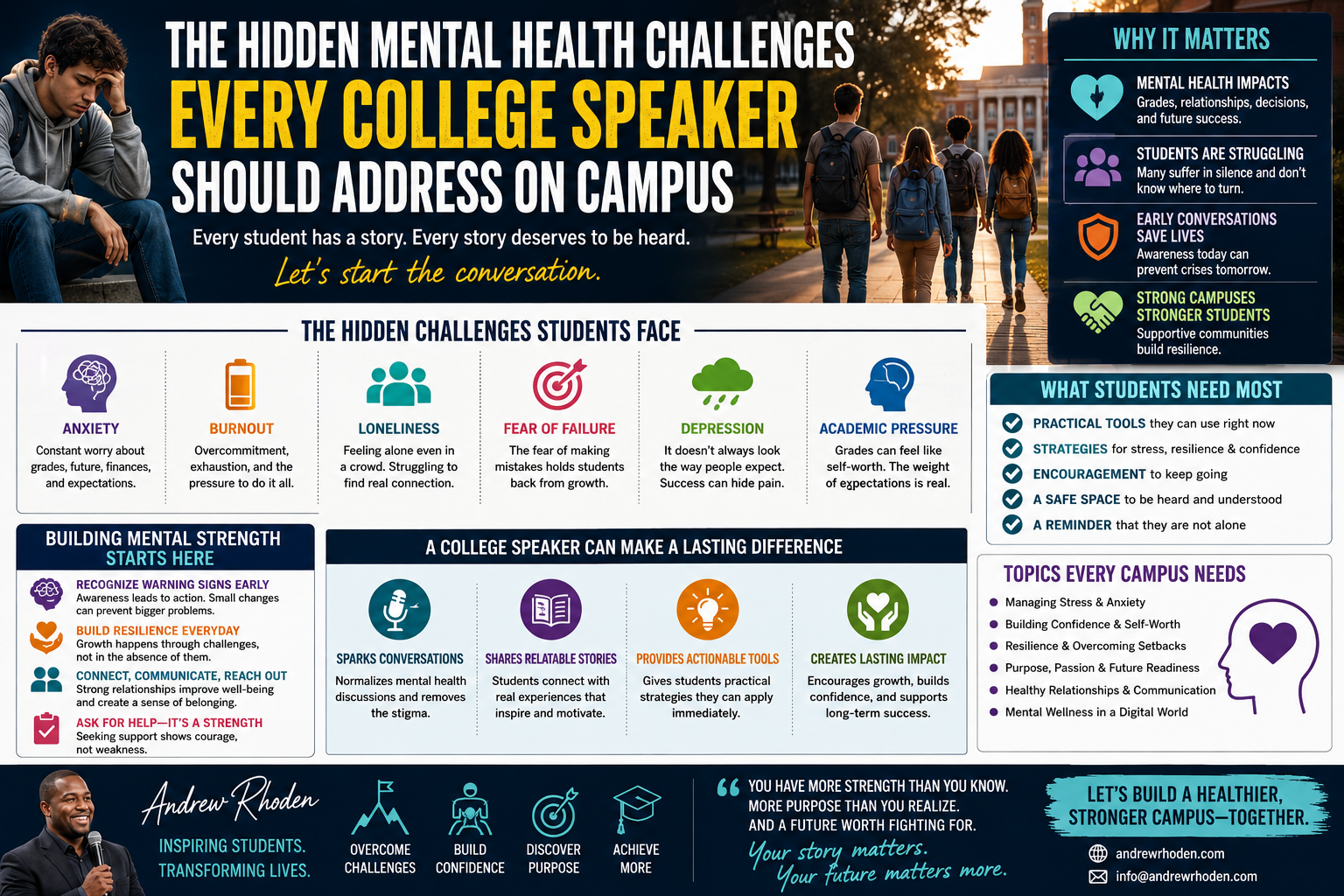
Mental health concerns among college students continue to rise across the country. While many institutions have expanded counseling resources and wellness programs, a large number of students still suffer in silence.
The challenge is not always visible. A student may appear successful in the classroom while privately struggling with anxiety, depression, burnout, or overwhelming stress. Faculty members, advisors, and administrators often recognize that the students who need support the most are not always the ones seeking help.
Students Often Hide Their Struggles
Many students fear being judged if they admit they are struggling. Some worry that asking for help will make them appear weak. Others simply do not know where to turn.
As a result, emotional challenges often remain hidden until they begin affecting grades, attendance, relationships, or personal well-being. This is where an experienced college speaker can make a significant impact by creating conversations that normalize seeking help and building resilience.
The Impact Extends Beyond Academics
Mental health challenges affect more than classroom performance. Students experiencing emotional distress often struggle with sleep, concentration, confidence, and motivation.
When these challenges remain unaddressed, they can influence nearly every aspect of campus life. Helping students understand that they are not alone is often the first step toward meaningful change.
Anxiety Is Becoming a Daily Reality for Many Students
Anxiety has become one of the most common mental health concerns among college students. While some stress is a normal part of life, persistent anxiety can become overwhelming.
Students frequently worry about grades, internships, future employment opportunities, finances, relationships, and family expectations. The pressure to succeed can feel relentless.
The Pursuit of Perfection Creates Additional Stress
Many students believe they must excel in every area of life. They want outstanding grades, leadership positions, internships, social connections, and career opportunities.
This pursuit of perfection often creates unrealistic expectations. When students inevitably encounter setbacks, they may feel discouraged or inadequate.
An effective college speaker helps students understand that growth often comes through challenges, mistakes, and perseverance rather than perfection.
Social Media Intensifies Comparison
Students today face a challenge previous generations never experienced.
Social media creates constant opportunities for comparison. Students frequently compare their achievements, appearance, social lives, and future plans to carefully curated online content.
These comparisons can damage self-confidence and increase feelings of anxiety. Learning how to maintain perspective in a digital world has become an essential skill for student success.
The Hidden Cost of Student Burnout
Burnout is becoming increasingly common on college campuses.
Many students operate under the belief that they must constantly stay busy to remain competitive. They overload their schedules with classes, jobs, internships, extracurricular activities, and social commitments.
While ambition can be valuable, nonstop activity without recovery often leads to exhaustion.
Students Rarely Recognize Burnout Early
Burnout typically develops gradually.
A student may initially feel motivated and energized. Over time, however, constant demands begin to drain emotional and physical resources.
Students experiencing burnout often report feeling disconnected, unmotivated, exhausted, and overwhelmed. Without intervention, burnout can negatively impact academic performance and mental health.
Recovery Requires More Than Taking a Break
Many students believe that a single weekend off will solve burnout.
In reality, recovery often requires changes in habits, priorities, and mindset. Students need strategies for managing responsibilities while protecting their well-being.
A skilled college speaker can provide practical guidance that helps students recognize warning signs before burnout becomes a crisis.
Loneliness in a Crowd
One of the most surprising mental health challenges on college campuses is loneliness.
People often assume that college students have unlimited opportunities for friendship and connection. While campuses offer many social experiences, genuine connection can still be difficult to find.
Many students report feeling isolated even when surrounded by classmates.
Major Life Transitions Can Feel Overwhelming
College often involves leaving familiar support systems behind.
Students may move away from family, childhood friends, and established routines. Building new relationships takes time, and the transition can feel emotionally challenging.
Students who struggle to form meaningful connections may experience loneliness, homesickness, and increased stress.
Connection Supports Mental Health
Research consistently shows that strong relationships contribute to emotional well-being.
Students who feel connected to their campus communities often demonstrate greater resilience during difficult periods.
Creating opportunities for authentic conversations is one reason colleges frequently invite a college speaker who can encourage meaningful engagement and community building.
Fear of Failure Is Holding Students Back
Many students are not afraid of hard work.
Instead, they are afraid of failure.
The fear of making mistakes often prevents students from taking risks, pursuing opportunities, or stepping outside their comfort zones. Unfortunately, avoiding challenges can limit personal growth.
Failure Is Often Misunderstood
Students frequently view failure as a permanent outcome rather than a temporary setback.
This perspective can create unnecessary pressure and anxiety.
Successful individuals in every field have experienced setbacks, disappointments, and obstacles. Learning how to respond to challenges is often more important than avoiding them altogether.
Resilience Can Be Learned
Resilience is not something people either have or do not have.
It is a skill that can be developed through experience, reflection, and intentional practice.
An impactful college speaker helps students understand that resilience is built through adversity, not in the absence of it.
Mental Health Conversations Need to Happen Earlier
Many mental health interventions occur after a student reaches a crisis point.
While support during difficult moments is essential, prevention is equally important.
Students benefit from learning coping strategies before challenges become overwhelming.
Proactive education creates stronger, healthier campus communities.
Early Awareness Creates Better Outcomes
When students recognize warning signs early, they are more likely to seek support before problems escalate.
Education helps remove stigma and encourages students to prioritize their well-being.
Providing these conversations during orientation programs, leadership events, and campus-wide initiatives can make a lasting difference.
Students Need Practical Tools
Motivation alone is not enough.
Students need actionable strategies they can implement immediately.
Topics such as stress management, emotional resilience, time management, confidence building, and healthy communication provide students with valuable resources that support long-term success.
Depression Often Looks Different Than People Expect
When people think about depression, they often imagine someone who is visibly sad or withdrawn. On college campuses, however, depression can be much harder to recognize.
Many students continue attending class, participating in activities, and interacting with friends while quietly struggling with emotional pain. They may appear successful on the outside while feeling overwhelmed on the inside.
This hidden reality makes mental health education especially important for today's college communities.
High-Achieving Students Are Not Immune
One of the biggest misconceptions about mental health is that success protects people from emotional challenges.
Some of the students earning the highest grades are also experiencing intense stress, loneliness, or depression. Their accomplishments may hide internal struggles that few people ever see.
An experienced college speaker understands how to address these realities in a way that resonates with students from diverse backgrounds and experiences.
Recognizing the Warning Signs
Depression can affect motivation, concentration, energy levels, and self-confidence.
Students may begin withdrawing from activities they once enjoyed. Others may struggle to maintain academic performance or relationships.
Helping students recognize these warning signs early can encourage them to seek support before challenges become more severe.
Academic Pressure Is Shaping Student Identity
For many students, academic performance becomes closely tied to personal identity.
A poor test score or disappointing semester can feel like a reflection of personal worth rather than a temporary setback. This mindset often increases stress and anxiety.
Students need reminders that grades are important, but they do not define a person's value or future potential.
The Weight of Expectations
Some students face pressure from parents, scholarships, athletic programs, or personal ambitions.
These expectations can create a constant sense of urgency. Students may feel that every decision carries enormous consequences.
Over time, this pressure can contribute to emotional exhaustion and decreased confidence.
Learning to Separate Performance From Self-Worth
One of the most valuable lessons students can learn is that mistakes do not determine their future.
Failure, disappointment, and setbacks are part of every meaningful journey.
A powerful college speaker helps students understand that growth often happens through challenges rather than avoiding them.
Leadership Development Begins With Mental Wellness
Many colleges invest heavily in leadership programs.
While leadership skills are important, mental wellness is often the foundation that supports effective leadership.
Students who understand emotional intelligence, resilience, and self-awareness are often better prepared to lead others.
Strong Leaders Manage Challenges Effectively
Leadership does not mean avoiding adversity.
It means learning how to respond when challenges arise.
Students who develop resilience are better equipped to navigate setbacks, uncertainty, and change.
These skills benefit them both during college and throughout their professional careers.
Emotional Intelligence Matters
Successful leaders understand how emotions influence decision-making.
Students who learn emotional intelligence often communicate more effectively, build stronger relationships, and manage stress more successfully.
These abilities are becoming increasingly valuable in today's workforce.
Building Resilience Before Students Face Major Setbacks
Many students do not begin thinking about resilience until they encounter significant challenges.
Unfortunately, waiting until a crisis occurs can make recovery more difficult.
Resilience is most effective when it is developed proactively.
Small Challenges Create Stronger Students
Every obstacle provides an opportunity for growth.
Whether facing academic struggles, relationship difficulties, financial concerns, or personal setbacks, students can learn valuable lessons through adversity.
Resilience grows when individuals learn how to navigate challenges rather than avoid them.
Confidence Comes From Experience
Students often assume confidence comes before success.
In reality, confidence usually develops after people overcome difficult situations.
Every challenge a student successfully navigates contributes to future confidence and resilience.
This message often resonates deeply when shared by an engaging college speaker who has experienced obstacles firsthand.
The Mental Health Impact of Uncertainty About the Future
Today's students face a rapidly changing world.
Questions about careers, financial stability, technology, and future opportunities can create significant stress.
Many students worry about whether they will find meaningful employment after graduation.
Others wonder if they are pursuing the right academic path.
Uncertainty Can Create Anxiety
The desire for certainty is natural.
Unfortunately, life rarely provides complete clarity.
Students who struggle with uncertainty may experience increased stress and decision fatigue.
Learning to move forward despite uncertainty is an important life skill.
Adaptability Is Becoming More Important
The future workforce will continue evolving.
Students who develop adaptability, resilience, and problem-solving skills are often better prepared for changing circumstances.
Helping students embrace flexibility can reduce anxiety while increasing confidence.
The Importance of Creating a Culture of Support
Mental health is not solely an individual responsibility.
Campus culture plays a major role in student well-being.
Students thrive when they feel supported, valued, and connected.
Creating this environment requires intentional effort from faculty, staff, administrators, and student leaders.
Students Need to Feel Seen
One of the most powerful experiences for any student is feeling understood.
When students believe their struggles are recognized, they are more likely to seek support and engage with available resources.
Simple conversations can make a significant difference.
Community Strengthens Resilience
Strong communities help students navigate challenges more effectively.
Supportive relationships provide encouragement during difficult times.
They also remind students that they do not have to face obstacles alone.
Building these connections should remain a priority on every campus.
The Unique Role of a College Speaker in Student Success
While counseling centers, faculty members, and student affairs professionals all play important roles, a college speaker brings a unique perspective to campus conversations.
Students often respond differently to outside voices who can share relatable experiences and practical insights.
An engaging presentation can spark conversations that continue long after the event ends.
Students Remember Stories
Facts and statistics are important, but stories create emotional connections.
Students often remember personal experiences and relatable examples more than data alone.
Effective speakers use storytelling to make important lessons memorable and actionable.
Inspiration Must Lead to Action
Motivation is valuable, but lasting impact requires action.
Students need practical tools they can apply immediately.
The most effective college speaker presentations combine inspiration with actionable strategies that help students create meaningful change.
Andrew Rhoden's Approach to Inspiring Students and Transforming Lives
Andrew Rhoden's mission is simple: inspire students to unlock their full potential while providing practical guidance that helps them navigate life's challenges.
His presentations are designed to meet students where they are while helping them envision where they can go.
Through authentic storytelling, actionable strategies, and relatable experiences, Andrew creates meaningful connections with audiences of all sizes.
Helping Students Move Beyond Survival Mode
Many students spend their college years simply trying to get through each day.
Andrew challenges students to move beyond survival mode and begin building lives filled with purpose, resilience, and confidence.
His message encourages students to take ownership of their growth while recognizing that setbacks are part of the journey.
Creating Lasting Impact on Campus
A successful presentation should not end when students leave the room.
Andrew's goal is to create lasting impact by giving students tools they can continue using long after the event concludes.
When students leave feeling empowered, equipped, and encouraged, campuses experience benefits that extend far beyond a single presentation.
Student Success and Mental Wellness Are Closely Connected
Student success is often measured through grades, retention rates, graduation rates, and career outcomes. While these metrics are important, they are frequently influenced by something deeper: mental wellness.
Students who are emotionally healthy are often better equipped to manage challenges, stay engaged in their studies, and pursue their goals with confidence. When mental health struggles remain unaddressed, academic performance often suffers as a result.
Colleges that prioritize mental wellness are investing in the long-term success of their students.
Students Perform Better When They Feel Supported
Supportive campus environments help students develop confidence and resilience.
When students know they have access to resources, mentors, and encouragement, they are more likely to seek help when challenges arise. This support can make the difference between a student persevering through adversity or withdrawing from opportunities.
Creating a culture where students feel supported benefits the entire campus community.
Mental Wellness Supports Retention
Student retention remains a major concern for colleges and universities nationwide.
Many students who leave school do not do so because they lack ability. Instead, emotional stress, isolation, burnout, or mental health struggles often contribute to their decision.
Addressing these issues proactively helps institutions improve both student well-being and retention outcomes.
The Benefits of Campus-Wide Mental Health Programming
Mental health initiatives are most effective when they reach a broad audience.
While counseling services are essential, many students may never schedule an appointment. Campus-wide programming creates opportunities to engage students who might not otherwise seek support.
Educational presentations, workshops, leadership events, and keynote programs help bring important conversations into the open.
Conversations Reduce Stigma
One of the greatest barriers to mental health support is stigma.
Students may worry about being judged or misunderstood if they admit they are struggling.
When campuses openly discuss mental health, these fears begin to diminish. Students realize they are not alone and that seeking help is a sign of strength rather than weakness.
Shared Experiences Build Connection
Students often assume they are the only ones facing certain challenges.
Hearing others discuss similar experiences can be incredibly powerful.
Shared conversations foster empathy, understanding, and connection. These moments help strengthen campus culture and encourage students to support one another.
Colleges Cannot Afford to Ignore These Challenges
The mental health needs of today's students continue to evolve.
What worked a decade ago may not fully address the realities students face today. Increased academic demands, financial pressures, social challenges, and uncertainty about the future have created new obstacles for many students.
Institutions that fail to address these concerns risk missing opportunities to support student success.
Early Action Creates Better Outcomes
Waiting until students reach a crisis point limits available options.
Preventive education provides students with tools they can use before challenges become overwhelming.
The earlier students learn resilience, stress management, and emotional wellness strategies, the better prepared they are to navigate difficult situations.
Students Are Asking for More Support
Across the country, students are increasingly vocal about the importance of mental health resources.
They want environments that recognize the realities they face and provide meaningful support.
Colleges that respond to these needs demonstrate a commitment to student success that extends beyond the classroom.
Creating Future Leaders Through Resilience
The students sitting in classrooms today will become tomorrow's leaders, entrepreneurs, educators, healthcare professionals, and innovators.
Their ability to navigate adversity will influence not only their own success but also the organizations and communities they serve.
Resilience is not simply a personal skill. It is a leadership skill.
Leadership Requires Adaptability
The future will continue bringing unexpected challenges.
Students who learn adaptability are better prepared to navigate change, uncertainty, and setbacks.
Developing these skills during college creates a foundation for long-term success.
Confidence Grows Through Challenges
Many students underestimate their own strength.
When they successfully overcome obstacles, they begin to develop confidence in their ability to handle future difficulties.
Helping students recognize this growth is one of the most valuable outcomes of resilience-focused programming.
The Lasting Impact of an Effective College Speaker
A powerful presentation can create a ripple effect throughout an entire campus.
Students leave with new perspectives. Faculty members gain insights into student experiences. Administrators identify opportunities to strengthen support systems.
The most impactful college speaker presentations inspire action long after the event ends.
Inspiration Creates Momentum
Students often need encouragement to take the first step.
Whether seeking support, pursuing goals, or embracing personal growth, inspiration can provide the momentum needed to move forward.
The right message delivered at the right time can change the direction of a student's life.
Action Creates Transformation
Motivation alone is temporary.
Real transformation occurs when students apply what they learn.
Presentations that combine inspiration with practical strategies help students create meaningful and lasting change.
Inspiring Students. Transforming Lives.
Andrew Rhoden understands the challenges facing today's college students because he has spent years speaking with students, educators, and campus leaders across the country.
His presentations go beyond traditional motivational speaking. They are designed to equip students with practical tools for navigating adversity, managing stress, building resilience, and pursuing their goals with confidence
.
Whether speaking to incoming freshmen, student leaders, athletic programs, faculty groups, or entire campus communities, Andrew delivers messages that are authentic, relatable, and actionable.
As a trusted college speaker, Andrew helps students recognize their potential while providing strategies they can use immediately to strengthen their mental wellness and personal growth.
His ability to connect with diverse audiences allows students to feel seen, understood, and empowered to take meaningful steps toward success.
Helping Students Thrive Beyond Graduation
College is about more than earning a degree.
It is about preparing students for the realities of life beyond the classroom.
Mental resilience, emotional intelligence, adaptability, and confidence are skills that will continue serving students long after graduation.
By investing in these areas today, colleges can help students build stronger futures tomorrow.
Students who learn how to manage adversity are better prepared to excel in their careers, relationships, and communities.
These lessons often become some of the most valuable takeaways from their college experience.
What Makes a Keynote Speaker Memorable for Student Audiences?
A great keynote speaker does more than deliver an inspiring presentation. The most effective speakers create meaningful connections with student audiences by sharing authentic experiences, practical lessons, and actionable advice that students can apply immediately. Colleges and universities often seek presenters who can address real-world challenges while motivating students to pursue their goals. Andrew Rhoden's presentations are designed to leave a lasting impression by helping students build resilience, develop a growth mindset, and create positive change in their lives.
Lessons From Leading Universities and Campus Events
Many respected institutions, including Southern Methodist University, Duke University, and Georgetown University, recognize the value of bringing influential speakers to campus. A well-planned campus event can inspire students, encourage dialogue, and strengthen the overall educational experience. Students benefit when they are exposed to new perspectives, leadership insights, and practical strategies that support personal and professional growth. These experiences often become some of the most memorable moments of a student's college journey.
The Value of a University Speaker Beyond the Classroom
A university speaker brings unique value by complementing traditional academic learning with real-world experiences and practical knowledge. While professors provide essential educational foundations, guest speakers often help students connect classroom concepts to future opportunities. By discussing leadership, innovation, resilience, and career development, speakers help students prepare for life after graduation. These conversations encourage students to think critically about their goals and future impact.
Professional Development Starts Before Graduation
Professional development should not begin after students enter the workforce. Colleges that prioritize leadership training, communication skills, and personal growth help prepare students for long-term success. Through engaging presentations and interactive workshops, students gain valuable insights that can support both academic achievement and career readiness. Developing these skills early gives students a stronger foundation as they transition into professional environments.
Commencement Speakers and the Power of Lasting Inspiration
The best commencement speakers leave graduates with more than a memorable speech. They provide encouragement, perspective, and practical wisdom that students can carry into the next phase of life. As graduates prepare to enter new careers and face new challenges, messages focused on resilience, adaptability, and purpose often resonate deeply. These moments can influence decisions and mindsets for years to come.
Interactive Workshops Create Stronger Student Engagement
While keynote presentations are powerful, interactive workshops often provide additional opportunities for student engagement. These sessions encourage participation, discussion, and hands-on learning. Students are more likely to retain information when they actively engage with the material rather than simply listening. Interactive experiences help students apply lessons directly to their personal and professional goals.
Leadership Lessons From Business Leaders and Entrepreneurs
Students can learn valuable lessons from business leaders, entrepreneurs, and innovators who have navigated challenges and achieved success. These speakers often share real-world examples that illustrate the importance of persistence, creativity, and adaptability. Learning from experienced professionals helps students better understand leadership principles and workplace expectations. These insights can strengthen both confidence and career readiness.
Panel Discussions Encourage Meaningful Conversations
Panel discussions create opportunities for students to hear diverse viewpoints and engage with important topics. Whether addressing leadership, mental health, innovation, current affairs, or social responsibility, these conversations often provide valuable perspectives. Students benefit from hearing how different professionals approach challenges and opportunities. Open dialogue encourages critical thinking and informed decision-making.
Building Professional Growth Through a Growth Mindset
Professional growth begins with a willingness to learn and adapt. Students who develop a growth mindset are often more resilient when facing setbacks and more open to new opportunities. Rather than viewing challenges as obstacles, they learn to see them as opportunities for improvement. This perspective supports both academic success and long-term career development.
Learning From Authors, Writers, and Industry Experts
Students often enjoy hearing from accomplished writers, bestselling authors, and industry professionals who have built successful careers through dedication and perseverance. While some speakers may be a New York Times bestselling author, a York Times bestseller, a best selling author, a former editor, a co founder, or a founder of a successful organization, their greatest value often comes from the lessons they share. Real stories about overcoming challenges and pursuing goals help students see what is possible in their own lives.
Encouraging Positive Impact and Social Responsibility
Today's students want to make a difference in their communities and professions. Discussions about social responsibility encourage students to think beyond personal success and consider how their actions affect others. Colleges that promote these conversations help prepare future leaders who are committed to creating a positive impact. Students who understand the importance of service and responsibility often become stronger contributors to society.
Creativity, Innovation, and Preparing Students for the Future
Innovation and creativity are essential skills in today's rapidly changing world. Students who learn how to think creatively are better prepared to solve problems, adapt to change, and identify new opportunities. Whether pursuing careers in business, technology, education, politics, writing, or other fields, innovation often drives success. Encouraging creative thinking helps students remain competitive and adaptable.
Finding the Perfect Speaker for Your Event
Selecting the perfect speaker for your event involves more than reviewing credentials. Colleges should look for speakers who connect with students, provide actionable advice, and create lasting impact. The most effective presenters combine experience, authenticity, and practical insights that resonate with young people. Andrew Rhoden's presentations are specifically designed to inspire students, strengthen resilience, encourage professional growth, and help students unlock their full potential.
Helping Young People Create Positive Change
Young people have the ability to influence communities, organizations, and future generations. By providing guidance, encouragement, and practical tools, colleges can help students develop the confidence to pursue meaningful goals. Through engaging presentations, interactive learning experiences, and thoughtful discussions, students gain skills that support lifelong success. These lessons often extend far beyond the classroom and into every stage of life.
A Speaker for Your Event Who Delivers Actionable Advice
Andrew Rhoden is committed to helping students move beyond inspiration and toward action. His presentations focus on resilience, leadership, mental wellness, professional growth, and personal development. Whether speaking alongside a director, serving as a co host for campus programs, participating in panel discussions, or addressing large student audiences, Andrew delivers practical strategies that students can apply immediately. His goal is simple: inspire students, transform lives, and help campuses create stronger, healthier, and more successful communities.
Building a Positive Workplace Culture Before Students Enter the Workforce
Many students focus on earning a degree without fully understanding the importance of workplace culture. The environment they join after graduation can significantly influence job satisfaction, professional growth, productivity, and long-term success. Colleges that expose students to discussions about leadership, communication, collaboration, and organizational values help prepare them for future careers. Understanding workplace culture before entering the workforce allows students to make more informed decisions and become stronger contributors to their organizations.
Trusting the Process of Growth and Personal Development
Success rarely happens overnight. Whether students are working toward academic goals, leadership opportunities, career advancement, or personal improvement, they must learn to trust the process. Growth often involves setbacks, challenges, and periods of uncertainty that test resilience and commitment. Andrew Rhoden encourages students to understand that meaningful achievement is built through consistent effort, continuous learning, and the willingness to keep moving forward even when progress feels slow. Embracing the process helps students develop confidence, perseverance, and a stronger foundation for future success.
Bring Andrew Rhoden to Your Campus
The hidden mental health challenges facing college students are real, and they are not going away on their own. Students need encouragement, practical guidance, and meaningful conversations that help them build resilience before challenges become overwhelming.
Andrew Rhoden's presentations are designed to inspire students, strengthen campus communities, and provide actionable strategies that support both academic success and personal well-being. His engaging approach helps students connect with the message while empowering them to take ownership of their growth and future.
If your institution is seeking a college speaker who can address mental health, resilience, leadership development, student success, and personal growth, Andrew Rhoden is ready to help create a meaningful impact on your campus.
Contact Us for a Free Consultation
Every campus has unique goals, challenges, and student needs. We would be happy to discuss how Andrew Rhoden's presentations can support your students, faculty, leadership programs, orientation events, wellness initiatives, or campus-wide programming.
Contact us today at (888) 209-4055 to schedule a free consultation and learn more about bringing Andrew Rhoden to your campus. We are happy to answer your questions, discuss presentation topics, and help you create an event that inspires students and strengthens your college community.
The conversations students hear today can influence the decisions they make tomorrow. Give your students the opportunity to hear a message that encourages resilience, promotes mental wellness, and inspires them to unlock their full potential.
share this
Related Articles
Related Articles