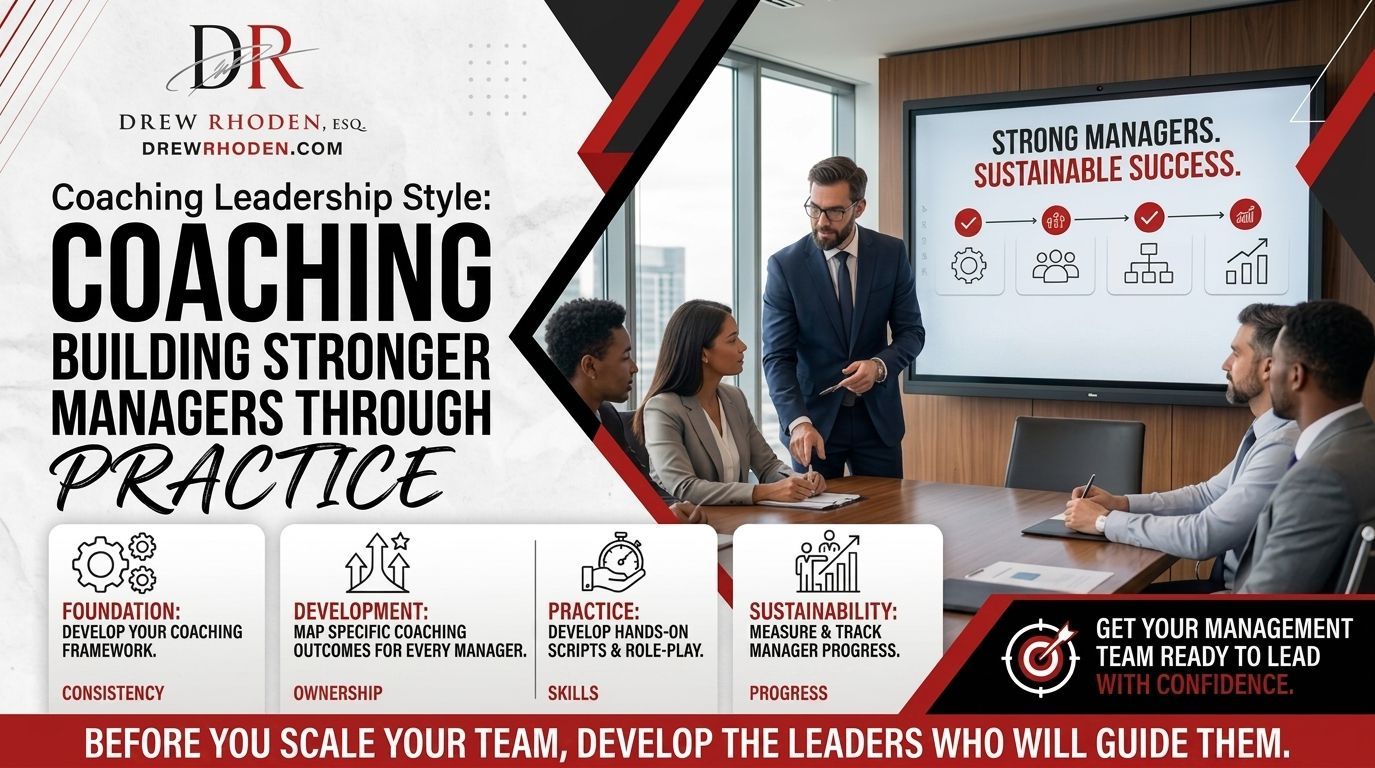





Strengthening Leadership Teams to Prevent Business Decline
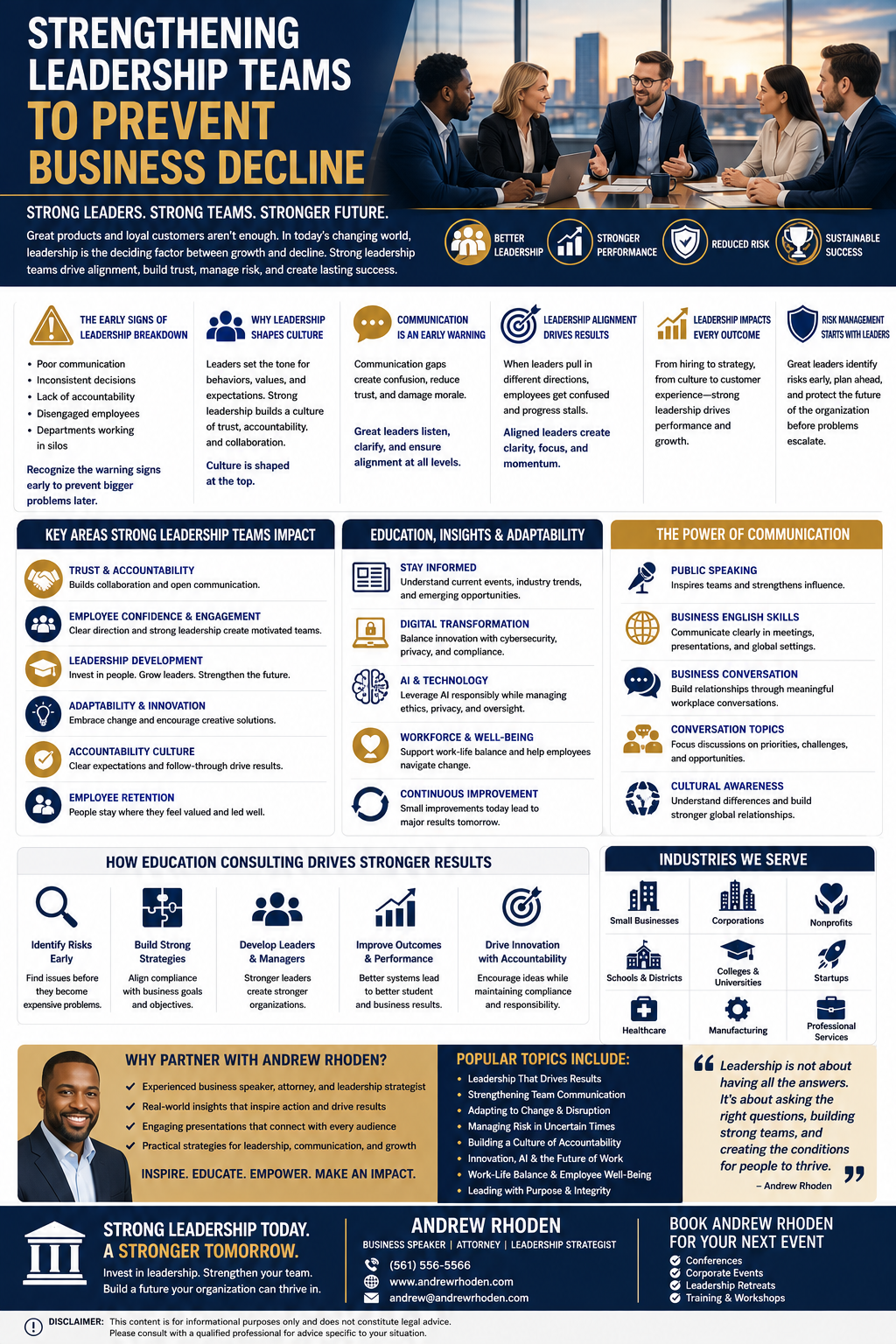
Why Strong Leadership Matters More Than Ever
Every successful organization eventually reaches a point where leadership becomes the deciding factor between growth and decline. A company may have excellent products, loyal customers, and talented employees, but weak leadership can slowly undermine those advantages. In today's rapidly changing business world, organizations face constant pressure from competition, technology, economic uncertainty, and shifting workforce expectations.
Many business owners focus heavily on revenue, marketing, and operations while overlooking leadership development. Unfortunately, leadership problems often remain hidden until performance begins to decline. By the time warning signs become obvious, significant damage may already have occurred.
Strong leadership teams help organizations navigate uncertainty, improve decision-making, and maintain focus during difficult periods. When leaders work together effectively, businesses are better positioned to overcome challenges and create sustainable success.
The Early Signs of Leadership Breakdown
Business decline rarely happens overnight.
More often, organizations experience gradual deterioration caused by poor communication, inconsistent decision-making, and lack of accountability. Employees may become disengaged, managers may operate independently, and departments may stop working toward shared objectives.
These issues often appear long before financial problems become visible.
Organizations that recognize these warning signs early have a much greater opportunity to reverse negative trends before they become serious threats.
Why Leadership Teams Shape Company Culture
Leadership influences every aspect of company culture.
Employees pay close attention to how leaders communicate, solve problems, handle conflict, and treat others. Leadership behaviors often become cultural norms throughout the organization.
When leaders demonstrate accountability, transparency, and collaboration, employees are more likely to do the same. Conversely, poor leadership behaviors often spread quickly throughout the workplace.
A healthy company culture begins with a strong leadership team.
Communication Problems Often Signal Larger Issues
One of the earliest indicators of organizational trouble is poor business communication.
Leaders may assume information is being shared effectively when, in reality, employees feel disconnected from important decisions. Communication gaps create confusion, reduce trust, and increase frustration.
Strong leaders understand that communication is more than delivering instructions.
It involves listening, clarifying expectations, and ensuring everyone understands organizational goals.
Why Leadership Alignment Is Critical
Organizations often struggle when leaders move in different directions.
One department may prioritize growth while another focuses on cost reduction. One manager may encourage innovation while another discourages risk-taking. These inconsistencies create confusion for employees.
Leadership alignment helps ensure decisions support a common vision.
When leaders work together effectively, the organization gains clarity and momentum.
The Relationship Between Leadership and Organizational Performance
Leadership directly affects organizational performance.
Every major business outcome is influenced by leadership decisions regarding hiring, strategy, culture, communication, and resource allocation. Strong leaders create environments where employees can perform at their highest level.
Poor leadership often creates barriers that limit productivity and innovation.
Improving leadership effectiveness frequently produces measurable improvements throughout the organization.
Why Risk Management Starts With Leadership
Effective risk management begins long before a crisis occurs.
Strong leaders identify potential threats, evaluate vulnerabilities, and develop plans to address challenges proactively. This approach reduces uncertainty and helps organizations respond more effectively when problems arise.
Leadership teams that ignore risks often find themselves reacting rather than planning.
Proactive leadership helps protect long-term business stability.
Building Trust Within Leadership Teams
Trust is essential for effective leadership.
Without trust, leaders hesitate to share concerns, challenge ideas, or collaborate openly. This can lead to poor decisions and missed opportunities.
Trust develops through consistent actions, honest communication, and shared accountability.
Organizations with high levels of trust often experience stronger teamwork and better results.
Why Employee Confidence Depends on Leadership
Employees look to leaders for direction during both good times and difficult periods.
When leaders communicate clearly and act decisively, employees often feel more confident about the future. Uncertainty, however, can quickly reduce morale and productivity.
Strong leadership helps create stability even when circumstances are challenging.
Confidence is often one of the most valuable assets a leadership team can provide.
The Importance of Leadership Development
Many organizations invest heavily in technical training but neglect leadership development.
Strong leaders are not simply born with leadership abilities. They develop skills through experience, coaching, education, and continuous improvement.
Leadership development helps managers become more effective communicators, decision-makers, and problem-solvers.
Organizations that invest in leadership often experience stronger long-term growth.
How Managers Influence Business Success
Front-line managers have tremendous influence over organizational outcomes.
They interact with employees daily, shape workplace experiences, and translate executive decisions into action. Their effectiveness often determines whether strategies succeed or fail.
Investing in manager development creates benefits throughout the organization.
Strong managers help bridge the gap between leadership vision and operational execution.
Why Leadership Teams Must Adapt to Change
The modern business environment changes rapidly.
Technology advancements, shifting customer expectations, artificial intelligence, and evolving workforce trends require leaders to remain flexible and responsive. Organizations that resist change often struggle to remain competitive.
Effective leadership teams embrace continuous learning.
Adaptability has become one of the most important leadership traits in today's business environment.
Learning From Current Events and Industry Trends
Leaders who ignore current events often miss important opportunities and risks.
Economic changes, technological innovation, workforce developments, and industry trends can significantly affect business performance. Staying informed allows leaders to make more strategic decisions.
Understanding broader trends helps organizations prepare for future challenges.
Knowledge creates opportunities for proactive leadership.
The Role of Innovation in Preventing Decline
Organizations that stop innovating often begin falling behind.
Innovation does not always require major technological breakthroughs. Small improvements in processes, communication, customer service, and operations can create significant value.
Strong leadership encourages creative thinking and continuous improvement.
Innovation helps businesses remain relevant in competitive markets.
Why Small Businesses Face Unique Leadership Challenges
Small businesses often operate with limited resources and lean leadership structures.
Owners frequently manage multiple responsibilities simultaneously, leaving little time for leadership development. While this is understandable, leadership challenges can still create significant risks.
Small organizations benefit greatly from strong leadership practices.
Even modest improvements can produce meaningful results.
Creating a Culture of Accountability
Accountability is one of the foundations of effective leadership.
Employees perform better when expectations are clear and leaders consistently follow through on commitments. Accountability creates trust and reinforces organizational standards.
Strong leadership teams model accountability through their own actions.
This behavior encourages responsibility throughout the workplace.
The Impact of Leadership on Employee Retention
Employees rarely leave organizations for a single reason.
Leadership quality often plays a significant role in retention decisions. Employees want to work for leaders who communicate effectively, provide support, and create opportunities for growth.
Strong leadership improves employee satisfaction and engagement.
Retaining talented employees helps organizations maintain stability and momentum.
Why Professional Development Should Be Ongoing
Leadership growth is a continuous process.
Even experienced leaders benefit from ongoing learning, coaching, and professional development. The business environment changes too quickly for leaders to rely solely on past experiences.
Organizations that prioritize development often remain more competitive.
Continuous learning supports long-term leadership effectiveness.
Communication Skills Separate Great Leaders From Average Leaders
Exceptional leaders understand the power of communication.
Whether speaking to employees, customers, investors, or community stakeholders, leaders must communicate clearly and confidently. Effective communication helps align teams and build trust.
This is one reason public speaking skills have become increasingly important for business leaders.
The ability to connect with an audience can significantly influence organizational success.
Why Public Speaking Strengthens Leadership Effectiveness
Public speaking is often viewed as a presentation skill.
In reality, it is a leadership skill. Leaders who can communicate effectively in meetings, conferences, and workplace settings often inspire greater confidence and engagement.
Strong communication helps leaders explain vision, address concerns, and motivate teams.
Public speaking strengthens leadership at every level of an organization.
Andrew Rhoden's Approach to Leadership Development
Andrew Rhoden has built a reputation as a trusted business speaker who helps organizations strengthen leadership, improve communication, and navigate complex business challenges. His background in law, business strategy, and organizational leadership allows him to provide practical insights that resonate with executives, managers, and employees alike.
Unlike many speakers who focus solely on theory, Andrew combines real-world experience with engaging presentation techniques. His presentations help leaders understand how communication, accountability, and strategic thinking contribute to organizational success.
Organizations seeking meaningful leadership development often benefit from perspectives grounded in both experience and practical application.
Why Business Communication Remains a Competitive Advantage
Many organizations underestimate how much effective communication influences performance.
Strong business communication helps leaders align teams, reduce misunderstandings, and create a more productive workplace. When communication is clear, employees understand expectations, customers receive better service, and organizational goals become easier to achieve.
Poor communication often leads to confusion, missed opportunities, and unnecessary conflict
Leaders who prioritize communication create stronger foundations for long-term success.
Business English Skills in a Global Economy
Today's business environment is increasingly connected.
Organizations frequently work with clients, vendors, and partners from different regions and countries. As a result, business english skills have become increasingly valuable in professional settings.
Strong communication helps professionals navigate meetings, negotiations, and presentations more effectively.
Whether participating in an international conference or managing a cross-border project, communication skills often influence outcomes.
Why Business English Conversation Skills Matter
Effective leadership involves more than technical expertise.
Leaders must also communicate ideas clearly and confidently. Developing business english conversation skills helps professionals navigate workplace discussions, presentations, and strategic conversations.
These skills are especially important when interacting with diverse audiences.
Clear communication strengthens collaboration and improves organizational performance.
Using Business Conversation to Build Stronger Teams
Every interaction shapes workplace relationships.
Simple business conversation opportunities often help leaders build trust and strengthen connections with employees. Whether during a formal meeting or casual workplace interaction, meaningful conversations contribute to stronger relationships.
Leaders who communicate consistently often create more engaged teams.
Strong relationships support collaboration and productivity.
Why Conversation Topics Matter in Professional Settings
The topics leaders choose to discuss influence workplace culture.
Relevant conversation topics help teams focus on priorities, opportunities, and challenges. Productive discussions encourage participation and generate valuable ideas.
Leaders who facilitate meaningful conversations often improve engagement.
Thoughtful dialogue helps organizations move forward more effectively.
Exploring Business Discussion Topics That Drive Results
Organizations benefit from addressing important business discussion topics regularly.
Examples include innovation, customer service, leadership development, employee engagement, technology adoption, and strategic planning. These conversations help organizations identify opportunities and address concerns proactively.
Strong leaders encourage open dialogue around important issues.
Meaningful discussions often lead to better decisions.
Why Learning Business English Supports Professional Growth
Many professionals continue learning business english throughout their careers.
Improved communication skills often create opportunities for advancement, leadership roles, and international collaboration. These skills help professionals communicate more effectively in meetings, presentations, and negotiations.
Organizations benefit when employees continue developing communication abilities.
Professional growth often begins with stronger communication.
Supporting Business English Students in the Workplace
Some organizations invest in communication development programs.
Business english students often gain confidence through practical exercises focused on workplace communication. These programs help employees improve clarity, professionalism, and collaboration.
When communication improves, organizational performance often improves as well.
Development opportunities create value for both employees and employers.
Business English Topics That Strengthen Leadership
Many leadership development programs include communication training.
Common business english topics include presentations, negotiations, meetings, networking, customer interactions, and conflict resolution. These areas directly influence leadership effectiveness.
Communication skills support stronger relationships and better outcomes.
Leaders who communicate effectively often achieve greater influence within their organizations.
Why Small Talk Has Strategic Value
Some leaders dismiss small talk as unimportant.
In reality, casual conversations help professionals build rapport, strengthen relationships, and create trust. Small talk often serves as the foundation for stronger business relationships.
People are more likely to collaborate effectively when they feel connected.
Relationship-building remains an important leadership skill.
Understanding Cultural Differences in Business
Modern organizations often operate across diverse environments.
Understanding cultural differences helps leaders communicate more effectively with employees, clients, and partners. Awareness of cultural perspectives reduces misunderstandings and strengthens collaboration.
Inclusive leadership supports stronger workplace relationships.
Cultural awareness is increasingly valuable in today's global economy.
Remote Work Has Changed Leadership Expectations
The rise of remote work has transformed leadership responsibilities.
Leaders must now maintain engagement, communication, and accountability across distributed teams. Building culture and trust often requires more intentional effort in remote environments.
Strong communication becomes even more important when employees are not physically together.
Effective leaders adapt their approaches to changing workplace realities.
Why Work Life Balance Influences Organizational Health
Employees increasingly value work life balance.
Organizations that support employee well-being often experience stronger engagement, improved retention, and higher productivity. Leadership plays a major role in creating healthy workplace expectations.
Sustainable performance depends on both results and well-being.
Strong leaders understand the importance of balance.
Helping Employees Navigate Workplace Challenges
Every organization faces challenges.
Economic uncertainty, organizational change, technology adoption, and workforce transitions can create stress for employees. Leaders who provide support during difficult periods often strengthen organizational resilience.
Employees look to leadership for guidance and stability.
Supportive leadership helps organizations navigate uncertainty more effectively.
How Corporate Events Support Leadership Development
Many organizations use corporate events to strengthen culture and develop leaders.
Conferences, retreats, workshops, and professional development programs create opportunities for learning and collaboration. These events help reinforce organizational priorities while fostering engagement.
The right speaker can significantly increase the impact of these experiences.
Strong presentations often inspire meaningful action.
Why Organizations Seek a Business Keynote Speaker
An experienced business keynote speaker brings fresh perspectives and valuable insights.
Leadership teams often benefit from hearing new ideas regarding communication, innovation, risk management, and organizational growth. A keynote presentation can energize employees and encourage strategic thinking.
The most effective speakers connect ideas to real-world challenges.
Practical insights often create lasting value.
What Makes an Ideal Keynote Speaker?
The ideal keynote speaker understands both leadership and business realities.
Audiences respond best to speakers who combine expertise with authenticity. They want practical guidance rather than abstract theories.
Strong speakers engage audiences while providing actionable insights.
The ability to inspire and educate simultaneously is a valuable skill.
Celebrity Speakers Versus Practical Business Experts
Many organizations consider hiring celebrity speakers for events.
While recognizable names can attract attention, practical expertise often delivers greater long-term value. Business audiences frequently benefit more from speakers who understand leadership, organizational performance, and workplace challenges.
Real-world experience creates credibility.
Practical insights often have a greater impact than entertainment alone.
Andrew Rhoden Helps Organizations Address Current Business Trends
As industries evolve, staying informed about emerging trends is essential.
Andrew Rhoden helps organizations understand how technology, leadership, communication, artificial intelligence, and changing workforce expectations affect business performance. His presentations address current developments while providing practical strategies for adaptation.
Organizations gain valuable insights they can apply immediately.
Staying informed helps businesses remain competitive.
Why Andrew Rhoden Connects With Diverse Audiences
Andrew Rhoden's presentations resonate with a wide range of audiences.
Business owners, executives, managers, entrepreneurs, and employees appreciate his ability to translate complex ideas into practical guidance. His expertise in law, leadership, and business strategy allows him to address challenges from multiple perspectives.
Audiences leave with actionable ideas rather than abstract concepts.
This practical focus helps create meaningful results.
Leadership Teams Shape the Future of Every Organization
The strength of a leadership team often determines the future of an organization.
Companies that invest in leadership development, communication, innovation, and employee engagement position themselves for long-term success. Strong leaders create environments where employees can perform at their best.
Business decline is rarely inevitable.
With the right leadership strategies, organizations can adapt, grow, and thrive.
Building Momentum Through Strong Leadership
Sustainable growth begins with leadership.
Organizations that prioritize communication, accountability, development, and strategic thinking often outperform competitors over time. Leadership influences culture, performance, innovation, and employee satisfaction.
Investing in leadership is one of the most valuable decisions a business can make.
The benefits often extend throughout the entire organization.
Moving Forward With Stronger Leadership
Every organization eventually reaches a moment when leadership becomes the deciding factor between continued growth and gradual decline. The businesses that succeed over the long term are often those that invest in their people, strengthen communication, embrace innovation, and develop leaders who can guide teams through uncertainty.
Leadership is not simply about managing operations. It is about creating confidence, building trust, supporting employees, and preparing organizations for future opportunities. When leaders commit to continuous improvement, the entire organization benefits.
Companies that prioritize leadership development today are often better prepared for the challenges and opportunities of tomorrow. The investment made in leadership now can influence organizational performance, workplace culture, and business success for years to come.
Using Business English Conversation Topics to Strengthen Leadership and Professional Communication
Many leadership development programs include practical business english conversation topics that help professionals communicate more effectively in workplace environments. Whether discussing company goals, customer relationships, market trends, or finance concerns, these discussions help employees build confidence and improve collaboration. Participating in a business english class can be an excellent way for professionals to strengthen communication skills while learning how to navigate real-world business situations. These conversations often prepare individuals for presentations, networking opportunities, and leadership responsibilities.
Strong communication skills are particularly valuable during a job interview, an important business trip, or when speaking with clients and colleagues in person. Educators frequently find that students feel more confident when they practice realistic workplace scenarios and engage in meaningful discussions. Some of the key features of effective communication training include interactive exercises, role-playing activities, and conversations covering various topics relevant to modern business environments. For example, discussing leadership lessons from public figures such as Will Smith, analyzing a professional blog post, or reviewing insights from a bestselling author can serve as a great topic or good topic for classroom and workplace discussions.
These activities are particularly helpful because they allow each person to develop stronger speaking skills while learning how to communicate professionally in different situations. Whether preparing for a new job, participating in leadership training, or developing workplace confidence, business communication exercises provide practical experience that can be applied immediately. Organizations that invest in communication development often see improvements in collaboration, leadership effectiveness, and overall organizational performance. Sometimes the most valuable learning occurs when participants are encouraged to explore ideas in more detail, ask thoughtful questions, and engage in meaningful conversations that support both personal and professional growth.
How a Business Speaker Helps Professionals Grow Through Real-World Communication Experiences
An experienced business speaker does more than deliver a presentation. Effective speakers share practical insights, real-world examples, and communication strategies that professionals can immediately apply within their organizations. Whether discussing leadership,
workplace culture, innovation, or organizational growth, a skilled presenter helps audiences connect ideas to everyday business challenges.
These presentations often encourage participants to think differently, improve communication, and develop stronger leadership skills.
Many professionals discover the value of effective communication during experiences such as a business trip, where they may need to build relationships, present ideas, or represent their company in unfamiliar environments. Clear communication can influence opportunities, strengthen professional relationships, and improve confidence when interacting with clients, colleagues, and industry leaders. Learning how to communicate effectively in these situations often contributes to both personal and professional success.
Organizations can also reinforce these lessons by sharing leadership insights through internal training materials, newsletters, or a company blog post. Articles covering communication strategies, leadership development, and workplace trends provide employees with ongoing opportunities to learn and grow. When combined with presentations from a knowledgeable business speaker, these resources help create a culture of continuous improvement, stronger collaboration, and long-term organizational success.
Contact Andrew Rhoden for a Free Consultation
Strong leadership does not happen by accident. It requires intentional development, effective communication, and a willingness to adapt to changing business conditions. Whether your organization is experiencing growth challenges, communication issues, leadership transitions, or cultural concerns, the right guidance can make a meaningful difference.
Andrew Rhoden is a trusted business speaker, leadership strategist, and professional presenter who helps organizations strengthen leadership teams, improve communication, and navigate today's evolving business environment. His presentations combine practical business insights with engaging delivery to create experiences that educate, motivate, and inspire action.
If your company is looking for a keynote speaker, leadership development expert, or business strategist for corporate events, leadership retreats, conferences, or professional development programs, contact us today at (888) 209-4055 to book a free consultation. We would be happy to discuss your goals, answer your questions, and explore how Andrew Rhoden can help your organization build stronger leaders and achieve sustainable success.
share this
Related Articles
Related Articles