




The Essential Role of a Resilience College Speaker During Crisis Moments on Campus
Why Colleges Are Rethinking the Role of Speakers
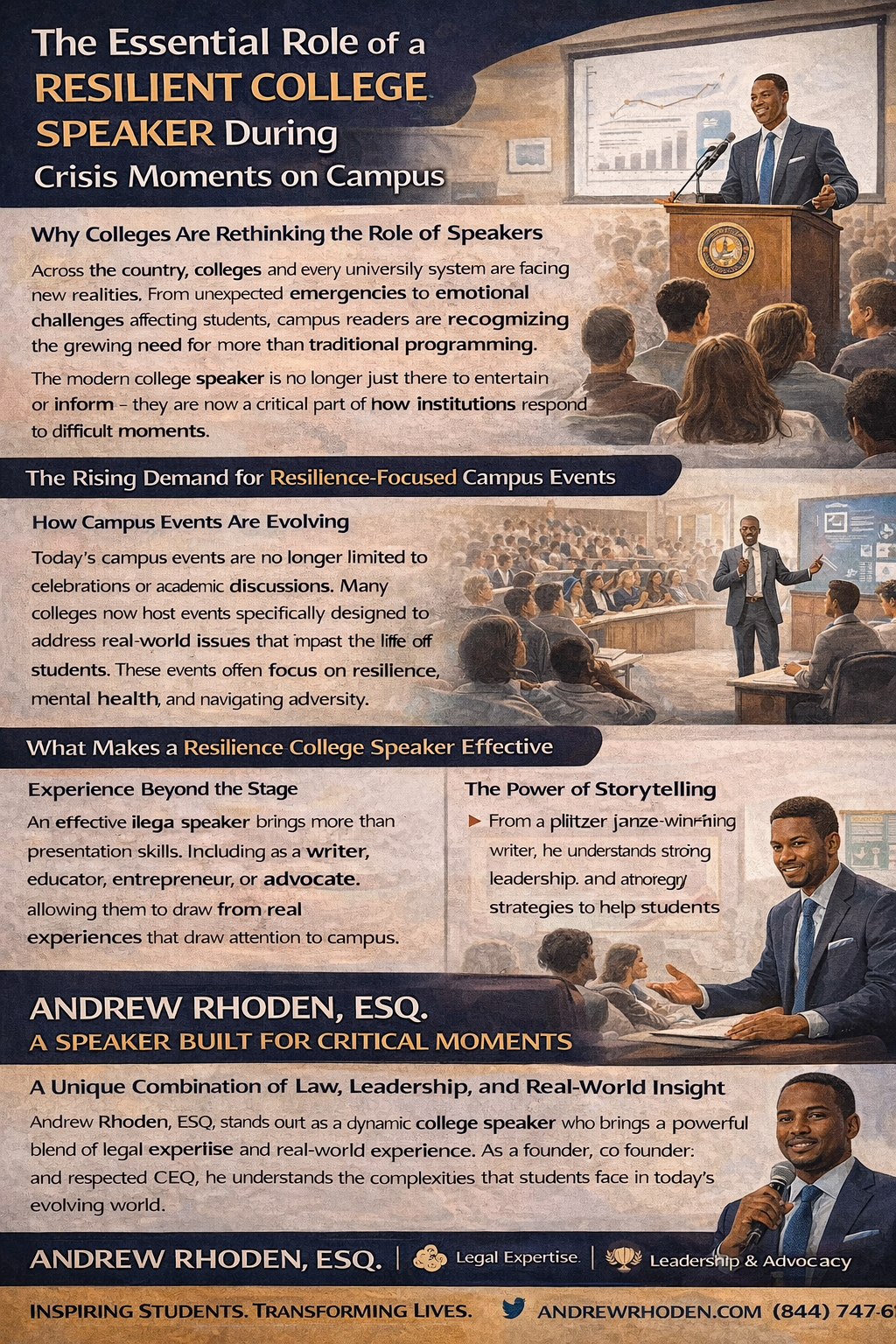
Across the country, colleges and every university system are facing new realities. From unexpected emergencies to emotional challenges affecting students, campus leaders are recognizing the growing need for more than traditional programming. The modern college speaker is no longer just there to entertain or inform—they are now a critical part of how institutions respond to difficult moments.
In times of uncertainty, speakers bring clarity, stability, and direction. A well-chosen keynote speaker can help guide college students, faculty, and staff through complex emotions while reinforcing a sense of unity on campus. This shift highlights the increasing importance of bringing in professionals who understand both crisis response and leadership.
The Rising Demand for Resilience-Focused Campus Events
How Campus Events Are Evolving
Today’s campus events are no longer limited to celebrations or academic discussions. Many colleges now host events specifically designed to address real-world issues that impact the life of students. These events often focus on resilience, mental health, and navigating adversity.
A powerful college event featuring experienced speakers can create a safe space for open dialogue. It allows the audience to process experiences together while gaining practical tools for moving forward. This is especially valuable when a university is working to rebuild trust and connection after a difficult situation.
The Role of Engaging Speakers in Difficult Moments
Not all speakers are equipped to handle sensitive situations. Institutions are now prioritizing engaging speakers who can connect with today's students on a deeper level. These individuals bring authenticity, relatability, and real-world insight.
The right keynote speaker understands how to read the room, adjust messaging, and deliver content that resonates with a diverse audience. Their ability to motivate and inspire during critical moments creates a meaningful and lasting impact.
What Makes a Resilience College Speaker Effective
Experience Beyond the Stage
An effective college speaker brings more than presentation skills. Many top speakers have backgrounds as a writer, educator, entrepreneur, or advocate, allowing them to draw from real experiences. Some are even a pulitzer prize winning writer or a new york times bestselling author, adding depth and credibility to their message.
Others may be a co founder or founder of impactful organizations, giving them firsthand knowledge of overcoming adversity. This level of experience is what sets apart a perfect speaker for high-stakes campus events.
The Power of Storytelling
Storytelling is one of the most effective tools a keynote speaker can use. Whether they are an actor, producer, or director, their ability to share meaningful stories can help students see their own experiences in a new light.
From a pulitzer prize-level narrative to a deeply personal account, storytelling builds trust. It allows the audience to feel understood while offering practical lessons that can be applied to their own life.
Andrew Rhoden, ESQ.: A Speaker Built for Critical Moments
A Unique Combination of Law, Leadership, and Real-World Insight
Andrew Rhoden, ESQ. stands out as a dynamic college speaker who brings a powerful blend of legal expertise and real-world experience. As a founder, co founder, and respected ceo, he understands the complexities that students face in today’s evolving world.
His background in sports law, business development, and protecting generational wealth positions him as more than just a keynote speaker. He is a trusted voice for leadership, innovation, and resilience.
A Voice That Connects With Today’s Students
Andrew Rhoden’s approach is rooted in authenticity. He speaks directly to today's students, addressing the pressures they face while encouraging them to build a stronger future. His ability to inspire students comes from relatable stories and actionable strategies.
As an award winning speaker, he has delivered impactful talks across leading colleges, leaving a lasting impact on every audience he engages.
The Influence of High-Profile Speakers in Higher Education
Learning From Recognized Voices
Many universities look to individuals who have been featured in the new york times or recognized as a york times bestseller. These bestselling author figures, including pulitzer prize winning writer professionals, bring authority and recognition that draw attention to important topics.
From a harvard professor to a respected political commentator, these speakers often shape conversations that influence both campus culture and broader societal discussions.
Inspiration Across Industries
Some speakers come from diverse backgrounds, including actor, producer, or even individuals associated with global recognition like an academy award, tony award, or grammy award. Their unique journeys provide insight into resilience, creativity, and success.
Even references to public figures like Angelina Jolie can illustrate how storytelling and advocacy can inspire change. These examples help students understand the broader impact of their actions.
Addressing Crisis Through Leadership and Communication
Building Strong Leadership on Campus
During times of crisis, strong leadership is essential. A skilled college speaker can reinforce the values that guide a university community forward. By addressing real concerns, they help leaders and students align on a shared vision.
This approach strengthens corporate culture within academic institutions, ensuring that values are reflected in both words and actions.
Encouraging Open Dialogue
A key role of speakers during difficult times is to encourage open communication. By creating a space where voices can be heard, they help students feel supported and valued.
This process not only builds trust but also fosters a sense of belonging that is critical for long-term success.
The Role of Advocacy and Social Impact
Becoming an Advocate for Change
Many top speakers serve as an advocate for meaningful change. Whether addressing social justice issues or promoting mental health awareness, they use their platform to drive positive outcomes.
A strong voice can influence how students think, act, and engage with their community.
Creating a Positive Impact That Lasts
The goal of any college event is to create a positive impact that extends beyond the moment. When speakers deliver meaningful content, it leaves a lasting impression that shapes behavior and decision-making.
The Importance of Innovation in Campus Programming
Adapting to Changing Needs
The needs of students are constantly evolving, and colleges must adapt. Bringing in speakers who focus on innovation ensures that programming remains relevant and impactful.
This includes exploring new formats, such as live discussions, interactive sessions, or even integrating a podcast element into events.
Preparing the Next Generation for the Future
Ultimately, the goal is to prepare the next generation for success. By exposing students to diverse perspectives, universities can help them develop the skills needed to thrive in an ever-changing world.
Selecting the Right Speaker for Your Campus
What Colleges Should Look For
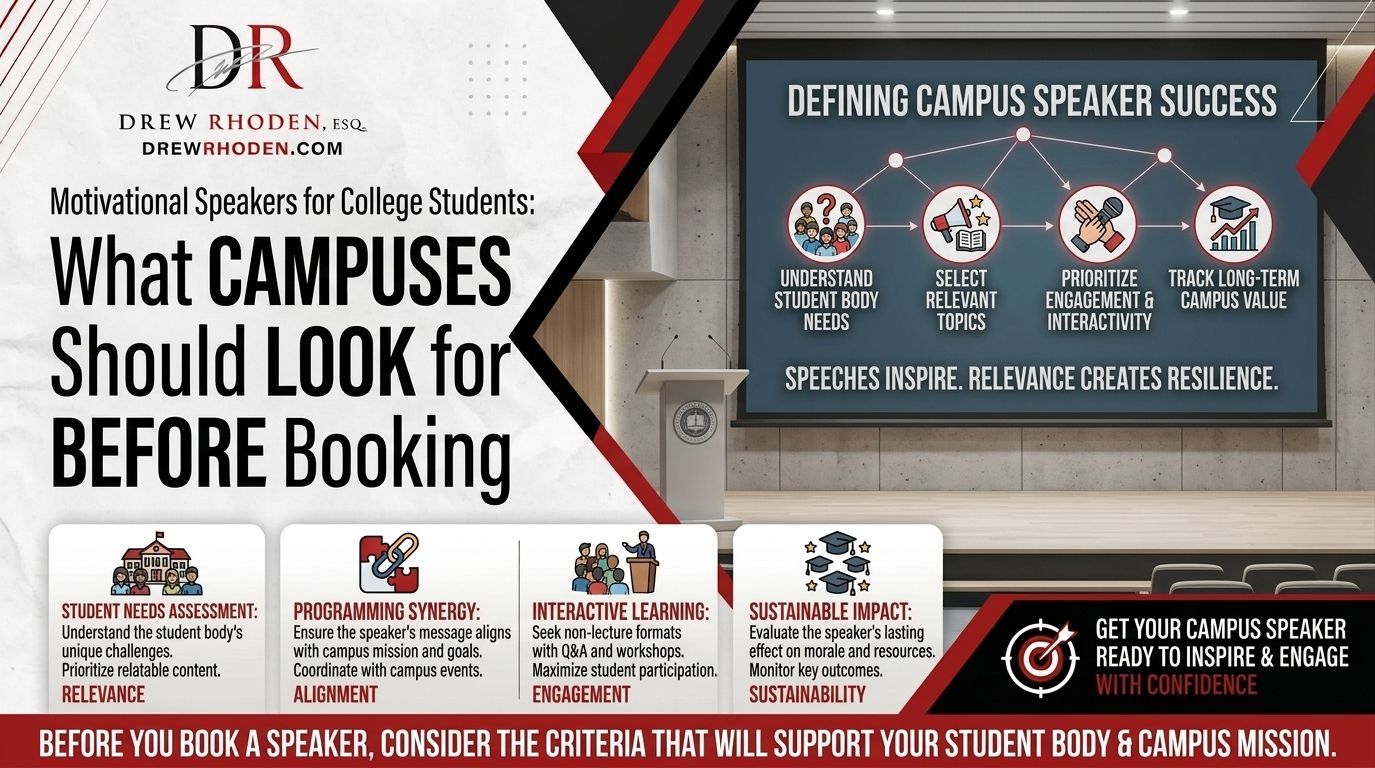
Choosing the right college speaker requires careful consideration. Institutions should look for individuals who:
- Have experience addressing real-world challenges
- Demonstrate strong leadership and communication skills
- Can connect with a diverse audience
- Bring credibility as a bestselling author or award winning professional
These qualities ensure that the selected speaker can deliver meaningful results.
Creating Memorable Events
A well-planned event with the right host and speakers can transform the campus experience. Whether it’s a keynote session or a panel discussion, the goal is to create moments that resonate with students long after the event ends.
A Lasting Perspective on the Role of Speakers
The evolving role of a college speaker reflects the changing needs of colleges and universities. As institutions face new challenges, the demand for experienced, empathetic, and knowledgeable speakers will only continue to grow.
Professionals like Andrew Rhoden, ESQ. bring the kind of insight and authenticity that today’s students need. His ability to combine legal expertise with real-world experience makes him an ideal choice for campuses seeking meaningful engagement.
Your College Speaker to Inspire and Motivate
Inspiring Students. Transforming Lives.
Andrew Rhoden’s mission is simple: to help students unlock their full potential. His talks go beyond surface-level motivation, offering practical guidance that resonates with the realities of life on campus. Whether speaking to aspiring leaders or first-year college students, his approach ensures every message is heard and remembered.
From the Classroom to the Global Stage: Influential Voices Shaping Personal Development
Across today’s speaking landscape, some of the most impactful leaders come from diverse and unexpected backgrounds. An award winning journalist, a former kindergarten teacher, or even a co host of a widely followed podcast can evolve into an acclaimed author and best selling author whose message reaches millions.
Many of these individuals have studied or spoken at respected institutions like Southern Methodist University, Duke University, and Georgetown University, while also collaborating with organizations connected to a national association or even initiatives tied to the White House.
Their journeys often reflect a deep passion for personal development, empowerment, and creating meaningful change. Some speakers, including inspiring figures like a deaf superhero, have amassed billion views online, proving their ability to connect with a global audience. Whether addressing students, professionals, or leadership teams, this carefully curated list of voices—many of whom have worked alongside a president or built a successful platform—continues to inspire transformation on campuses and beyond.
Connect With Andrew Rhoden, ESQ. Today
If your university or organization is planning upcoming campus events or navigating a challenging moment, now is the time to bring in a speaker who delivers real impact. Andrew Rhoden, ESQ. provides insight, inspiration, and strategies that help students grow, adapt, and lead.
Reach out today to schedule a free consultation and learn how a powerful college speaker can elevate your next event. Contact us at (888) 209-4055 to start the conversation and create an experience your audience will never forget.
share this
Related Articles
Related Articles