





Sport Speaker Insights on Managing Anxiety and Stress in Competitive Sports
Understanding the Pressure Behind Competitive Sports
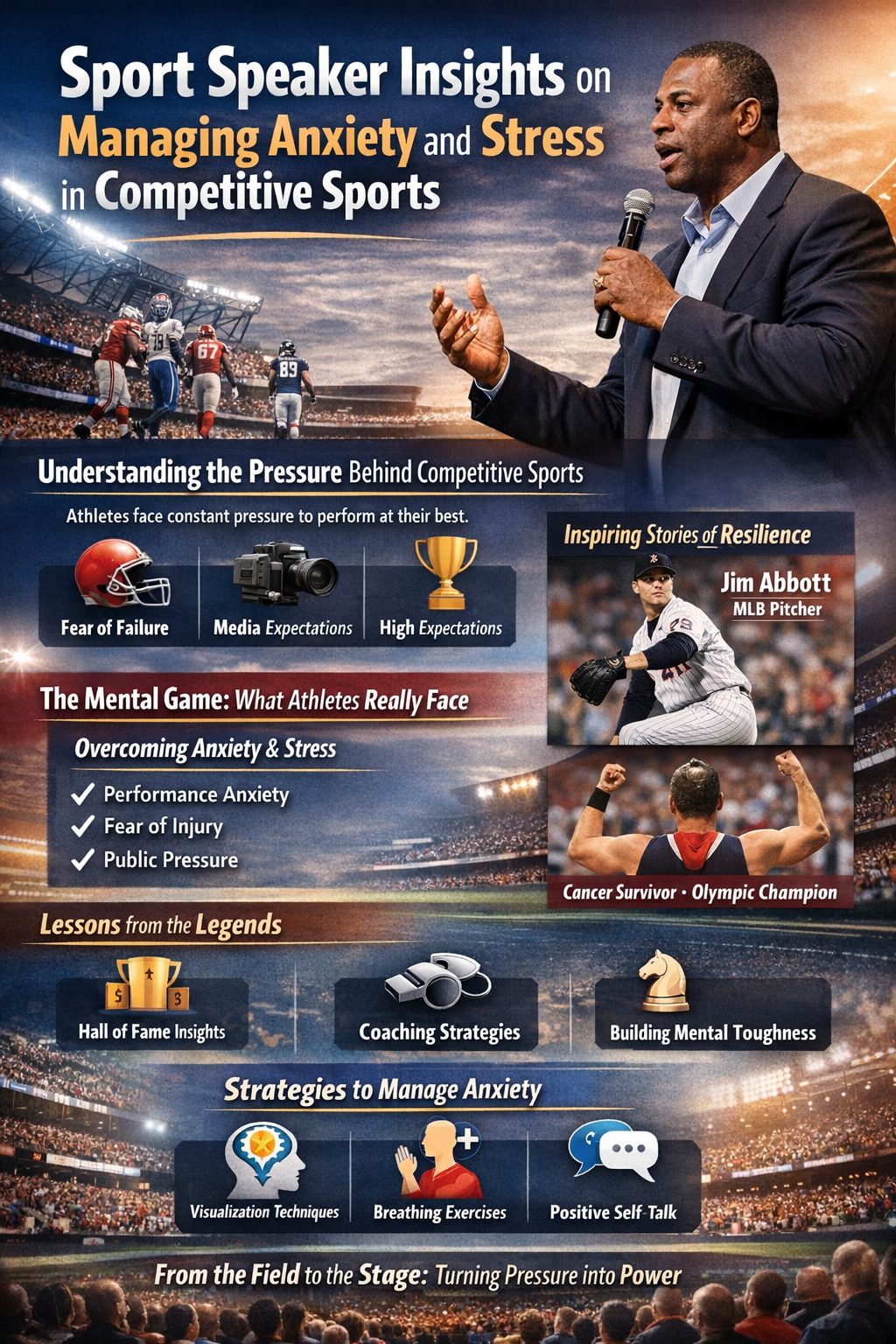
In the world of competitive sports, pressure is not just expected—it is constant. Athletes at every level, from a rookie stepping onto the field to a super bowl champion, experience moments where anxiety can affect performance. A seasoned sport speaker often shares that the difference between good and great athletes is not just physical ability, but how they manage stress under pressure. These insights come from years of experience across the nfl, major league baseball, and even the world cup stage.
Many motivational speakers who have transitioned from athletes to keynote speaker roles explain that pressure is part of the journey. Whether it’s a former nfl quarterback preparing for the super bowl or an olympic gold medalist standing before the world, the mental battle is real. These speakers bring authenticity because they have lived it, making their message resonate deeply with audiences.
The Mental Game: What Athletes Really Face
The Hidden Struggles Behind Success
Behind every highlight reel is a story of internal struggle. Athletes often deal with fear of failure, public expectations, and the pressure to perform consistently. A hall of famer may appear confident, but even those in the nfl hall or nba hall have faced moments of doubt. This is where a sports keynote can shift perspectives, offering real-world strategies to manage these emotions.
A cancer survivor who returns to the playing field often becomes one of the most powerful athlete speakers. Their journey highlights resilience and reminds audiences that stress is not always the enemy—it can be a tool for growth. These legendary stories provide inspiration and practical lessons that go beyond the game.
Why Anxiety Affects Performance
Anxiety can disrupt focus, decision-making, and physical execution. A former nfl player or head football coach might explain how even a slight mental lapse can change the outcome of a game. This is why sports keynote speakers emphasize mental preparation just as much as physical training.
Key factors that contribute to anxiety include:
- High expectations from coaches and team members
- Fear of injury or failure
- Media pressure, especially from platforms like espn
- Personal goals tied to success and fame
Understanding these triggers allows athletes to take control rather than feel overwhelmed.
Lessons from Elite Sports Speakers
Learning from the Greats
Some of the top sports keynote speakers include individuals who have reached the pinnacle of their careers. From a super bowl champion to an olympic champion, these speakers bring unmatched credibility. Names like Magic Johnson often come up in discussions about leadership, resilience, and peak performance.
Magic Johnson, a hall of fame basketball icon, is frequently referenced by motivational sports speakers for his ability to overcome challenges. His journey from nba hall recognition to becoming a successful entrepreneur and philanthropist demonstrates how mindset can shape outcomes far beyond sports.
Insights from a Hall of Famer Perspective
A hall of famer understands pressure differently. Whether from the hockey hall or nfl hall, these individuals have experienced the highest levels of competition. Their keynote speech often focuses on:
- Staying focused in high-pressure moments
- Building confidence through preparation
- Turning setbacks into lessons learned
These insights are not just for athletes but for anyone looking to improve performance in high-stress environments.
The Role of Coaches and Leadership
How Coaches Influence Mental Strength
A head coach or nfl head coach plays a critical role in shaping an athlete’s mindset. Great coaches do more than teach plays—they build confidence and resilience. Many motivational speakers who were once coaches share how leadership can either increase stress or help athletes manage it effectively.
A head football coach who has guided teams through championships understands the balance between pushing athletes and supporting them. Their insights often highlight the importance of communication, trust, and teamwork.
Building a Supportive Team Environment
A strong team environment reduces anxiety and promotes peak performance. When athletes feel supported, they are more likely to perform at their best. Key elements include:
- Open communication between players and coaches
- Encouragement rather than criticism
- Clear roles within the team
This approach is often discussed by sports legends who have experienced both positive and negative team dynamics.
Strategies to Manage Anxiety in Sports
Mental Preparation Techniques
Athletes can use several techniques to manage stress effectively. A keynote speaker who is also a bestselling author may emphasize the importance of routine and preparation. These strategies are commonly shared by athlete speakers across different sports.
Some proven methods include:
- Visualization before competition
- Controlled breathing exercises
- Positive self-talk
- Setting realistic goals
These techniques help athletes stay focused and reduce anxiety during critical moments.
The Power of Routine
Consistency creates confidence. A former nfl quarterback might explain how pre-game routines helped maintain focus during the super bowl. Routine eliminates uncertainty, allowing athletes to concentrate on execution rather than distractions.
Motivational speakers often stress that routine is not about superstition—it is about preparation. This mindset shift can significantly improve performance.
Inspiration from Real-Life Athlete Stories
Overcoming Adversity
Stories of athletes overcoming adversity are among the most powerful tools for inspiration. Jim Abbott, a major league baseball pitcher born without a right hand, is frequently mentioned by sports keynote speakers. His journey proves that limitations are often self-imposed.
Similarly, a cancer survivor who returns to competition embodies resilience. These stories remind audiences that challenges can be stepping stones rather than obstacles.
From the Field to the Stage
Many athlete speakers transition into roles as keynote speaker, podcast host, or entrepreneur. Their experiences on the field provide valuable lessons for life and business. A co founder or ceo who once played in the nfl brings a unique perspective to leadership and stress management.
These individuals often become bestselling author figures, sharing their insights with a global audience. Their ability to inspire goes beyond sports, impacting audiences across industries.
The Business of Sports Speaking
Understanding Speaking Fees and Value
Hiring a sport speaker involves understanding the value they bring. While speaking fees vary, the impact of a powerful keynote speech can be significant. Organizations often invest in top sports keynote speakers to motivate their team and improve performance.
The star power of a super bowl champion or olympic gold medalist can draw attention to an event. However, the true value lies in the lessons and insights they share.
What Makes a Great Sports Keynote Speaker
A great keynote speaker combines experience, storytelling, and authenticity. The best speakers are those who can connect with audiences and deliver actionable insights. Key qualities include:
- Real-world experience in sports
- Strong communication skills
- Ability to inspire and motivate
- Relatable stories and lessons
These traits are what set apart top sports keynote speakers from others.
The Connection Between Sports and Life
Lessons That Extend Beyond the Game
The lessons learned in sports apply to everyday life. From teamwork to resilience, these principles help individuals succeed in various fields. A sports keynote often highlights how the mindset developed in athletics can lead to success in business and personal life.
An entrepreneur or founder who once competed at a high level understands the parallels between sports and leadership. This perspective resonates with audiences looking to improve their own performance.
Building Confidence Through Experience
Confidence is built through experience and preparation. A former nfl player or world cup champion knows that success comes from consistent effort. These lessons are often shared by motivational speakers to help others build confidence in their own abilities.
The Role of Media and Public Perception
Handling Pressure from the Spotlight
Media attention can increase stress for athletes. Whether appearing on espn or being analyzed by an analyst, athletes must learn to manage public perception. A keynote speaker who has experienced this firsthand can provide valuable insights.
An emmy award winning analyst or espn analyst often discusses how athletes can stay focused despite external distractions. This guidance is essential for maintaining performance under pressure.
Turning Pressure into Motivation
Pressure can be transformed into motivation with the right mindset. Many motivational sports speakers emphasize that stress is not always negative. Instead, it can be a driving force for improvement.
This perspective helps athletes reframe their challenges and approach competition with confidence.
Preparing for Your Next Event with a Sports Speaker
Why Sports Speakers Make an Impact
Bringing in a sport speaker for your next event can create lasting impact. These speakers offer unique insights that resonate with audiences across industries. Their stories of success, failure, and resilience provide valuable lessons for everyone.
Whether it’s a super bowl champion, olympic champion, or hall of fame athlete, the message remains consistent—mental strength is key to success.
Creating a Memorable Experience
A powerful sports keynote can transform an event into an unforgettable experience. The combination of storytelling, expertise, and authenticity leaves a lasting impression on audiences.
Organizations looking to inspire their team often turn to athlete speakers who can deliver both motivation and practical insights.
Moving Forward with Confidence and Clarity
Managing anxiety and stress in competitive sports is not about eliminating pressure—it is about learning how to handle it effectively. The insights shared by sports keynote speakers, from former nfl stars to olympic gold medalist figures, provide a roadmap for success.
These speakers remind us that challenges are part of the journey. With the right mindset, preparation, and support, athletes can turn pressure into performance and achieve their goals. The lessons shared on the stage often extend far beyond sports, impacting every area of life.
The Influence of Motivational Speakers in Competitive Sports
Motivational speakers play a vital role in helping athletes and organizations navigate the pressures of competitive sports. These speakers bring real-world experience, often as former athletes, coaches, or industry leaders, allowing them to connect deeply with audiences. Through powerful storytelling and practical insights, motivational speakers help individuals reframe anxiety, build confidence, and stay focused under pressure. Their ability to inspire action and shift mindset makes them a valuable addition to any event focused on performance, leadership, and personal growth.
Connect with a Leading Sport Speaker for Your Event
If you are looking to inspire your team, elevate your event, and provide meaningful insights on managing stress and achieving peak performance, now is the time to connect with a proven sport speaker.
Andrew Rhoden, ESQ., is a distinguished former college football coach, athlete, and attorney. With over a decade of experience coaching NCAA Division I football and serving as a head football coach at the high school level, Andrew brings unmatched expertise to every keynote speech. His background as a former nfl-level competitor and his deep understanding of sports, leadership, and mental health make him one of the most sought-after motivational speakers in the industry.
Andrew’s journey from the playing field to becoming a respected attorney and entrepreneur has been featured in major publications such as USA Today, U.S. News & World Report, and Yahoo News. As a former student-athlete with advanced degrees in Sports Management and a J.D. from American University Washington College of Law, he combines real-world experience with professional insight. His recognition as part of Hampton University’s 40 Under 40 Distinguished Alumni Association highlights his impact across both sports and law.
Whether you are planning your next event or looking to motivate your team, Andrew delivers powerful insights, inspiration, and actionable strategies that resonate with audiences.
Contact us today at (888) 209-4055 to book a free consultation and learn how a dynamic sports keynote speaker can make a lasting impact on your organization.
share this
Related Articles
Related Articles