






How to Plan a Photo Shoot Abroad (Without Losing Your Mind or Your Images)
What "Planning a Photo Shoot Abroad" Really Means
Picture this: you land in Bogotá with two camera bodies, a small crew, a tight client brief, and exactly five days to capture everything on your shot list. The light is different. The language is different. Your equipment is somewhere between customs and baggage claim. This is what international photography production actually looks like.
Planning a photo shoot abroad goes far beyond booking flights and picking a pretty location. It means navigating visas, overseas location scouting, crew logistics, weather backup plans, legal permissions, and client expectations across time zones. Organizing a successful photo shoot abroad requires balancing logistics and creative preparation at every stage.
At DrewRhoden.com, founder-led travel productions in places like Colombia have taught us that the best international work happens when creative exploration meets solid planning. By the end of this article, you'll know how to plan a photo shoot abroad step by step: from locking a brief to boarding the return flight with backed-up files.

Clarify the Creative Brief and Non‑Negotiables Before You Book Flights
A vague request like "let's shoot in Europe this fall" is not a brief. It's a trip idea. Before anyone books a flight, turn that idea into a document with specific deliverables, formats, deadlines, and usage rights. Communicate clearly about the vision and pacing of the shoot so every team member knows what success looks like on day one.
Lock these non-negotiables before any travel:
- Deliverables and usage rights: digital, print, social, billboard-define the scope and license terms upfront.
- Shot list priorities: rank hero shots versus nice-to-haves; plan your daily timeline around natural light for optimal shooting conditions.
- Key dates: client review milestones, publishing schedules, and hard deadlines.
- Locations: old town streets in Cartagena, sunrise at Monserrate in Bogotá-be specific, not aspirational.
- Budget ceilings: total spend, contingency allocation, and what triggers a scope change conversation.
Build a simple production calendar: 3–4 months out, approve the brief and begin remote scouting. At 6–8 weeks, book crew, talent, and flights. At 4 weeks, handle gear shipping and permits. This timeline prevents scope creep when everyone is jet-lagged and the client starts adding "one more scene."
Colombia photography lessons from prior trips prove this repeatedly: a tight brief avoids wasted days exploring aimlessly.
Choose the Right Country, City, and Season for Your Shoot
The right location is the one that serves the story, not just the one that looks good on a mood board. Connect the brand's narrative to specific geography-colonial streets versus glass towers, Caribbean light versus Andean mist.
Here's how a few destinations compare:
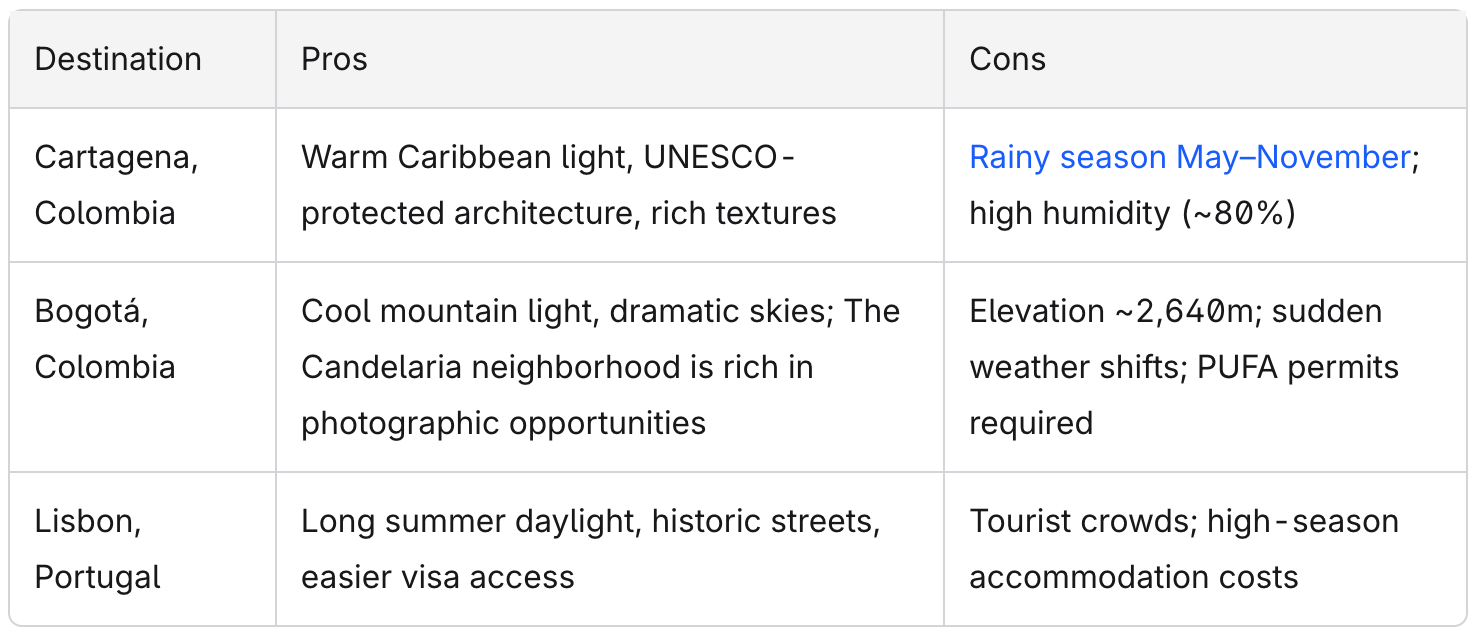
Cartagena is a UNESCO-protected site and photographer's paradise. The historic wall of Cartagena offers stunning architectural photography, and nearby Islote Santa Cruz is the world's most densely populated island-a striking visual story on its own.
Research locations thoroughly using digital guides or local blogs. Check major holidays like Semana Santa that affect crowds and permit availability. Consider safety, political stability, and access to hospitals or camera repair. Do a quick desk-based overseas location scouting pass using Google Street View and local Instagram geotags before committing.

Build a Realistic Shooting Schedule (With Buffer and Weather Days)
Never schedule critical hero shots on the day you land. Jet lag, customs delays, and lost bags will happen. Arrive early at locations to allow ample preparation time on actual shoot days.
Structure a 5–7 day production like this:
- Day 1: Arrival, light scouting, tech checks, crew alignment.
- Days 2–4: Core shoot. Book photo shoots during early morning for best lighting-golden hour is ideal for capturing stunning images. Sunrise and sunset provide the best lighting and early morning shoots help avoid crowds.
- Day 5: Floating weather backup or reshoot day.
- Days 6–7: Wrap, file backup, travel.
Schedule shoots later in the week for better acclimation. Schedule photo shoots towards the end of your trip so the team has found its rhythm. Early morning is the best time for street photography in Cartagena, where golden hour starts around 5:45 AM near the equator.
Integrate a formal rain plan into every schedule: designate at least one floating day for weather, plus short indoor backup blocks on each main shoot day. Use a shared cloud calendar with call times, transport plans, meal breaks, and sunset times for each location. Time zone differences matter-client review windows shift when you're a few hours ahead or behind.
Travel Shoot Crew Planning: Who Actually Needs to Fly?
Every seat on the plane adds cost: airfare, lodging, per diems, and customs complexity. The question isn't "who do I want there?" but "who actually needs to fly?"
Core roles to evaluate:
- Must fly: Lead photographer/director, producer (if scope warrants it), 1st assistant or digital tech.
- Hire locally: Lighting tech, fixer/translator, hair and makeup, drone operator, production assistant.
- Case-by-case: Dedicated wardrobe stylist, second shooter, video crew.
Consider hiring local talent or guides for better navigation and insight. A trusted local fixer can often replace 2–3 extra crew seats and dramatically simplify permits and problem-solving. Platforms like Flytographer offer vetted photographers abroad, and Airbnb Experiences lists local photographers for hire if you need supplemental coverage. Always review photographers' portfolios on their websites or Instagram before committing.
Create a crew travel list with passport names, dates, roles, allergies, emergency contacts, and WhatsApp numbers. Stagger arrivals: producer and assistant arrive 1–2 days early to finalize logistics; talent arrives the day before their first on-camera day.
Plan for crew fatigue. Back-to-back 14-hour days destroy quality. Cap shooting at 10–12 hours and build in rest.
Flights, Lodging, and Local Transport That Support the Shoot (Not Fight It)
Travel logistics either support the production or fight it. There's no middle ground.
- Flights: Book morning arrivals with at least one backup flight option. Longer layovers reduce the risk of lost gear on tight connections. Pack necessary gear in carry-on bags when flying-bodies, lenses, drives, and media never go in checked luggage. Carry a versatile camera setup to minimize fatigue and enhance agility.
- Customs: Register expensive gear beforehand to avoid customs issues. Customs preparation is important when traveling with high-end equipment. For multi-country shoots, an ATA Carnet lets you temporarily import professional gear without paying duties-include make, model, serial numbers, and value for every item.
- Accommodation: Stay within 15–20 minutes of primary locations. Inside Cartagena's walled city beats a suburban hotel an hour away. Choose rooms with reliable Wi-Fi and desk space for evening backups and editing sessions.
- Local transport: Coordinate logistics like transportation and meeting spots ahead of time. Pre-book vetted drivers for pre-dawn call times. Use vans with space for stands and Pelican cases. Build a simple movement plan for each day: hotel → location A → lunch → location B → backup indoor space → return, with drive times mapped.
Permits, Visas, and Legal Details You Can't Ignore
Check legal requirements and local customs regarding photography permits before you arrive, not after someone in a uniform asks for paperwork.
- Tourist vs. commercial: Most countries differentiate between personal photography and commercial production. In Colombia, foreign production personnel may need a courtesy V visa for artistic or technical roles on audiovisual projects.
- Public space permits: In Bogotá, the PUFA permit is required for film and audiovisual shoots in public spaces, with a typical 5-business-day approval window. Tripod rules in Paris, drone restrictions in Colombia, and fees for commercial work in historic centers like Dubrovnik all vary.
- Model and location releases: Use bilingual release forms. Ensure usage rights cover international distribution. Explain clearly to talent how images will be used.
- Insurance: Gear coverage, liability for rented studios or rooftops, and professional indemnity. U.S. photographers can expect basic business insurance bundles around $227/month.
- Lead time: Start permit conversations 4–8 weeks in advance. Store approvals digitally in a shared folder and carry printed copies.
Respect local culture and customs during photography. This isn't just etiquette-it's how you protect your access and your reputation.
Overseas Location Scouting, Light, and Weather Backup Plans
Start overseas location scouting remotely. Scout locations virtually or locally to find unique angles and vantage points using Google Earth, director's references, and Instagram location tags in target neighborhoods.
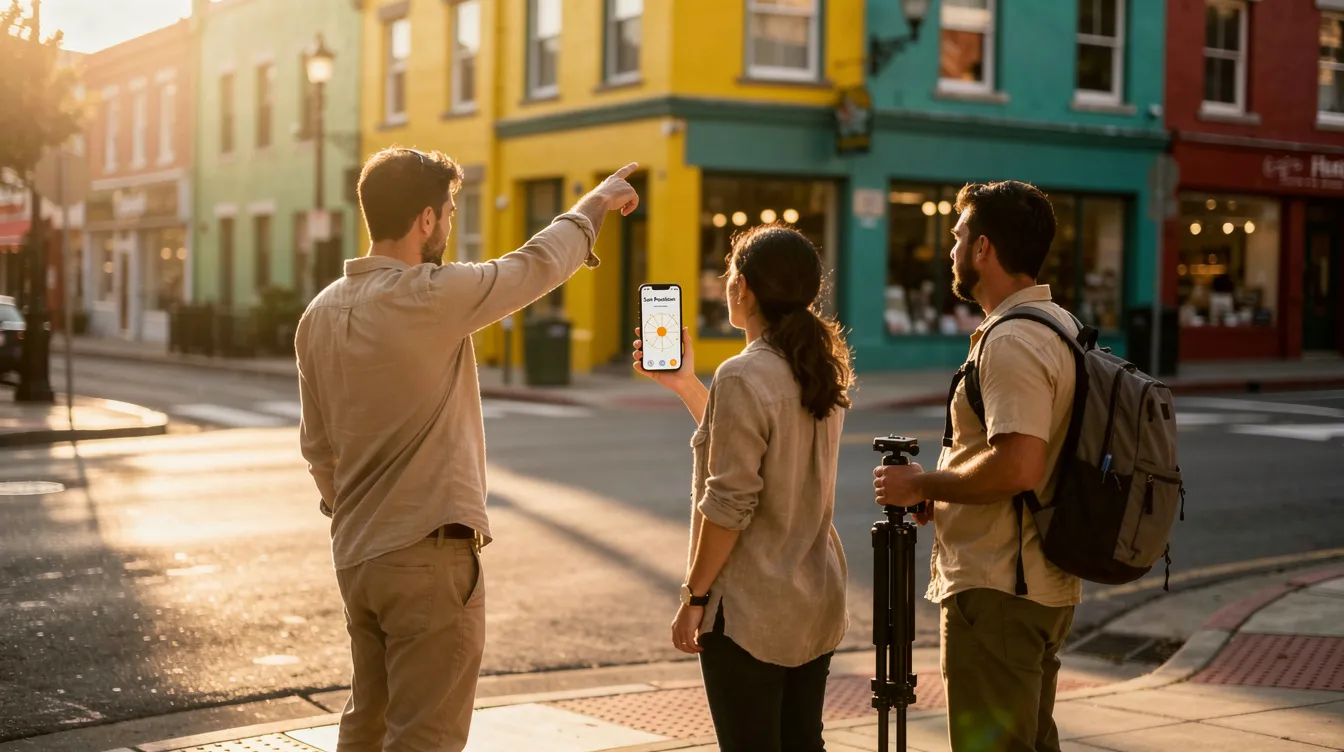
Then do an in-person tech scout: walk through streets of Getsemaní in Cartagena or La Candelaria in Bogotá to test light, noise, crowd flow, and power access. Use apps like Photopills or Sun Surveyor to map where light will fall at specific hours, especially for outdoor ceremony scenes or terrace portraits.
Build a weather backup plan for every outdoor spot:
- A list (primary outdoor): hero shots in full sun or golden hour.
- B list (cloudy): overcast skies and light drizzle can enhance photos with softer, more even light.
- C list (full rain): covered gallery lobby, hotel courtyard, greenhouse. Have a rain backup plan for outdoor ceremonies.
Light rain is not visible in photos, so don't panic at the first drops. Use plain white or see-through umbrellas for photos in rain if you want to lean into the weather. Ensure indoor space for guests during unexpected weather changes, and provide extra drinks for guests in hot weather to keep everyone comfortable. If a wedding day or main hero shot is washed out by a 3 p.m. storm, pivot to an early morning reshoot the next day.
Models, Talent, and Local Collaborators Abroad
Model coordination abroad requires more lead time and clearer contracts than domestic casting.
- Casting: Work with local agencies or Instagram outreach to find on-brand talent in cities like Mexico City, Bogotá, or Barcelona. A local tour of casting options often surfaces talent you'd never find remotely.
- Contracts: Usage terms must extend across borders. Cover working hours, overtime, travel days, and cancellation policies. Bilingual contracts reviewed by local counsel are worth the cost.
- Cultural nuance: Expectations around punctuality, communication style (WhatsApp versus email), and wardrobe modesty vary by region.
- Backup plans: Have at least one alternate model or an extra day in case of illness, visa issues, or missed connections.
- Hair, makeup, wardrobe: Source products locally when possible. Confirm who brings base wardrobe versus what's rented or shopped on arrival.
- Family and children: If the project involves family shoots, bring a snack to help your child warm up to the photographer. Children may take time to adjust to new environments during shoots. Aim for just two great photos with everyone smiling rather than forcing dozens of stiff frames.
DrewRhoden.com leverages relationships with local fixers and creatives in Colombia to quickly assemble reliable crews and talent-friends and collaborators built over multiple visits.
Gear, Data Management, and On‑the‑Road Backup Discipline
Backup solutions are essential for travel photography. Full stop.
- Gear packing: Primary and backup camera bodies, key lenses, compact lighting, batteries, chargers, power adapters, surge protectors. A detailed list of every item with serial numbers protects you at customs and for insurance claims.
- Rent vs. carry: C-stands, large modifiers, and ladders rent locally. Specialty bodies, lenses, media, and color targets travel with you.
- Customs documentation: Keep serial number lists, an explanation letter for border officers, and consider an ATA Carnet for multi-country shoots.
- Backup workflow: Dual card recording in-camera. Nightly copy to laptop. Clone to two external SSDs-one stays on your person, one locked at the hotel. Verify file integrity with checksum tools.
- Environmental care: Shooting in humid Cartagena means silica packs, dry bags, and lens cleaning after every session. Salt air corrodes equipment fast.
- Nightly shutdown routine: Charge everything. Name folders by date and location. Log any gear damage. Note must-reshoot items while memories are fresh. This discipline is the difference between a project that delivers and one that falls apart on the flight home.

Budgeting, Risk Management, and When to Bring in a Producer
Every international shoot has costs that surprise you. The job of a budget is to make those surprises survivable.
Primary budget zones:
- Flights and baggage fees
- Hotels and per diems
- Local transport (drivers, vans, fuel)
- Crew day rates and talent fees
- Permits, rentals, locations
- Insurance (medical, gear, liability, travel)
- Contingency: 10–20% of total budget
Prepare for unexpected events by having contingency plans. Risk scenarios include lost luggage with key gear, political protests blocking streets, or a storm cancelling an outdoor ceremony or rooftop scene. Insurance reduces financial damage-expect to spend roughly $227/month for basic business coverage as a U.S. photographer.
Hire a producer once the project crosses a complexity threshold: more than 3–5 crew, multiple distant locations, or a budget where schedule slippage becomes expensive. Founder-led teams like DrewRhoden.com approach budgets transparently, separating creative fees from hard travel costs so clients see exactly where their money goes and can make informed tradeoffs.
Frequently Asked Questions About Planning a Photo Shoot Abroad
How far in advance should I start planning an international photography production? For larger crews and complex permits, 3–6 months. Lean teams of 2–3 can manage in 6–8 weeks if the destination is familiar.
What if it rains on our main outdoor day? Activate your rain plan. Shift hero scenes to early morning the next day, pivot to indoor coverage, or embrace it-overcast and drizzle often create beautiful, moody photographs.
Is it cheaper to fly my own crew or hire locally? It depends. Flying your team ensures consistency but adds costs. Local hires bring knowledge and save on airfare. Hybrid teams often work best.
Can I shoot commercially while traveling as a tourist? Dangerous assumption. Many countries require work permits or commercial visas even for short stays. Check local laws before promising anything to clients.
How do I protect my files while flying home? Carry at least one full copy in your personal item-never in checked baggage. Book your photo shoot towards the end of your trip so you have time for proper backups. Schedule early morning shoots for better lighting and fewer crowds, leaving evenings for file management.
If you're interested in deeper guidance, complex or high-stakes projects benefit from consulting someone who's already produced multiple international shoots.
Next Steps: Bringing Your International Shoot From Idea to Reality
The core pillars are straightforward: a clear brief, a realistic schedule, smart crew and travel logistics, permits handled early, thorough overseas location scouting, weather backup plans at every level, and rigorous data management. None of this is magic. It's a framework that students of production learn through repetition-and sometimes through expensive mistakes.
Even small teams and solo creators can execute a professional photo shoot abroad with the right planning. Don't wait for the perfect moment. The world is full of light, art, history, and visual stories worth the effort.
Explore Drew Rhoden photography, speaking, and behind-the-scenes content on DrewRhoden.com for real-world examples of international productions. If you're a photographer, creative director, or small team planning your next shoot abroad, visit the website and register your interest-we hope to hear about what you want to capture next.

share this
Related Articles
Related Articles