





How Overcoming Adversity Builds Stronger Teams, Better Leaders, and More Determined People
When Challenges Become Turning Points
Every organization, no matter how successful, faces moments of adversity. These moments often arrive without warning, disrupting routines, creating stress, and forcing people to confront difficult situations. In everyday life and in business, adversity is not something that can be avoided—it is something that must be faced.
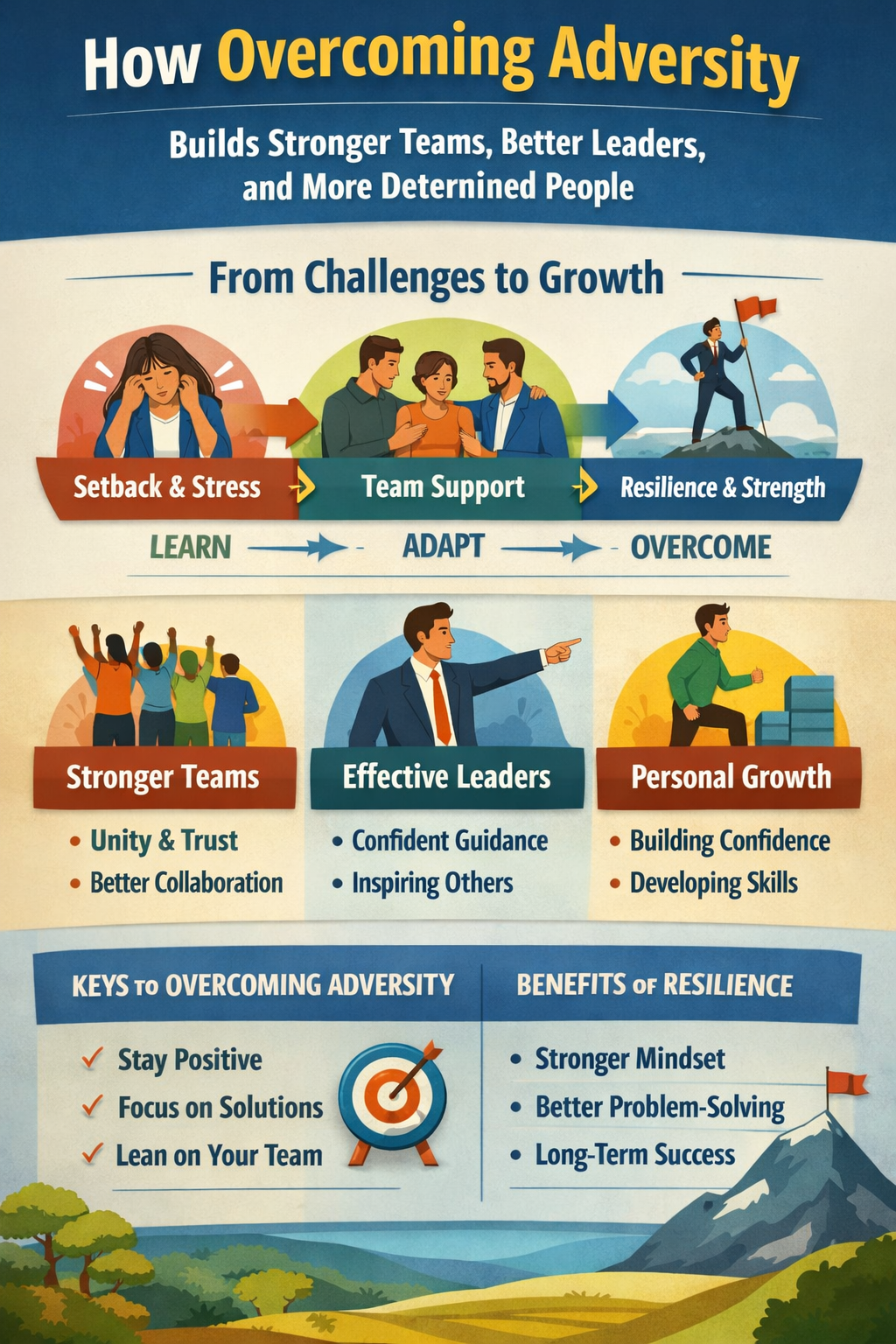
What separates strong teams from struggling ones is not the absence of challenges, but the ability to overcome them. When individuals learn to embrace adversity, they begin building resilience that shapes how they respond in future situations. This process is not always easy, but it is essential for growth, leadership, and long-term success.
Understanding Adversity in the Workplace
What Adversity Looks Like in Real Life
Adversity can take many forms in a professional setting. It may involve job loss, unexpected setbacks, or internal conflict within a team. These challenges can impact mental health, disrupt workflow, and create uncertainty across an organization.
For example, a company facing sudden market changes may struggle to maintain stability. Employees may feel anxious, upset, or unsure about their future. These emotions are natural, but how a team responds in that moment defines its strength.
Why Most People Struggle With Adversity
Most people are not naturally equipped with the right tools to handle adversity. When difficulties arise, fear and anxiety can take over, making it harder to think clearly or act with confidence.
The brain reacts to stress as a threat, which can limit problem-solving ability. Without building resilience, individuals may feel stuck or overwhelmed. This is why developing strategies to manage adversity is so important.
Building Resilience Through Difficult Times
The Foundation of Resilience
Resilience is the ability to recover, adapt, and continue moving forward despite challenges. It is not about avoiding hardship, but about learning how to navigate it effectively.
Building resilience requires time, self-awareness, and the willingness to grow. It involves recognizing emotions, understanding reactions, and developing new ways of thinking.
How Resilience Develops Over Time
Resilience is built through experience. Each challenge becomes a test that strengthens a person’s ability to handle future difficulties.
A study showed that individuals who actively engage in building resilience are better equipped to manage stress and maintain their well being. This is because they develop the mental and emotional skills needed to stay focused under pressure.
The Role of Leadership in Overcoming Adversity
Strong Leaders Emerge From Challenges
Leadership is often defined during difficult times. A leader’s ability to remain calm, provide support, and guide others through uncertainty is critical.
When leaders embrace adversity, they set an example for their teams. Their actions demonstrate courage, confidence, and the ability to maintain control even when circumstances feel uncertain.
Creating a Culture of Strength
Leaders play a key role in shaping how teams respond to adversity. By encouraging open communication and acknowledging challenges, they create an environment where people feel supported.
This sense of security allows individuals to focus on solutions rather than fear. It also strengthens the overall resilience of the organization.
How Teams Grow Stronger Through Adversity
Turning Challenges Into Opportunities
Teams that learn to overcome adversity often come out stronger. Difficult times force collaboration, creativity, and problem-solving.
Instead of viewing challenges as obstacles, resilient teams see them as opportunities for growth. This shift in perspective changes how problems are approached and solved.
Building Trust and Connection
Adversity can bring people closer together. When team members support each other during difficult situations, trust is built.
This trust becomes the foundation for future success, allowing teams to work more effectively and confidently.
The Connection Between Mental Health and Resilience
Supporting Emotional Well Being
Mental health plays a critical role in how individuals handle adversity. Stress, anxiety, and even depression can impact a person’s ability to function effectively.
Providing support and encouraging individuals to seek professional help when needed is essential. A balanced diet, proper rest, and social support also contribute to overall well being.
Recognizing the Signs of Struggle
It is important to recognize when someone is struggling. Signs may include changes in behavior, decreased performance, or emotional withdrawal.
Acknowledging these signs early allows for timely intervention and support.
Practical Strategies for Overcoming Adversity
Developing the Right Tools
To overcome adversity, individuals need practical tools and strategies. These include:
- Maintaining a positive perspective
- Focusing on solutions rather than problems
- Building strong support networks
- Practicing stress management techniques
These tools help individuals stay grounded and focused during difficult times.
Managing Emotions Effectively
Emotions are a natural part of the process. Learning to manage emotions allows individuals to respond thoughtfully rather than react impulsively.
This ability is key to maintaining control and making sound decisions.
The Science Behind Resilience
How the Brain Responds to Challenges
The brain is wired to react to threats, which is why adversity can feel overwhelming. However, with practice, the brain can be trained to respond differently.
Resilient individuals develop patterns of thinking that help them stay calm and focused.
The Power of Perspective
Perspective plays a significant role in overcoming adversity. Viewing challenges as opportunities rather than threats can change the entire experience.
This shift in thinking helps individuals feel more in control and confident in their ability to navigate difficulties.
Real-World Examples of Overcoming Adversity
Lessons From Experience
Stories of overcoming adversity provide valuable insights. They show how individuals have faced challenges and emerged stronger.
For example, a team that successfully navigates a major setback often develops new skills and strategies that improve future performance.
Applying These Lessons
These lessons can be applied in any setting. By learning from others, individuals can develop their own approach to handling adversity.
The Impact on Personal and Professional Growth
Building Confidence and Courage
Overcoming adversity builds confidence. Each success reinforces the belief that challenges can be managed.
This confidence leads to greater courage, allowing individuals to take on new opportunities.
Long-Term Growth and Development
Adversity is a catalyst for growth. It pushes individuals to develop new skills, expand their thinking, and adapt to changing circumstances.
This growth benefits both individuals and organizations.
The Role of Support Systems
Importance of Social Support
Having a strong support system is essential during difficult times. Friends, family, and colleagues provide encouragement and guidance.
This support helps individuals stay motivated and focused.
Providing Support Within Teams
Organizations should create environments where support is readily available. This includes open communication, mentorship, and access to resources.
How Andrew Rhoden Inspires Resilience and Growth
A Speaker Who Understands Adversity
Andrew Rhoden is more than just a speaker—he is someone who has experienced adversity firsthand. His ability to connect with audiences comes from real-world experience and a deep understanding of human challenges.
Through his speeches, Andrew shares stories, strategies, and insights that resonate with listeners. His words inspire individuals to embrace challenges and push beyond their limits.
Empowering Teams and Leaders
Andrew’s approach focuses on building resilience within teams and leaders. He provides practical tools and encourages individuals to take control of their circumstances.
His impact extends beyond the moment, helping organizations create lasting change.
Transforming Challenges Into Lasting Success
Embracing the Journey
Overcoming adversity is not a one-time event. It is an ongoing process that shapes who we are and how we respond to future challenges.
By embracing this journey, individuals and teams can achieve greater success and fulfillment.
Moving Forward With Purpose
The lessons learned from adversity provide a foundation for future growth. They create a sense of purpose and direction that drives continued progress.
Take the Next Step Toward Growth and Resilience
If your organization is ready to strengthen its team, develop stronger leaders, and create a culture of resilience, now is the time to act. Overcoming adversity is not just about surviving challenges—it is about using those moments to build something greater.
Andrew Rhoden delivers powerful, experience-driven talks that inspire individuals to overcome obstacles, improve mental health, and develop the resilience needed to thrive. His ability to connect with audiences and provide actionable insights makes him a valuable resource for organizations seeking meaningful change.
Contact us at (888) 209-4055 to book a free consultation. Let’s explore how Andrew Rhoden can help your team navigate challenges, build resilience, and move forward with confidence.
share this
Related Articles
Related Articles