




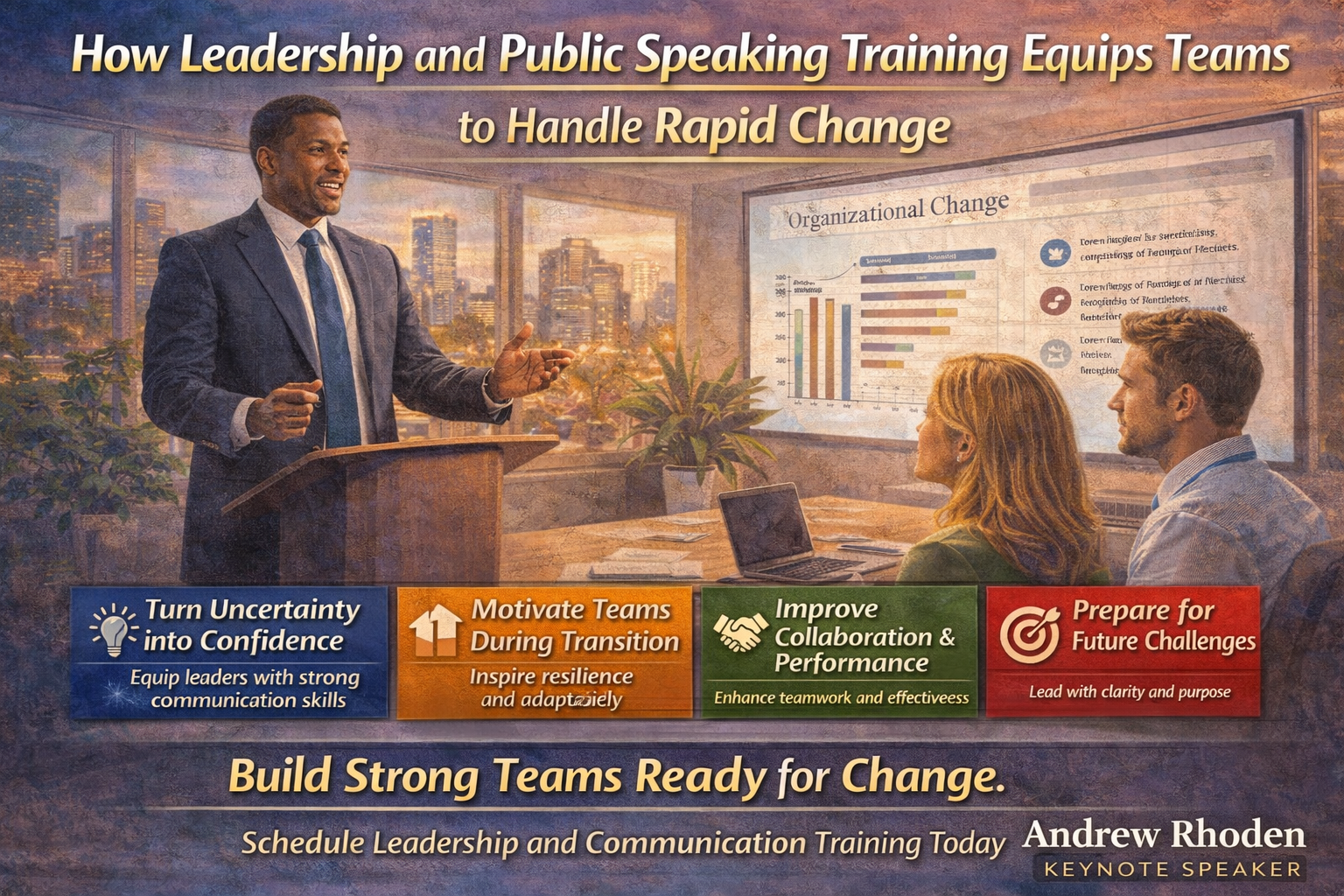
How Leadership and Public Speaking Training Equips Teams to Handle Rapid Change
Change is no longer something organizations experience once every few years. It is constant. New technology, evolving markets, shifting expectations, and global competition require companies to adapt quickly. In this environment, leadership and public speaking training are not optional skills. They are essential tools that equip teams to respond with confidence instead of confusion.
When a leader can stand in front of a room and clearly explain a new direction, uncertainty decreases. When professionals know how to speak with clarity and purpose, they help others feel steady. A powerful keynote speaker understands this dynamic. A well-delivered keynote speech can reset the mindset of an entire organization during moments of transition.
At corporate events, conferences, and professional gatherings, the right keynote can influence culture and performance. Leadership training combined with public speaking development strengthens how teams communicate, collaborate, and respond to change. That is why organizations increasingly seek an opening keynote speaker or closing keynote speaker who can address real-world challenges with practical insight.
Why Rapid Change Demands Strong Leadership Communication
Rapid change affects daily life inside organizations. Employees worry about job stability, shifting roles, and new expectations. Without strong leadership communication, uncertainty spreads quickly. Teams may hesitate, delay decisions, or resist new strategies.
A keynote speaker who focuses on leadership communication can show how clarity reduces fear. Leaders who learn how to speak with authority and empathy can guide teams through transitions. Instead of delivering a canned speech, a great speaker addresses the real concerns of the audience.
When leaders develop public speaking skills, they gain the ability to influence attitudes during high-pressure moments. That influence creates stability and momentum.
The Power of a Keynote Speaker at a Leadership Event
A keynote speaker sets the tone for an event. Whether serving as an opening keynote speaker or a closing keynote speaker, the message delivered on stage shapes how attendees interpret the day’s discussions.
At a conference focused on transformation, the keynote must address innovation, resilience, and performance. A motivational keynote speaker who shares stories of overcoming adversity can inspire people to act. Attendees leave not just informed, but energized.
The most impact often comes when the keynote connects strategy to personal responsibility. A keynote speech should challenge the audience while offering clear direction.
Leadership Training and Public Speaking Go Hand in Hand
Leadership and public speaking are deeply connected. Leaders must speak to inspire, persuade, and align teams. A leader who cannot communicate clearly struggles to guide others during change.
Through structured training, professionals learn how to prepare a speech, manage nervous energy, and deliver a message with confidence. They practice eye contact, vocal control, and body language. These skills strengthen their ability to speak effectively in meetings, town halls, and major events.
When teams are trained in communication, they become better ambassadors for the organization. They can speak with confidence to clients, partners, and internal teams.
Technology, Communication, and the Modern Workplace
Today’s workplace is shaped by technology and connected devices. Teams use phones, laptops, and smart home tools such as Amazon Alexa, Google Assistant, and Google Nest Audio in their daily routines. These devices respond to voice commands, manage tasks, and integrate with other devices in a connected ecosystem.
While tools like a smart speaker, home assistant, or even a HomePod Mini can play music, manage reminders, and support productivity, they cannot replace human leadership. Google technology may assist with search, audio playback, or scheduling, but it cannot deliver the emotional intelligence required during organizational change.
Leadership communication remains human at its core. Technology supports operations, but a keynote speaker shapes vision.
Smart Speaker Lessons for Leadership
Interestingly, smart home systems offer a useful example for leadership. A smart speaker responds clearly to voice input. It listens, processes, and delivers a response. Leaders can learn from this model.
Just as a Google Assistant device responds to clear commands, teams respond best to clear communication. Confusing instructions create frustration, just as unclear voice commands confuse connected devices.
Leaders who refine their speech and messaging reduce friction. They create alignment instead of confusion.
Handling Change With Structured Communication
During rapid change, structured communication matters. Leaders must research the situation, understand risks, and create a clear message. This preparation allows them to speak with authority.
A keynote speaker addressing transformation often outlines top tips for managing uncertainty. These may include:
- Clarifying the purpose behind change
- Addressing concerns honestly
- Reinforcing shared values
- Encouraging open discussion
When professionals attend a conference and hear a keynote built on research and experience, they feel prepared rather than overwhelmed.
The Role of the Opening Keynote Speaker
The opening keynote speaker plays a critical role in shaping expectations. At the start of an event, attendees may feel skeptical or uncertain. A strong opening keynote creates alignment and sets a confident tone.
This type of speaker should avoid generic messaging. Instead of delivering a canned speech, the keynote must connect directly to the organization’s goals. By addressing real challenges, the speaker helps attendees engage fully.
When the opening keynote resonates, the rest of the event builds on that momentum.
The Influence of the Closing Keynote Speaker
The closing keynote speaker has a different responsibility. After a full day of panels, workshops, and discussions, attendees may feel overloaded. The closing keynote must synthesize key themes and inspire action.
A powerful closing keynote brings clarity. It reminds the audience why the event matters and how to apply insights. The right closing keynote speaker ensures that attendees leave prepared to implement change.
This final speech often determines whether ideas translate into measurable performance.
Building Resilience Through Motivational Speaking
Motivational speakers focus on mindset. In times of rapid change, mindset influences how teams respond. If people feel threatened, they resist. If they feel supported, they adapt.
A motivational keynote speaker who shares honest experiences about overcoming adversity can help people feel understood. By connecting personal stories to professional challenges, the speaker builds trust.
Resilience grows when leaders model courage and transparency.
Leadership Communication in a Connected World
Modern professionals live in a world filled with connected devices. A phone syncs with a smart speaker. Google Assistant connects with other devices. Amazon Alexa integrates with smart home systems.
In this connected environment, communication is constant. Employees expect transparency and clarity. Leaders must be prepared to speak across platforms, from in-person meetings to virtual conferences.
Training in public speaking ensures leaders can adapt their speech to different formats without losing impact.
Why Organizations Need the Best Speaker for Change
Not all speakers are equal. The best speaker for a leadership event understands both strategy and emotion. They combine expertise with relatable storytelling.
Companies invest time and money into conferences because they want measurable results. Choosing the right keynote speaker ensures that investment produces value.
When a speaker understands business, culture, and innovation, they deliver more than inspiration. They deliver direction.
Integrating Leadership Training Into Company Culture
Leadership development should not be limited to a single event. Organizations that integrate training into their culture see long-term benefits. Ongoing workshops, coaching sessions, and keynote presentations reinforce core principles.
Companies that support communication development create leaders at every level. Employees feel empowered to speak up and contribute ideas.
This culture of communication strengthens collaboration and drives sustainable performance.
Preparing Teams for the Next Wave of Change
Change will continue. Markets evolve, technology advances, and consumer expectations shift. Teams that are prepared for change respond with agility instead of hesitation.
A keynote speaker focused on future readiness encourages attendees to think beyond the present. By discussing innovation, adaptability, and communication, the keynote equips teams for long-term growth.
Preparation reduces fear. Preparation builds confidence.
Andrew Rhoden: A Dynamic Keynote Speaker for Modern Leaders
Join the journey with Andrew Rhoden, a celebrated keynote speaker and legal luminary renowned for his expertise in sports law, business development, protecting generational wealth, and leadership. Andrew’s keynote speech style blends real-world examples with forward-thinking strategy.
As a motivational keynote speaker, Andrew engages audiences with authenticity. He does not rely on a canned speech. Instead, he speaks directly to the needs of the audience, whether at a corporate conference, academic gathering, or professional event.
Organizations that partner with Andrew gain a speaker who understands performance, integrity, and innovation.
Keynote Speaking Services Across Industries
Andrew Rhoden has partnered with respected companies and organizations across industries. His keynote addresses are tailored to corporate leadership events, business development seminars, and academic conferences.
As a closing keynote speaker or opening keynote speaker, he adapts to the needs of the event. His speech connects strategy to action.
Audiences do not simply listen. They leave prepared to implement change.
Bringing Clarity and Confidence to Your Next Event
Leadership and public speaking training equip teams to handle rapid change with confidence. A powerful keynote speaker reinforces these skills by modeling clarity and courage.
Whether addressing a room of executives or emerging professionals, the message must be clear. Leaders who speak well lead well.
In a world filled with devices, technology, and constant noise, human communication remains the most powerful tool for transformation.
Extending Leadership Impact Through Social Media Channels and Virtual Support
Leadership growth does not end when the keynote speaker steps off the stage. Organizations today continue the conversation across social media channels, where teams share insights, post highlights from the event, and keep the momentum alive. Some companies even use a virtual assistant platform to manage scheduling, follow-up emails, and internal communication after a major conference. While technology supports organization and efficiency, it is the human element that drives lasting change. Importantly, when leaders continue the talk beyond the event and engage their broader community, the lessons become part of the company culture rather than a one-day experience.
Choosing the Right Speaker: Value, Features, and Long-Term Results
When selecting between Andrew Rhoden and other speakers, decision-makers should consider more than just the price of the engagement. The real value lies in the features of the presentation—customized messaging, industry-specific research, and actionable strategies that teams can apply immediately. A keynote experience is often called transformative when it inspires people to take ownership of their roles and sign on to a renewed vision. Rather than wait for change to happen naturally, organizations that invest in leadership development are intentionally putting growth at the center of their strategy. For companies truly interested in equipping their teams to adapt and excel, the right keynote speaker delivers far more than a speech—they deliver direction and momentum.
Connect With Andrew Rhoden for Your Next Keynote
If your organization is preparing for rapid change, now is the time to invest in leadership development. A keynote speaker can provide the spark that shifts mindset and accelerates performance.
Andrew Rhoden is ready to help your organization achieve greater success through dynamic and engaging keynote speeches. Whether you need an opening keynote speaker to set the tone or a closing keynote speaker to deliver lasting impact, his expertise makes a difference.
Contact us at (888) 209-4055 to book a free consultation. Let us discuss how Andrew’s keynote speaking services can equip your team to handle change with clarity, strength, and confidence.
share this
Related Articles
Related Articles