




The Rapid Rise of Mental Health Needs on Campus and the Role of a Professional College Speaker
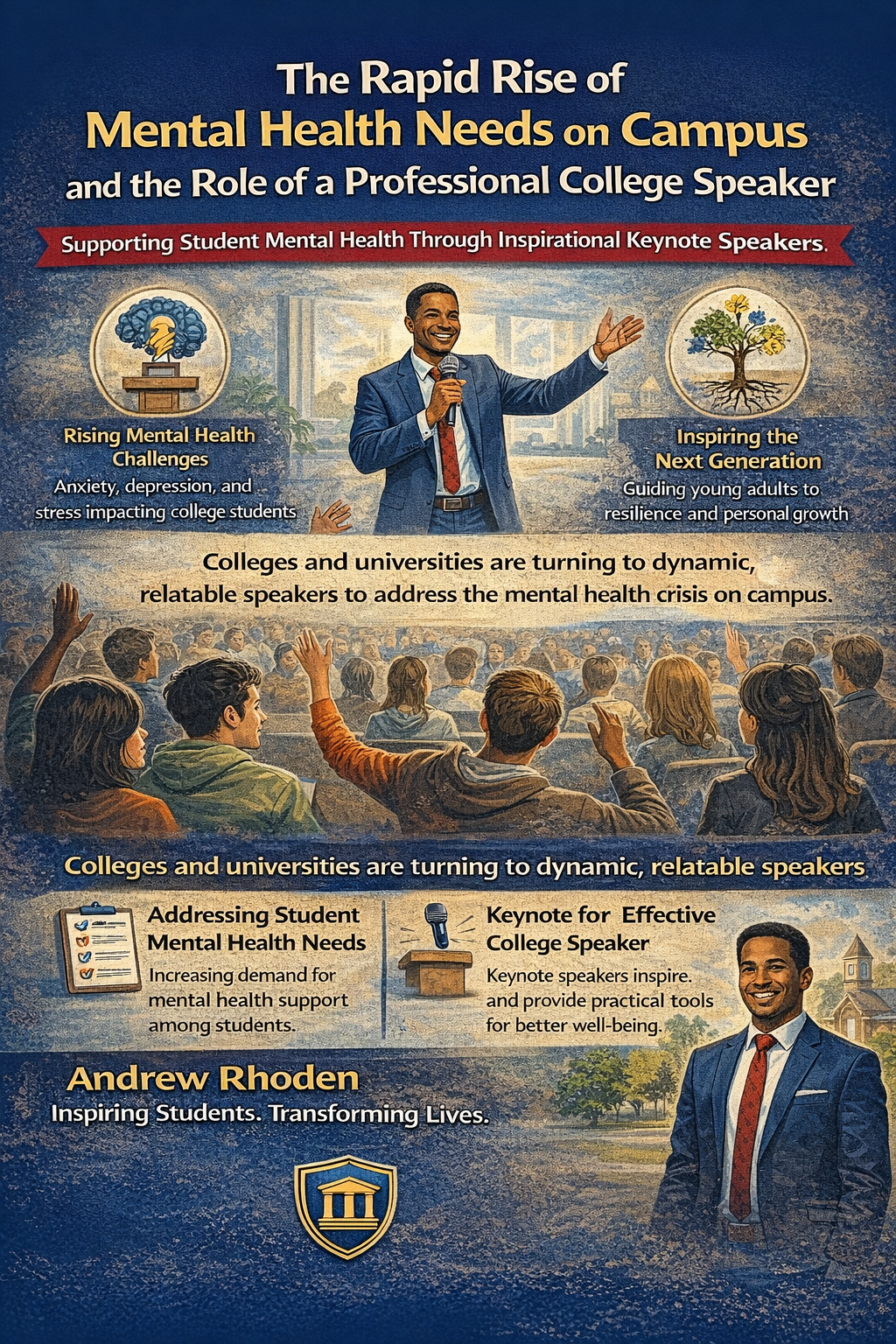
Across the country, colleges and universities are facing a growing reality. The mental health needs of students are rising faster than many institutions can respond. Anxiety, depression, isolation, and uncertainty about the future are now common topics in dorm rooms, classrooms, and campus counseling centers.
Administrators, professors, and campus leaders understand the importance of addressing these concerns in meaningful ways. Traditional programming still plays a role, but many colleges are turning to a professional college speaker to connect with students in a deeper, more personal way. A powerful keynote speaker can help shift culture, create awareness, and leave a lasting impact on an entire campus community.
A New Era of Mental Health Challenges in Colleges and Universities
The world has changed quickly for young adults. Social media pressure, academic competition, financial stress, and global uncertainty have created new emotional burdens. Colleges and universities are seeing more students seeking support than ever before.
College students today are navigating complex challenges that affect both their academic success and their personal life. Mental health is no longer a side conversation. It is central to campus success, retention, and overall well-being.
Why Campus Culture Matters More Than Ever
Campus culture influences how students respond to stress and setbacks. When students feel isolated or unheard, challenges can intensify. Creating a supportive environment requires intentional leadership and thoughtful programming.
A professional college speaker can help reshape campus culture by encouraging open conversations. Through storytelling and relatable experiences, speakers engage the audience in a way that feels authentic and empowering.
The Growing Demand for Engaging Speakers at Campus Events
Colleges are investing in campus events that address mental health directly. From orientation to leadership summits, institutions are seeking engaging speakers who understand today’s youth.
An effective college event should do more than fill seats. It should inspire, motivate, and encourage reflection. When colleges choose the perfect speaker, they create opportunities for real dialogue and meaningful growth.
The Power of a Keynote Speaker to Inspire Change
A keynote speaker has the power to set the tone for an entire campus event. The right voice can energize students while addressing serious issues with care and clarity.
Many colleges invite award winning leaders, bestselling author personalities, or even a political commentator to speak. While those speakers may draw attention, institutions must also ensure the message resonates with students’ real-life experiences.
Students Are Listening—But Only to Authentic Voices
Today’s students value authenticity. They respond to speakers who share real stories and practical advice. A motivational speaker who understands student life can build trust quickly.
Whether the speaker is a founder, entrepreneur, or activist, authenticity matters more than status. Even an award winning journalist featured in the New York Times must connect on a human level to truly engage the audience.
Mental Health and the Role of Leadership
Campus leadership plays a crucial role in shaping student well-being. Presidents, deans, and student leaders must prioritize mental health in policy and programming.
Bringing in a college speaker who understands leadership development reinforces this commitment. When speakers motivate students to take ownership of their future, they contribute to a healthier campus culture.
Addressing the Next Generation of Leaders
The next generation of leaders is sitting in classrooms right now. These students will become entrepreneurs, educators, activists, and CEOs. Supporting their mental health is not only compassionate—it is strategic.
Universities that invest in inspiring students today are investing in long-term success. A college speaker can plant seeds of resilience, confidence, and purpose that shape students’ future careers and life paths.
Why Colleges Seek Award Winning Voices
Colleges often look for award winning speakers to headline major events. An Academy Award winner, a Tony Award performer, or even a Grammy Award recipient can draw attention.
However, impact depends on connection, not just credentials. Whether the speaker is a York Times bestselling author, a television host, or a Shark Tank entrepreneur known as the people’s shark, the message must resonate with students.
The Role of the Entrepreneur and CEO Perspective
Entrepreneurs and CEOs bring a unique perspective to campus discussions. They often speak about resilience, risk-taking, and personal growth.
A founder or co founder who has built successful organizations can share real lessons about failure and recovery. These stories remind students that setbacks are part of the journey toward success.
Balancing Inspiration With Practical Guidance
Motivation is powerful, but students also need practical tools. A highly engaging college speaker should offer actionable strategies alongside inspiration.
Topics may include managing stress, building healthy habits, and finding purpose in a changing world. By combining storytelling with guidance, speakers create a positive impact that extends beyond the event.
Representation and Diverse Voices on Campus
Colleges and universities serve diverse student populations. Women, first-generation students, and youth from different cultural backgrounds deserve representation.
An advocate or activist who speaks about social justice can empower marginalized voices. A deaf superhero, a former kindergarten teacher turned leader, or a producer and writer who overcame adversity can provide hope.
Media Influence and Modern Role Models
Students are influenced by public figures from television, writing, and social media. A political commentator or television host who has appeared in the New York Times may capture initial attention.
However, the lasting impact comes from relatability. Whether the speaker is a York Times bestseller, a co host of a popular show, or an actor with a global platform, authenticity drives engagement.
Creating a Lasting Impact Through Campus Events
A single college event can influence an entire campus community. When speakers engage the audience deeply, students carry those lessons into classrooms, dorms, and future careers.
Colleges that prioritize mental health programming often report improved campus morale. A strong keynote speaker can create a ripple effect that continues long after the applause ends.
The Importance of Strategic Speaker Selection
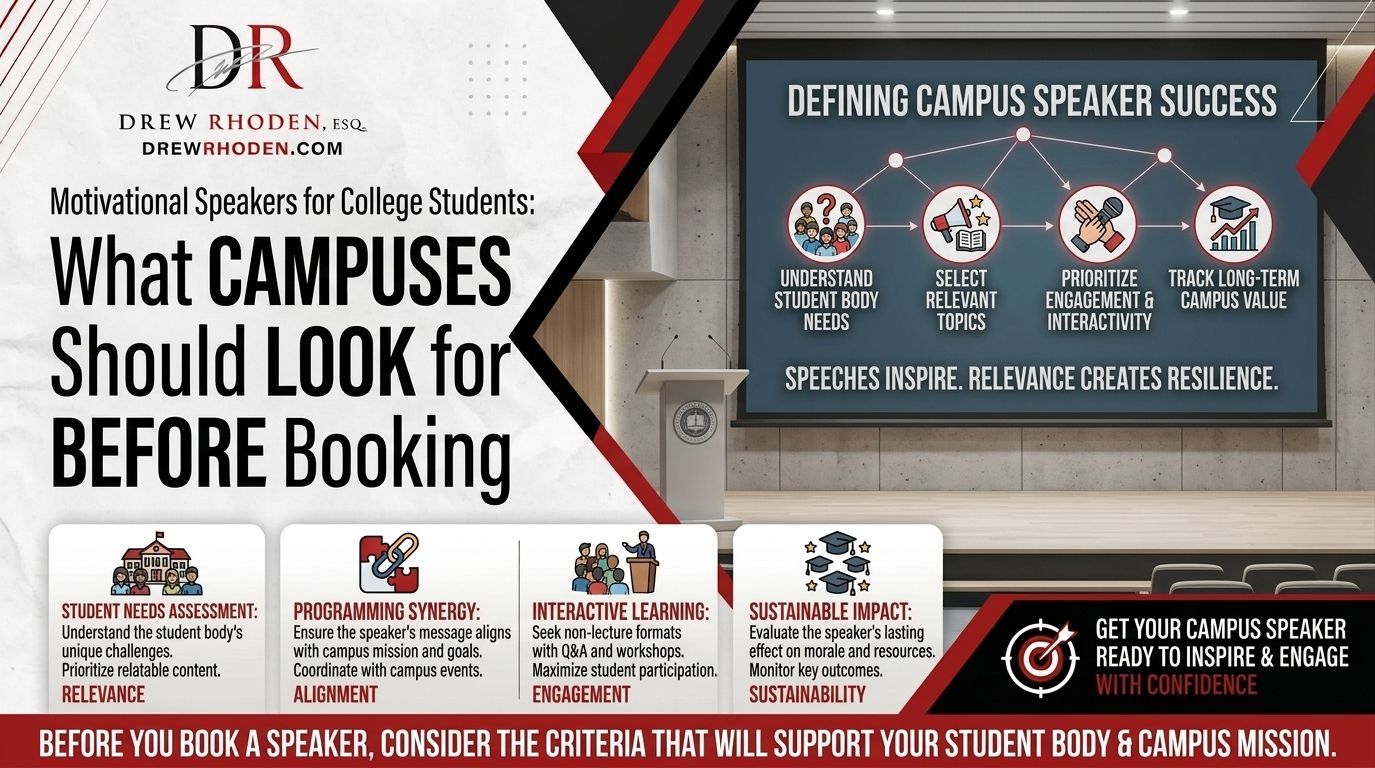
Selecting the right speaker requires intention. Colleges must consider their students’ needs, campus culture, and long-term goals.
The perfect speaker aligns with the institution’s mission and values. Whether at Georgetown University or a small liberal arts school in Santa Barbara, the message must fit the audience.
Building Momentum Through National Networks
Many institutions collaborate through national associations to identify effective speakers. Sharing best practices allows colleges to learn from one another.
Organizations that host impactful speakers often see stronger attendance and engagement at future events. The momentum builds over time.
Andrew Rhoden: Inspiring Students. Transforming Lives.
Your College Speaker to Inspire and Motivate Inspiring Students. Transforming Lives. Andrew Rhoden’s mission is simple: to inspire students to unlock their full potential. His talks go beyond motivation, offering practical guidance and relatable stories that resonate with today’s students.
As a dynamic college speaker and entrepreneur, Andrew Rhoden connects with audiences on a personal level. Whether speaking to aspiring leaders, women in business programs, or freshmen adjusting to campus life, he brings passion and clarity. His ability to engage ensures his message is heard, understood, and remembered.
Why Colleges and Universities Choose Andrew Rhoden
Andrew Rhoden is known for creating a safe space where students can reflect honestly. His background as a founder and leader allows him to speak with authority while remaining approachable.
He focuses on mental health, leadership, and resilience in a way that empowers students to take control of their journey. His sessions are designed to motivate and create measurable growth.
Transforming Campus Culture Through Storytelling
Storytelling has power. When students hear authentic experiences, they feel less alone.
Andrew Rhoden’s approach blends inspiration with realism. He speaks not just about success, but about the obstacles that shaped his life and career. This honesty builds trust and fosters meaningful dialogue across campus.
Moving From Awareness to Action
Raising awareness about mental health is only the first step. Colleges must also encourage action.
A strong college speaker helps students move from listening to applying lessons. When students leave an event with practical strategies, the impact becomes tangible.
Strengthening the Campus Community
Universities thrive when students feel supported. Faculty, professors, and administrators play a role, but outside speakers can reinforce that message.
By hosting events focused on well-being and leadership, colleges demonstrate commitment to student success. The entire campus benefits from a unified approach.
Investing in Student Success
Mental health programming is not an expense; it is an investment. When students feel supported, retention improves and campus engagement increases.
Colleges and universities that prioritize this work build a reputation for care and excellence. A thoughtful college event can shape a student’s path for years to come.
A Call to Lead With Purpose
The rapid rise of mental health needs on campus demands bold action. Institutions cannot afford to ignore the emotional challenges facing students today.
A professional college speaker can serve as a catalyst for change. By addressing real issues with compassion and clarity, speakers help create stronger, more resilient communities.
Ready to Inspire and Motivate Your Campus?
If your college or university is seeking a powerful voice to address mental health and leadership, now is the time to act. Andrew Rhoden brings passion, insight, and authenticity to every event. His ability to connect with students ensures that each message resonates deeply.
Contact us at (888) 209-4055 to book a free consultation. Let us help you plan a meaningful college event that supports your campus, inspires your students, and transforms lives.
share this
Related Articles
Related Articles