



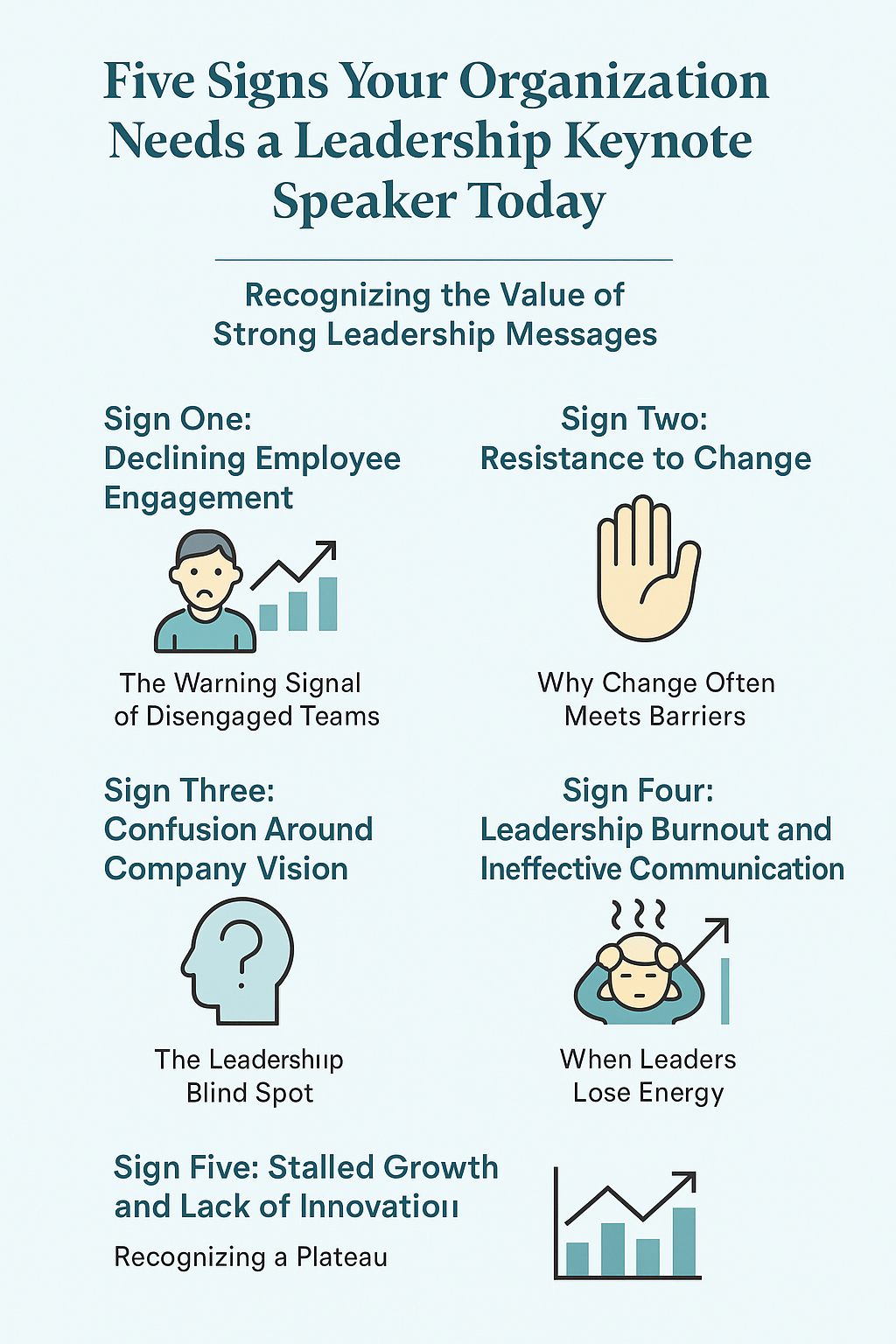
Five Signs Your Organization Needs a Leadership Keynote Speaker Today
Recognizing the Value of Strong Leadership Messages
Leadership in any organization sets the tone for culture, productivity, and long-term vision. Without clarity from the top, teams lose their sense of direction. That’s where a leadership keynote speaker can become transformative. By helping leaders articulate their vision, keynote speakers reinforce alignment and create the spark that motivates teams to take action.
A keynote speech is more than words—it’s a carefully designed message that resonates across multiple levels of an organization. When executed well, it has the same power as a good keynote speaker tuning sound quality so that everyone hears the right notes, free from distortion. Companies that ignore these warning signs risk stagnation, missed opportunities, and employee disengagement.
Sign One: Declining Employee Engagement
The Warning Signal of Disengaged Teams
When employees are no longer energized by their work, productivity begins to slip. Engagement scores might dip, voluntary turnover rises, and the energy inside the office feels muted. Much like most smart speakers losing their clarity when ignored, disengagement spreads across teams.
The Cost of Inaction
Failing to re-engage employees leads to higher recruitment costs, burnout, and reduced innovation. Just as poor audio quality makes it difficult to enjoy even the best wireless speakers, low engagement strips away the joy of collaboration. Ignoring this sign creates long-term damage to morale and retention.
How a Leadership Keynote Speaker Reverses It
A motivational speaker like Andrew can reignite passion by addressing the root causes of disengagement. His keynote speech blends practical strategies with stories of overcoming adversity, giving teams a renewed sense of purpose. His presentation style connects directly with audience demographics across industries, ensuring that every listener feels valued.
Sign Two: Resistance to Change
Why Change Often Meets Barriers
Organizations inevitably face shifts—whether it’s adopting new technology, restructuring teams, or moving into new markets. Yet employees frequently resist change. Like an android user reluctant to switch ecosystems, resistance stems from fear of the unknown.
The Cost of Inaction
Ignoring resistance leaves projects stalled and opportunities wasted. It’s similar to holding onto a fifth generation echo dot when newer, more effective options exist; refusing to adapt limits growth. The cost shows up in missed deadlines, frustrated managers, and lost market share.
How a Keynote Speech Builds Adaptability
An opening keynote speaker sets the tone at pivotal company events by addressing change head-on. Andrew demonstrates how adaptability is essential, and he equips teams with the tools to embrace transformation. His stories resonate the same way a great speaker balances both motivation and actionable strategy.
Sign Three: Confusion Around Company Vision
The Leadership Blind Spot
A vision without clarity is like a little speaker with poor sound quality—the message gets lost in the noise. Employees may understand what they do day to day but lack insight into why their work matters. When vision becomes blurred, performance goals start to lose relevance.
The Cost of Inaction
If employees can’t see how their contributions align with the bigger picture, they disengage further. It’s the organizational equivalent of smart home devices that don’t sync correctly—each unit may work individually, but without alignment, they fail to function as a system. Companies that let vision drift risk losing their competitive edge.
Why Andrew’s Keynote Speeches Clarify Vision
Andrew is not a canned speech kind of presenter. He customizes his keynote speeches to reflect each organization’s challenges. His ability to act as a closing keynote speaker leaves audiences walking away with a renewed sense of clarity, purpose, and unity.
Sign Four: Leadership Burnout and Ineffective Communication
When Leaders Lose Energy
Burnout doesn’t just affect employees—it affects leaders too. When executives feel drained, their messages become uninspiring. It’s like relying on wireless speakers with poor stereo sound; the words are there, but the energy doesn’t resonate.
The Cost of Inaction
Leaders who fail to communicate effectively risk losing trust and credibility. Just as event planners know a poor keynote speech can derail an entire conference, failing leadership communication diminishes confidence across the company. Eventually, teams stop listening altogether.
How a Motivational Keynote Speaker Helps
Andrew offers more than a speech; he provides a reset button. His keynotes remind leaders of their track record, inspire them with fresh perspective, and give them the tools to communicate in a way that truly connects. His talks deliver great sound, much like upgrading from an outdated echo speaker to a system with flawless hi fi.
Sign Five: Stalled Growth and Lack of Innovation
Recognizing a Plateau
When growth stalls, it’s a sign that innovation has slowed. Employees may be repeating old processes instead of creating new solutions. It’s similar to relying on apple homepod mini for advanced audio control while ignoring the broader apple ecosystem—capabilities are underutilized.
The Cost of Inaction
Stalled growth makes companies vulnerable to competitors. Just as many smart speakers lose market share when they fail to innovate beyond basic voice commands, businesses that ignore innovation fall behind. The longer leaders wait, the harder it becomes to recover.
Andrew’s Role in Reigniting Growth
As a good keynote speaker, Andrew’s role is to inspire fresh thinking. His stories, much like a sonos era device delivering great sound, bring energy and vision to audiences. He helps employees see opportunities in challenges, creating momentum toward new strategies and breakthroughs.
Beyond the Five Signs: Other Indicators You Can’t Ignore
- High turnover in management roles
- Declining event’s success at company meetings
- Inconsistent messaging across other speakers in leadership
- Difficulty tailoring communication to diverse audience demographics
These additional red flags highlight the need for a right keynote speaker who can reset direction and unify messaging. Without intervention, these signs accumulate until recovery requires a full-scale cultural overhaul.
How Andrew Elevates Organizational Events
Andrew doesn’t deliver a canned speech; his presentation style is interactive, dynamic, and tailored. Whether acting as an opening keynote speaker to set the stage, or a closing keynote to bring a powerful finale, he adapts to the needs of the event.
His talks feel like listening to the best smart speaker, where audio quality is clear, voice assistant features respond instantly, and everything aligns seamlessly. Just as google assistant integrates across platforms to control things in a smart home, Andrew’s speeches integrate leadership lessons with practical actions that teams can immediately apply.
Why Event Planners Trust Andrew
A Partner in Crafting Memorable Experiences
Event planners know the importance of choosing the best speaker for their audience. They also know that one weak session can undo an entire conference. By working with Andrew, they gain an award winning approach that transforms gatherings into lasting experiences.
The Power of a Great Speaker
Andrew’s keynotes are carefully curated to balance inspiration with action. He is not just a speaker, but a guide—someone who leaves the audience with practical tools, rather than empty hype. His ability to deliver music playback levels of engagement ensures that audiences remember the message long after the event ends.
Choosing the Right Keynote Speaker for Your Organization
Finding the right fit isn’t just about finding good speakers; it’s about choosing someone who can align with your values and strategy. Andrew understands that every organization faces unique challenges. His role is to adapt his keynote to meet those specific needs.
Much like choosing the best wireless speakers or ensuring your google home integrates with existing wi fi systems, selecting the right keynote speaker is about compatibility and long-term effectiveness. Andrew’s adaptability ensures that he delivers not just words, but meaningful results.
Moving from Stagnation to Inspiration
Every organization faces moments when leadership messages fall flat. The cost of inaction is too high—missed opportunities, declining morale, and wasted potential. A well-timed keynote provides the clarity, motivation, and unity teams desperately need.
Andrew’s ability to engage audiences and inspire them to action sets him apart as a motivational keynote speaker. His presentations combine real-world examples with forward-thinking strategies that apply across industries. Whether you’re hosting corporate leadership events, business development seminars, or academic and professional conferences, he’s the great speaker who transforms events into turning points.
Why Choosing the Best Smart Speaker Mirrors Choosing the Right Keynote
Selecting the best smart speaker is not just about volume; it’s about clarity, reliability, and the ability to connect seamlessly with other systems. In the same way, choosing a keynote speaker for your organization requires more than a famous name—it requires someone who can cut through the noise, deliver a message with impact, and integrate with the event’s objectives. Both decisions determine the quality of the experience and whether your audience walks away inspired or unimpressed.
Andrew’s ability to deliver powerful keynote speeches mirrors the qualities of the best smart speaker—clear, compelling, and able to resonate across diverse audiences. His approach ensures that the message doesn’t just sound great in the moment, but continues to echo in the minds of attendees long after the event has ended.
Inspiring Teams Through Overcoming Adversity
One of the most powerful ways to connect with an audience is through stories of overcoming adversity. Employees often face challenges such as workplace uncertainty, shifting market demands, or personal setbacks that influence their performance. When leaders acknowledge these struggles and provide examples of resilience, teams feel supported and motivated to persevere.
Andrew weaves the theme of overcoming adversity into his keynote speeches in a way that resonates with every level of the organization. His real-world stories remind employees that challenges are not roadblocks but stepping stones toward growth. By highlighting resilience, adaptability, and forward momentum, he equips organizations to face difficulties with confidence and strength.
What Sets Motivational Speakers Apart in Leadership Events
Many organizations turn to motivational speakers when they notice morale slipping or teams struggling to adapt. While some motivational speakers focus only on excitement, the most effective ones balance inspiration with strategies that directly apply to workplace challenges. This balance ensures employees leave with both energy and clarity about what to do next.
Andrew takes this further by connecting real-world leadership lessons to the exact issues companies face today. Unlike many motivational speakers who deliver the same stories at every stop, he customizes each keynote to align with organizational goals. The result is not just an uplifting moment, but a message that drives measurable progress long after the event ends.
Why the Best Speaker Elevates More Than Just the Event
When organizations bring in outside voices, they don’t want filler—they want transformation. That’s why choosing the best speaker is about more than charisma; it’s about finding someone who can deliver both inspiration and practical direction. The best speaker doesn’t rely on a generic message or a one-size-fits-all story. Instead, they craft a keynote that addresses the specific needs of the audience, ensuring relevance and impact.
Andrew embodies what companies look for in the best speaker. His ability to combine storytelling, leadership insights, and actionable strategies gives organizations a return on investment that extends far beyond the event itself. By aligning his keynote with company goals, Andrew ensures that leaders and employees walk away energized, focused, and ready to act.
The Difference Between a Good Keynote Speaker and a Great One
A good keynote speaker can inspire an audience for an afternoon, but a truly great one drives change that lasts for months or years. The difference lies in the ability to combine motivational storytelling with actionable strategies that employees and leaders can apply immediately. A good keynote speaker often leaves listeners feeling uplifted, while a great one leaves them equipped to act.
Andrew consistently bridges that gap. His keynote speeches inspire audiences while also addressing the practical challenges organizations face daily. For any company asking whether a good keynote speaker is enough, Andrew demonstrates why investing in a proven, transformational speaker is the smarter long-term decision.
How to Find Speakers Who Truly Transform Organizations
When companies recognize the warning signs—such as disengagement, resistance to change, or lack of vision—the next challenge is knowing how to find speakers who can deliver real impact. Many organizations settle for names that sound impressive but fail to connect with employees in a meaningful way. The key is to look for professionals who blend practical insights with inspiration, ensuring the message sticks long after the event ends.
Andrew stands out because he doesn’t deliver a generic keynote; he tailors his approach to the organization’s unique challenges. His ability to balance storytelling, actionable strategies, and motivational energy ensures he goes beyond what most event planners expect when they set out to find speakers. For organizations serious about lasting change, he is the partner who turns a keynote into a powerful tool for transformation.
Connect With Us Today
If your organization is experiencing any of these warning signs, it’s time to take action before costs escalate. Don’t let disengagement, resistance, or lack of clarity derail your growth. Andrew can provide the keynote speech your company needs to restore energy, vision, and alignment.
Contact us at (888) 209-4055 to book a free consultation. We’ll answer your questions, discuss your goals, and show you how Andrew can serve as the closing keynote speaker or opening keynote speaker your next event needs. His proven ability to inspire ensures that your leadership messages resonate the same way the best smart speakers deliver flawless clarity.
share this
Related Articles
Related Articles