




Every Organization Can Learn From People Who Have Overcome Adversity
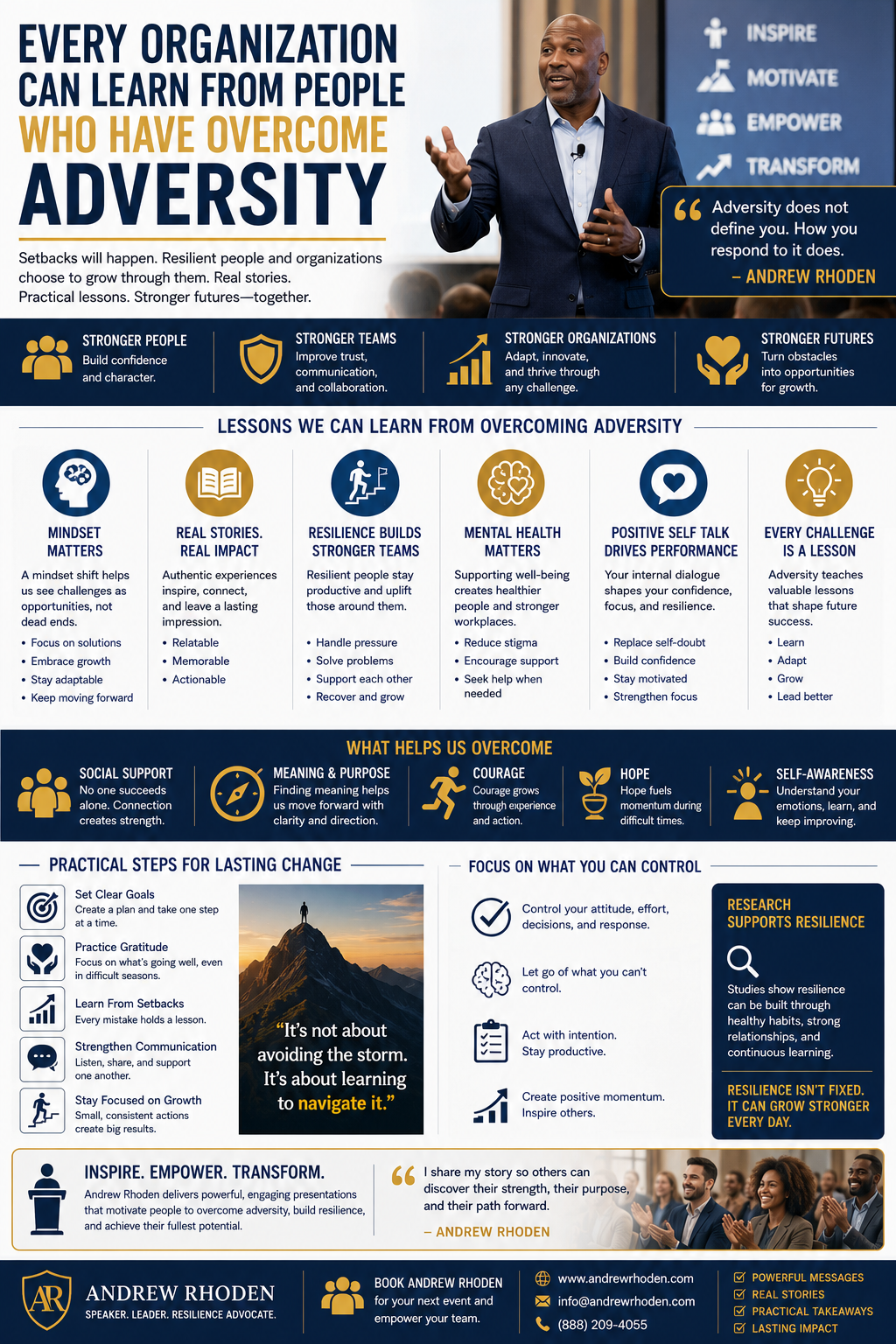
Every organization will eventually encounter unexpected setbacks. Economic uncertainty, changing markets, leadership transitions, employee burnout, and personal struggles can affect even the strongest teams. While businesses often invest in new technology, operational improvements, and leadership training, they sometimes overlook one of the most powerful sources of inspiration—learning from people who have overcome adversity. Their experiences offer more than motivation; they provide practical lessons that help individuals and organizations grow stronger together.
Organizations that encourage resilience create cultures where employees feel prepared to respond when challenges arise. Rather than allowing setbacks to define outcomes, resilient teams learn how to adapt, solve problems, and continue moving forward with confidence. These qualities are rarely developed through theory alone. They grow through authentic experiences shared by individuals who have successfully navigated difficult circumstances.
Andrew Rhoden brings those experiences to every audience he serves. His presentations go beyond motivational stories by connecting personal experiences with practical leadership lessons that people can apply immediately. Andrew speaks from his own life, showing audiences that overcoming adversity is not reserved for extraordinary individuals—it is a process available to anyone willing to grow through life's challenges.
Adversity Can Become a Powerful Teacher
No organization hopes to experience hardship, yet every business will eventually face obstacles that test leadership and teamwork. Economic changes, internal challenges, unexpected disruptions, and personal struggles all influence workplace performance. The difference often lies in how people respond rather than the difficulty of the situation itself.
Learning from people who have overcome adversity helps organizations recognize that setbacks do not automatically determine future outcomes. Difficult experiences often create stronger leaders, wiser decision-makers, and more connected teams when approached with the right perspective.
Instead of fearing adversity, organizations can begin viewing it as an opportunity for long-term growth.
Overcoming Adversity Begins With a Mindset Shift
Many challenges become more manageable when individuals change the way they interpret them. A healthy mindset influences how people respond to uncertainty, setbacks, and unexpected changes. Rather than becoming trapped in destructive thinking, resilient individuals develop habits that encourage forward progress.
A meaningful mindset shift does not ignore problems. Instead, it encourages people to acknowledge obstacles while remaining focused on realistic potential solutions. This balanced approach allows teams to continue making progress even during difficult times.
Organizations that encourage a growth mindset often develop employees who feel more confident handling change because they view setbacks as opportunities to learn instead of permanent failures.
A Growth Mindset Supports Better Decisions
People with a growth mindset often learn to:
- Focus on progress rather than perfection
- Develop new skills
- Accept constructive feedback
- Learn from mistakes
- Remain open to change
These habits contribute to stronger personal and professional development.
Real Stories Create Lasting Impact
There is something uniquely powerful about hearing authentic stories from someone who has lived through significant challenges. Unlike theoretical discussions, personal experiences create emotional connections that audiences remember long after the presentation ends.
Andrew Rhoden shares experiences from his own journey, illustrating how perseverance, courage, and intentional decision-making helped shape his life. His message reminds audiences that success is rarely the absence of hardship. More often, it is the result of continuing to move forward despite uncertainty.
These real-life examples help people recognize that their current circumstances do not have to define their future.
Building Resilience Benefits Every Organization
Strong organizations are built by resilient people. Building resilience helps employees remain productive during periods of uncertainty while supporting healthier workplace relationships.
Resilience is not something people either possess or lack. It develops over time through experience, reflection, learning, and consistent practice. Organizations that intentionally strengthen resilience often see improvements in communication, adaptability, and leadership development.
Employees who become more resilient frequently inspire those around them to respond positively during difficult moments.
Mental Health Deserves Meaningful Attention
Conversations about mental health have become increasingly important within today's workplace. Employees may experience chronic stress, anxiety, burnout, or periods when they feel overwhelmed by professional and personal responsibilities.
Supporting mental well-being strengthens individuals while also improving organizational performance. Leaders who encourage open communication help reduce stigma and create healthier workplace cultures.
In some situations, individuals may benefit from choosing to seek professional guidance or professional help when additional support is needed. Recognizing when outside assistance may be appropriate reflects strength rather than weakness.
Positive Self Talk Influences Daily Performance
The conversations people have with themselves often influence how they approach challenges. Positive self talk encourages confidence, perseverance, and emotional balance during stressful situations.
Negative internal dialogue, on the other hand, can contribute to low self esteem, hesitation, and unnecessary self-doubt. Learning to recognize these patterns helps individuals respond more effectively when facing adversity.
Small changes in thinking frequently create significant improvements in long-term performance.
Words Shape Perspective
Healthy internal dialogue helps people:
- Maintain confidence
- Reduce unnecessary stress
- Improve focus
- Build emotional resilience
- Strengthen decision-making
Changing internal conversations often becomes the beginning of meaningful personal growth.
Every Challenge Creates an Opportunity to Learn
Most successful people can identify moments when unexpected setbacks changed the direction of their lives. While those experiences were rarely easy, they often became turning points that encouraged new ways of thinking.
Facing adversity frequently reveals strengths that might otherwise remain hidden. It encourages people to develop new skills, expand their perspectives, and approach future obstacles with greater confidence.
Organizations benefit when employees learn to view challenges as opportunities instead of permanent barriers.
Social Support Strengthens Resilience
No one succeeds entirely alone. Strong social support from colleagues, mentors, family members, and friends often plays an important role during periods of uncertainty.
Organizations that encourage teamwork and supportive workplace relationships create environments where employees feel comfortable asking for help when needed. That sense of connection often improves morale while reducing feelings of isolation.
People become more resilient when they know they are not facing challenges by themselves.
Meaning Making Helps People Move Forward
One of the most powerful ways people recover from hardship is through meaning making. Instead of allowing painful experiences to define them, resilient individuals look for lessons that create purpose and direction.
This process does not erase difficult emotions. Rather, it helps people recognize that valuable growth can emerge from challenging experiences.
Finding meaning often transforms setbacks into opportunities for personal and professional development.
Navigate Life's Challenges With Confidence
Every organization includes individuals who must navigate life's challenges while continuing to fulfill personal and professional responsibilities. Unexpected health concerns, job loss within a family, financial pressure, or personal hardship can affect workplace performance in ways that are not always visible.
Andrew Rhoden's message reminds audiences that resilience is not about pretending difficulties do not exist. It is about developing the right tools, maintaining hope, and continuing the journey even when circumstances become difficult.
His presentations encourage individuals to focus on practical steps they can begin using immediately instead of waiting for the perfect moment before taking action.
Courage Grows Through Experience
True courage is rarely developed during comfortable moments. It often emerges when people face uncertainty, disappointment, or unexpected obstacles.
Every difficult experience provides an opportunity to strengthen character while increasing confidence for future challenges. As individuals continue overcoming adversity, they frequently discover abilities they never realized they possessed.
That confidence becomes valuable not only in personal life but throughout professional leadership as well.
Resilient Teams Create Stronger Organizations
Organizations become stronger when individuals learn to support one another through uncertainty. A resilient workplace is not one without challenges—it is one where people know how to cope, communicate effectively, and remain focused when circumstances become difficult.
Employees who understand the value of resilience often respond with greater confidence during periods of change. Instead of becoming discouraged after a setback, they continue searching for practical ways to move forward. That mindset strengthens collaboration and improves long-term performance.
Practical Steps Create Lasting Change
Inspiration is important, but meaningful growth happens when people apply what they have learned. Andrew Rhoden encourages audiences to leave every presentation with practical steps they can begin using immediately in both their personal and professional lives.
Small actions performed consistently often produce greater results than dramatic changes attempted only once. Whether someone wants to improve communication, strengthen leadership, or increase emotional resilience, steady progress creates lasting transformation.
Daily Habits Build Confidence
Simple habits can include:
- Setting realistic goals
- Practicing gratitude
- Learning from setbacks
- Strengthening communication
- Remaining focused on long-term growth
These daily choices help individuals continue moving forward with confidence.
Focus on What You Can Control
Many people spend valuable energy worrying about situations beyond their influence. While some circumstances cannot be changed, individuals can often control how they respond, communicate, and make decisions.
Learning to focus on controllable actions reduces unnecessary stress while improving emotional well-being. This approach allows people to remain productive instead of becoming overwhelmed by uncertainty.
Organizations also benefit when employees concentrate on solutions rather than problems.
Research Continues to Support Resilience
Modern research continues to demonstrate the importance of resilience in both personal development and workplace success. Individuals who develop healthy coping strategies often recover more effectively from setbacks while maintaining stronger emotional well-being.
Although every person's experience is unique, studies consistently show that resilience can be strengthened through intentional habits, supportive relationships, and continuous learning. These findings reinforce what many successful leaders already understand through experience.
Resilience is not fixed. It can continue to develop throughout life.
Hope Creates Momentum During Difficult Times
Even during the most challenging seasons, hope remains one of the most valuable leadership qualities. Hope encourages people to continue working toward meaningful goals despite temporary setbacks.
Organizations led by hopeful individuals often inspire greater confidence among employees because optimism becomes contagious when supported by action. Hope does not ignore reality; it helps people believe that improvement remains possible.
That belief often becomes the first step toward meaningful change.
Every Person Has the Ability to Grow
No two journeys look exactly alike. Every person faces different experiences, responsibilities, and circumstances throughout life. While some challenges may seem larger than others, everyone has the ability to grow through adversity.
Andrew Rhoden reminds audiences that success is rarely defined by avoiding obstacles. Instead, it is often determined by the willingness to learn, adapt, and continue moving forward.
Growth begins when people recognize that their current situation does not have to determine their future.
Building Confidence Through Experience
Confidence rarely appears overnight. It develops through repeated experiences of facing challenges, learning from setbacks, and continuing to move forward.
Each obstacle successfully overcome strengthens belief in one's own capabilities. Over time, individuals begin trusting themselves to handle future challenges with greater resilience.
Organizations benefit when employees develop this confidence because they become more willing to lead, innovate, and solve problems.
Emotions Should Be Acknowledged, Not Ignored
Resilience does not require people to suppress their emotions. Healthy emotional awareness allows individuals to process disappointment, frustration, and uncertainty in productive ways.
Recognizing emotions creates opportunities for thoughtful decision-making instead of impulsive reactions. Leaders who model emotional awareness also encourage healthier workplace communication.
A balanced approach strengthens both personal well-being and organizational culture.
Obstacles Can Become Opportunities
Many remarkable achievements begin with unexpected obstacles. While challenges often feel discouraging in the moment, they frequently create opportunities to discover strengths, improve leadership skills, and develop new perspectives.
Andrew Rhoden shares powerful examples from his own experiences that demonstrate how perseverance transforms setbacks into stepping stones. His message encourages audiences to stop viewing obstacles as permanent roadblocks and begin seeing them as opportunities for growth.
This perspective helps organizations remain adaptable during periods of uncertainty.
Strong Leaders Respond Differently
Resilient leaders often:
- Remain calm under pressure
- Encourage collaboration
- Adapt quickly
- Inspire confidence
- Continue learning
These qualities strengthen teams during challenging situations.
Reflection Helps Create Future Success
Taking time to reflect allows individuals to better understand their experiences while identifying valuable lessons for the future. Reflection encourages thoughtful growth instead of simply moving from one challenge to the next.
People who regularly reflect often become wiser decision-makers because they learn from both successes and setbacks. This habit supports continuous personal and professional improvement.
Growth becomes more meaningful when people intentionally learn from their journey.
Prepared Leaders Inspire Others
Preparation extends beyond technical skills. Emotionally prepared leaders demonstrate confidence, flexibility, and composure during uncertain situations.
When leaders remain calm, employees often respond with greater confidence as well. This positive influence strengthens workplace culture while encouraging healthier decision-making throughout the organization.
Preparation allows leaders to respond rather than simply react.
The Human Spirit Is Stronger Than Many People Realize
The human spirit has an extraordinary ability to recover, adapt, and continue growing even after significant hardship. History provides countless examples of individuals who refused to allow adversity to define their lives.
These stories continue inspiring organizations because they remind audiences that perseverance often produces extraordinary outcomes. Andrew Rhoden's presentations reinforce this message by connecting real experiences with practical leadership lessons.
His story demonstrates that resilience is available to anyone willing to embrace the process.
Embrace the Journey Instead of Fearing It
Every meaningful achievement involves challenges along the way. Rather than fearing setbacks, resilient individuals learn to embrace every stage of the journey, understanding that growth often occurs during the most difficult moments.
Life rarely follows a perfectly predictable path. There will be times when plans fall apart or expectations change. Those moments do not signal failure—they often become opportunities to develop greater wisdom, resilience, and confidence.
Choosing to embrace the process allows people to continue moving forward regardless of the circumstances.
Andrew Rhoden Inspires Audiences Through Real-Life Experience
Andrew Rhoden is more than a motivational speaker. He is someone who has personally experienced adversity and understands what it takes to overcome it. His presentations combine authentic storytelling with practical leadership lessons that audiences can immediately apply in their careers, businesses, and personal lives.
Whether discussing resilience, leadership, perseverance, or personal development, Andrew delivers messages that resonate because they are rooted in real experience rather than theory. His ability to connect with audiences encourages individuals to believe in their own potential while inspiring organizations to build stronger, more resilient teams.
Attendees leave with renewed confidence, practical strategies, and a greater sense of purpose that extends far beyond the event itself.
Every Organization Has the Opportunity to Grow Stronger
Every workplace will eventually encounter challenges. The organizations that thrive are often those willing to invest in their people before adversity becomes overwhelming. Learning from people who have overcome adversity equips teams with the perspective, resilience, and determination needed to face future challenges with confidence.
Andrew Rhoden's message reminds audiences that difficult moments do not define a person or an organization. What truly matters is the willingness to learn, adapt, and continue moving forward with purpose.
When resilience becomes part of an organization's culture, growth follows naturally.
Real Growth Begins During Tough Times
Many of the strongest leaders are shaped during tough times, not during periods of comfort. A single one night experience can completely change the direction of a person's life, revealing strengths they never knew they possessed. Andrew Rhoden explains that dealing with adversity requires more than determination—it requires understanding how the brain and body respond to stress and learning how to channel that energy into positive action. His message reminds audiences that every individual has the power to choose growth over discouragement, regardless of the circumstances they face. Through authentic stories and practical insights, Andrew helps people remain fully present, develop resilience, and move forward with greater confidence even when life becomes unexpectedly difficult.
Contact Andrew Rhoden for a Free Consultation
If your organization is looking for a speaker who delivers authentic inspiration backed by real-life experience, Andrew Rhoden is ready to help. His presentations empower audiences to overcome adversity, strengthen leadership, build resilience, and develop the mindset needed to succeed through life's challenges.
Whether you're planning a corporate conference, leadership event, association meeting, educational program, or team development session, Andrew customizes every presentation to create meaningful and lasting impact. Organizations across the country trust his ability to connect with audiences and inspire positive change through practical, real-world insights.
Contact us today at (888) 209-4055 to book your free consultation. We'll discuss your event, answer your questions, and help you create an experience that motivates your audience to move beyond obstacles, embrace growth, and achieve lasting success.
share this
Related Articles
Related Articles