





The Hidden Lessons in Every Setback: Helping People See Possibility Through Adversity
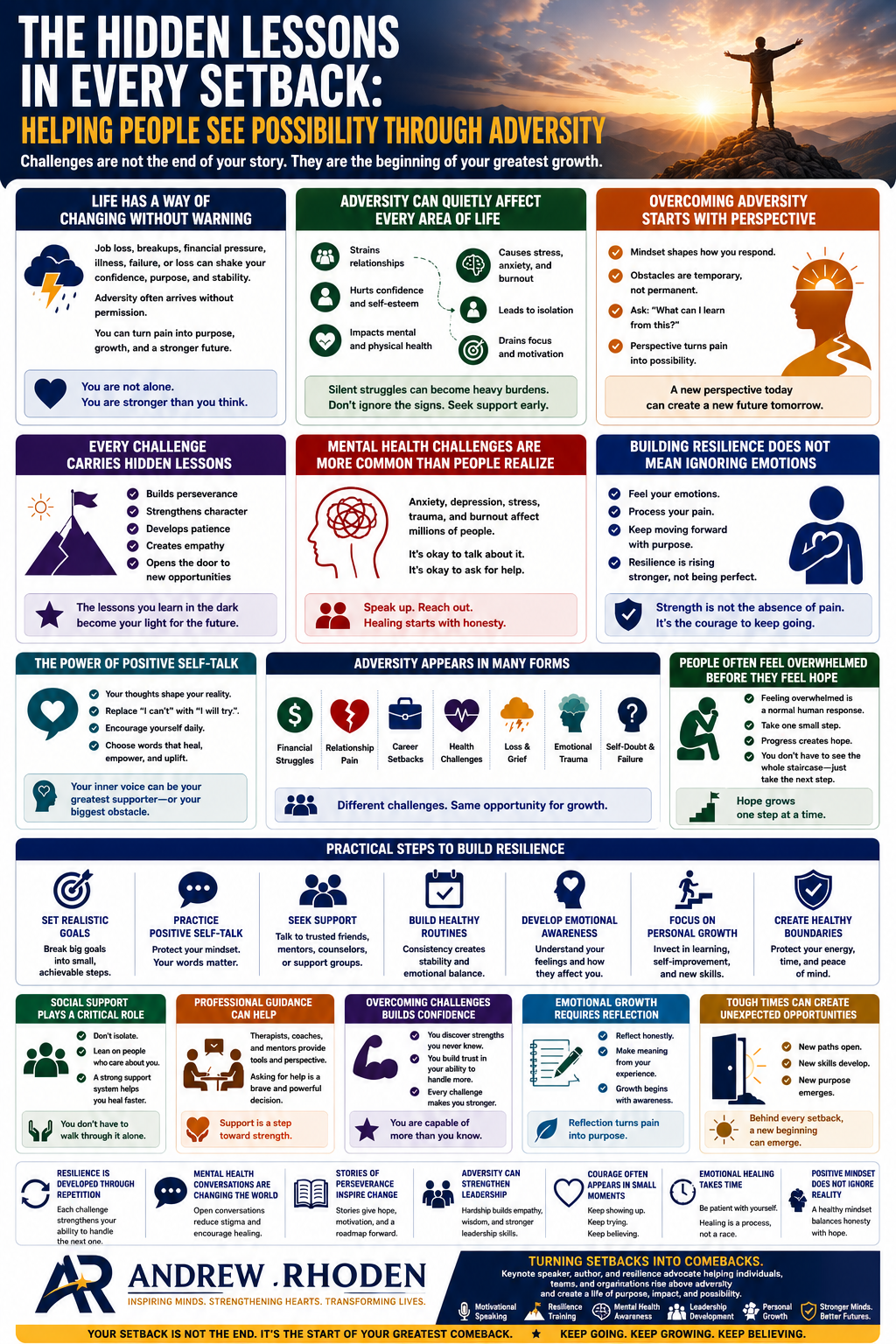
Life Has a Way of Changing Without Warning
Most people do not expect hardship to arrive when it does. One moment, life feels stable and predictable, and the next moment everything changes. A sudden job loss, a painful breakup, financial pressure, health concerns, or personal failure can create emotional weight that feels impossible to carry. During those difficult times, many people begin questioning their confidence, purpose, and ability to move forward.
Adversity often arrives without permission, and it rarely looks the same for every person. Some people experience mental health challenges after years of silent stress, while others struggle after losing a loved one, facing chronic illness, or dealing with career setbacks that shake their identity. The emotional impact can leave people feeling isolated, discouraged, and emotionally exhausted.
An overcoming adversity speaker helps audiences understand that setbacks do not have to define the rest of their journey. Instead of seeing pain as the end of the story, people can learn how to turn obstacles into opportunities for growth, resilience, and long-term transformation.
Adversity Can Quietly Affect Every Area of Life
Hardship rarely affects only one part of a person’s life. Stress at work can affect relationships at home. Emotional pain can impact confidence, physical health, and the ability to focus. When people face adversity for long periods of time, they often begin losing hope without realizing how deeply the challenge is affecting them.
Many people try to hide their struggles because they fear judgment or embarrassment. They continue moving through life while privately battling destructive thinking, low self esteem, anxiety, or emotional burnout. Over time, that emotional pressure can become overwhelming if there is no healthy outlet or support system available.
This is one reason inspirational speakers who focus on overcoming adversity often connect so deeply with audiences. People need reminders that they are not alone and that even the hardest moments can still produce growth and purpose.
Overcoming Adversity Starts With Perspective
One of the most powerful lessons an adversity speaker teaches is that perspective matters during hardship. Two people can experience similar setbacks and respond in completely different ways. One may feel defeated permanently, while another may use the experience as a driving force for personal growth and future success.
That difference often comes from mindset. A growth mindset allows people to see obstacles as temporary challenges rather than permanent failures. Instead of asking, “Why is this happening to me?” people begin asking, “What can I learn from this experience?”
This mindset shift does not erase pain overnight. However, it helps people regain a sense of control during moments that once felt completely hopeless.
Every Challenge Carries Hidden Lessons
Many successful people speak openly about the setbacks they experienced before reaching success. Business failures, rejection, injuries, criticism, and emotional hardship often become the very experiences that shape future leadership and resilience.
Adversity teaches lessons that comfort rarely can. Difficult moments force people to develop perseverance, emotional strength, patience, and courage. While nobody wants pain or hardship, many people eventually realize that their greatest periods of growth came during seasons of struggle.
An overcoming adversity speaker helps audiences recognize these hidden lessons before bitterness or fear prevents them from moving forward.
Mental Health Challenges Are More Common Than People Realize
Mental health has become one of the most important conversations in modern society. Many people silently battle anxiety, depression, emotional exhaustion, or overwhelming stress while appearing completely fine on the outside.
Mental health challenges affect students, athletes, executives, parents, entrepreneurs, and professionals across every industry. Some people struggle after traumatic experiences, while others slowly lose emotional stability from years of pressure and emotional suppression.
Speakers who address adversity and mental health create space for honest conversations that many audiences desperately need. People often feel relieved when they realize they are not the only ones struggling internally.
Building Resilience Does Not Mean Ignoring Emotions
Many people misunderstand resilience. They assume resilience means pretending everything is fine or refusing to acknowledge pain. In reality, building resilience requires people to process emotions honestly while continuing to move forward with purpose.
Healthy resilience allows people to experience sadness, frustration, disappointment, or fear without completely giving up on themselves. It means learning how to cope with hardship while continuing to develop emotional strength and self-awareness.
An inspirational speaker often helps audiences understand that resilience is not perfection. It is the ability to rise stronger after life knocks someone down.
The Power of Positive Self Talk During Hardship
People going through adversity often become their own harshest critics. Negative internal thoughts can quietly destroy confidence and create feelings of hopelessness over time.
Positive self talk helps interrupt destructive thinking patterns that convince people they are failures or incapable of recovery. Encouraging language may seem simple, but the words people repeat to themselves daily often shape emotional well being and future decisions.
A positive mindset does not mean ignoring reality. Instead, it means choosing language that supports healing, perseverance, and healthy emotional growth even during difficult times.
Adversity Appears in Many Forms
Hardship affects people differently because adversity takes many forms throughout life. Some people face financial collapse, while others experience divorce, grief, betrayal, illness, or emotional trauma.
A single parent trying to support a family may experience completely different stress than an athlete recovering from a career-ending injury. Someone facing a natural disaster may struggle differently than a person dealing with chronic illness or emotional isolation.
Even though every situation is unique, the emotional process of overcoming challenges often shares common patterns involving fear, uncertainty, resilience, and eventual growth.
People Often Feel Overwhelmed Before They Feel Hope
During major setbacks, many people initially feel overwhelmed because they cannot immediately see a solution. Fear about the future can create emotional paralysis that makes it difficult to take even small steps forward.
An adversity speaker helps people understand that feeling overwhelmed does not mean they are weak. It simply means they are human. Sometimes people need guidance, encouragement, and practical strategies to help them regain emotional stability during difficult seasons of life.
Hope usually begins returning one small step at a time rather than through dramatic overnight change.
The Journey Through Hardship Looks Different for Everyone
No two people experience adversity in exactly the same way. Some people recover quickly from setbacks, while others need much longer periods of emotional healing and personal reflection.
The journey through hardship often involves setbacks, moments of doubt, emotional breakthroughs, and gradual progress. People sometimes feel discouraged because healing is not always linear.
An effective speaker reminds audiences that personal growth is a process rather than a single moment. Small victories often become the stepping stones toward long-term transformation.
Social Support Plays a Critical Role in Recovery
People facing adversity often isolate themselves because they feel embarrassed, misunderstood, or emotionally exhausted. Unfortunately, isolation can make hardship even more difficult to overcome.
Strong social support helps people process emotions, regain perspective, and maintain hope during difficult seasons. Friends, family members, mentors, counselors, and support groups can all provide encouragement when life feels heavy.
A healthy support network reminds people that they do not have to navigate life’s challenges completely alone.
Building Resilience Requires Practical Steps
Motivational inspiration is important, but people also need practical steps they can apply to their own lives. Real resilience grows through consistent habits, healthy thinking patterns, and intentional decision-making over time.
Some helpful strategies may include:
- Setting realistic goals
- Practicing positive self talk
- Seeking professional help when needed
- Building healthy routines
- Developing emotional awareness
- Focusing on personal growth
- Creating healthy boundaries
Small actions repeated consistently often create major long-term emotional improvements.
Professional Guidance Can Help People Regain Direction
Sometimes adversity becomes too overwhelming to manage alone. People experiencing severe stress, trauma, or mental health struggles may need additional support beyond encouragement from friends or family.
It is important for individuals to seek professional guidance when emotional pain begins affecting daily life, relationships, or overall well being. Therapists, counselors, coaches, and mentors can provide tools that help people cope with emotional pressure more effectively.
Seeking support is not weakness. In many situations, asking for help becomes the first courageous step toward healing.
Overcoming Challenges Often Builds Confidence
People who successfully overcome adversity frequently discover strengths they never realized they possessed. Hardship often reveals hidden abilities, emotional resilience, and deeper confidence that comfort never required.
When individuals survive difficult experiences, they often develop greater trust in their own ability to handle future obstacles. This confidence becomes especially important during future setbacks or periods of uncertainty.
The process of overcoming challenges teaches people that they are capable of much more than fear initially convinced them.
Emotional Growth Requires Honest Reflection
Personal growth often begins when people stop avoiding painful emotions and start honestly reflecting on their experiences. Reflection allows individuals to process hardship rather than simply burying emotional pain beneath distractions or busyness.
Meaning making becomes an important part of healing because people naturally search for purpose during difficult moments.
Understanding how adversity shaped character, priorities, or perspective often helps individuals regain clarity and emotional peace.
An adversity speaker helps audiences see that reflection is not weakness. It is part of emotional growth and healing.
Tough Times Can Create Unexpected Opportunities
Most people would never choose hardship willingly. However, difficult experiences sometimes create opportunities for growth that never would have existed otherwise.
A career setback may inspire someone to pursue a more fulfilling path. Personal failure may motivate someone to develop new skills or healthier habits. Emotional pain may strengthen empathy and compassion toward others facing similar struggles.
Many successful people eventually realize that the experiences they once feared most became powerful turning points in their own life.
Resilience Is Developed Through Repetition
Resilience is not something people either have or do not have naturally. Like any other skill, resilience develops through repeated experiences, emotional practice, and perseverance over time.
Each obstacle people overcome strengthens their ability to handle future adversity more effectively. Over time, people learn how to manage emotions, adjust expectations, and maintain focus even during stressful situations.
This process does not remove hardship completely, but it helps individuals emerge stronger with each challenge they face.
Mental Health Conversations Are Changing the World
For many years, conversations about mental health were avoided in schools, workplaces, and public settings. Today, more organizations are recognizing the importance of emotional wellness and psychological resilience.
Speakers who address mental health challenges openly help reduce stigma and encourage healthier conversations around stress, emotional pressure, and healing. Audiences often respond powerfully when they hear authentic stories involving hardship, perseverance, and recovery.
These conversations remind people that emotional struggles are part of the human experience, not something to hide in silence.
Stories of Perseverance Inspire Real Change
People connect deeply with stories because stories make adversity feel personal, relatable, and human. Hearing how someone overcame hardship often gives audiences hope that they can survive their own struggles as well.
Stories remind people that setbacks do not have to become permanent definitions of identity. Even after failure, rejection, or emotional pain, people still have the ability to rebuild confidence and move forward.
An inspirational speaker uses stories not simply to motivate audiences emotionally, but to help them recognize practical lessons and possibilities for their own journey.
Adversity Can Strengthen Leadership
Many great leaders developed their strongest leadership skills during periods of hardship. Adversity often teaches empathy, patience, discipline, and emotional intelligence in ways success alone cannot.
Leaders who have faced obstacles often understand how to support others more effectively because they remember what it felt like to struggle personally. This emotional awareness creates stronger communication, compassion, and resilience inside organizations and communities.
An overcoming adversity speaker often helps leaders understand that difficult experiences can shape stronger character and more effective leadership over time.
Courage Often Appears in Small Moments
People sometimes assume courage only exists in dramatic moments. In reality, courage often appears quietly through everyday decisions to keep going despite emotional pain or uncertainty.
Courage may look like attending therapy after months of struggling silently. It may mean rebuilding life after job loss, continuing school during hardship, or asking for help during emotional crisis.
The ability to keep moving forward after disappointment is one of the clearest signs of resilience and personal strength.
Building Resilience Helps People Navigate Life’s Challenges
Life will always contain uncertainty, setbacks, and unexpected obstacles. While nobody can avoid hardship completely, people can develop the emotional tools needed to respond more effectively when adversity appears.
Building resilience helps individuals navigate life’s challenges with greater emotional stability, confidence, and perspective. It teaches people how to recover from setbacks without completely losing hope or direction.
An adversity speaker often helps audiences understand that resilience is one of the most valuable skills any person can develop throughout life.
Emotional Healing Takes Time
Healing from hardship rarely happens in one night. Emotional recovery often takes patience, self-awareness, and consistent support over time.
Some people expect themselves to recover immediately after painful experiences, only to feel frustrated when emotions continue lingering longer than expected. Healing is not weakness, and it should not be rushed artificially.
Allowing space for emotional recovery helps people process adversity in healthier and more sustainable ways.
Positive Mindset Does Not Mean Ignoring Reality
A positive mindset is often misunderstood as blind optimism or pretending problems do not exist. True positivity involves acknowledging hardship honestly while still believing improvement is possible.
People with a healthy mindset recognize challenges realistically, but they refuse to allow adversity to permanently define their identity or future. They focus on potential solutions rather than remaining trapped in hopelessness.
This balance between honesty and hope becomes essential during difficult seasons of life.
Practical Strategies Help Audiences Apply Inspiration
Motivation alone fades quickly if audiences leave without practical guidance they can apply daily. Effective speakers combine emotional inspiration with actionable steps people can use immediately in their own lives.
These strategies may involve emotional regulation, healthy communication, goal setting, confidence building, or stress management techniques. Practical guidance helps audiences transform inspiration into long-term personal growth.
People are more likely to create meaningful change when they leave feeling empowered rather than simply emotionally entertained.
Adversity Can Become a Driving Force for Purpose
Many people discover new purpose after surviving difficult experiences. Pain sometimes reveals passions, values, or priorities that were previously hidden beneath routine and comfort.
Some individuals become mentors, advocates, coaches, or leaders because of the hardship they survived personally. Others use their experiences to help people facing similar struggles.
Adversity does not automatically create growth, but when approached intentionally, it can become a powerful driving force for purpose and transformation.
The Right Tools Help People Rebuild Confidence
People struggling with hardship often lose confidence in themselves, their future, or their ability to succeed again. Rebuilding confidence requires support, encouragement, emotional awareness, and healthy coping skills.
The right tools help individuals regain focus, process emotions, and move forward with greater clarity. Confidence grows gradually as people begin recognizing their ability to survive challenges and continue progressing despite setbacks.
Over time, those experiences often become powerful reminders of inner strength and resilience.
Obstacles Can Become Stepping Stones
Some of the most meaningful opportunities for growth emerge from experiences people once viewed as devastating failures. Obstacles often force individuals to rethink priorities, develop new perspectives, and create healthier habits.
Instead of seeing hardship only as punishment, people can begin viewing setbacks as stepping stones toward future strength and wisdom. This mindset does not minimize pain, but it changes how people interpret adversity moving forward.
An overcoming adversity speaker helps audiences recognize that painful experiences can still produce meaningful growth and positive change.
Andrew Rhoden Inspires Audiences to Rise Stronger
Andrew Rhoden is a dynamic and impactful inspirational speaker who has spent decades helping people overcome obstacles and discover new possibilities through adversity. His presentations connect deeply with audiences because he speaks with authenticity, practical wisdom, and genuine compassion for the human experience.
Whether speaking to athletes, corporate teams, students, or community organizations, Andrew helps audiences understand how perseverance, resilience, and courage can transform even the most difficult moments in life. His ability to combine emotional storytelling with actionable guidance makes his presentations both inspiring and practical.
Andrew Rhoden empowers audiences to rise stronger, rebuild confidence, and recognize the hidden lessons inside adversity. His message encourages people to move forward with hope, focus, and a renewed sense of purpose.
Real Growth Often Begins During Hardship
Most people would never choose adversity willingly. Yet many eventually discover that the experiences that challenged them most also shaped them most deeply. Hardship often reveals strengths, values, and abilities that comfort never required.
People who overcome difficult moments frequently develop greater empathy, perseverance, emotional awareness, and resilience. These experiences become part of the foundation that shapes future success and personal growth.
The goal is not to avoid every challenge in life. The goal is to learn how to face adversity with courage, develop emotional strength, and continue moving forward even during uncertain seasons.
Speak With Andrew Rhoden for Your Next Event
Audiences today are searching for more than temporary motivation. They want authentic guidance, meaningful stories, and practical tools that help them overcome obstacles and build resilience during difficult times.
Andrew Rhoden delivers powerful presentations designed to inspire athletes, business professionals, students, and leaders to overcome adversity and move forward with renewed confidence. His presentations focus on perseverance, mental health awareness, personal growth, and the ability to turn hardship into opportunities for growth and transformation.
Whether you are organizing a corporate conference, sports convention, youth seminar, leadership event, or educational program, Andrew Rhoden provides impactful presentations that leave audiences encouraged, empowered, and ready to take action. Contact us at (888) 209-4055 to book a free consultation and learn more about bringing an overcoming adversity speaker to your next event.
share this
Related Articles
Related Articles