




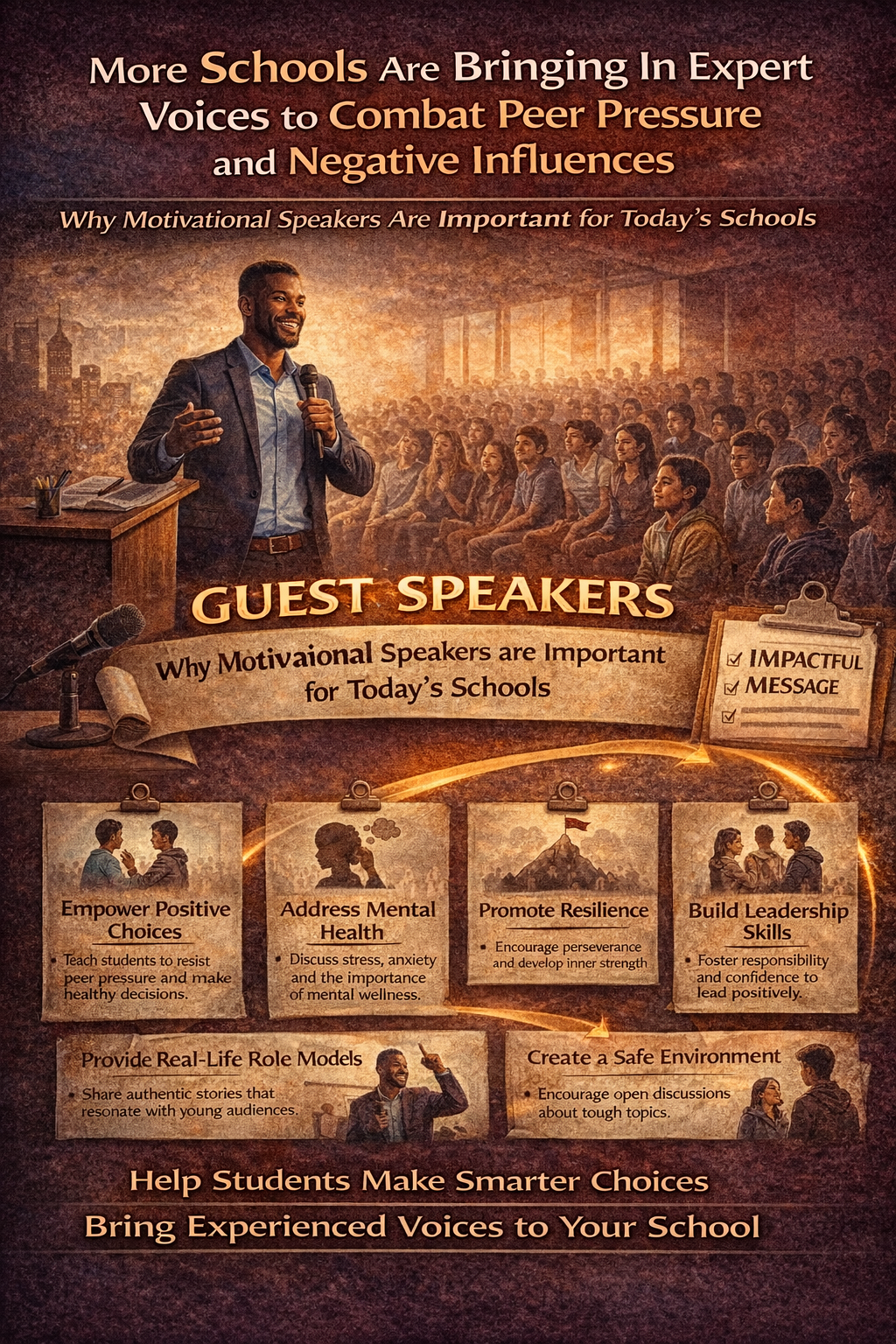
More Schools Are Bringing In Expert Voices to Combat Peer Pressure and Negative Influences
The Growing Need for Guest Speakers in Today’s Schools
Across the country, educational institutions are recognizing that today's students face challenges very different from those experienced by previous generations. Issues such as peer pressure, social media stress, and increasing mental health issues are affecting young people at earlier ages. As a result, many administrators are turning to guest speakers for schools who can address these topics in ways that connect with young audiences.
Bringing in motivational speakers for schools allows educators to introduce powerful perspectives that reinforce classroom learning while promoting positive change. These events create opportunities for students to hear from professionals who speak openly about real-life challenges and solutions. A compelling guest speaker can reach students in ways that textbooks often cannot.
Why Motivational Speakers Are Becoming Essential on Campus
School leaders increasingly view motivational speakers as a valuable part of student development. These professionals offer guidance that supports both character education and academic growth. When schools invite youth motivational speakers, they provide students with tools for navigating challenges both inside and outside the classroom.
An engaging education speaker can help inspire students to reflect on their choices and develop stronger decision-making skills. By focusing on topics such as self esteem, responsibility, and resilience, these speakers help young people build confidence and strengthen their sense of direction.
For school leaders, the goal is not simply entertainment during a school event, but meaningful engagement that improves student outcomes.
Addressing Peer Pressure in Modern Schools
One of the most common concerns expressed by educators involves the impact of peer pressure on high school students and middle school learners. Social expectations and group influence can shape how students behave, sometimes encouraging decisions that harm their well-being.
Experienced motivational speakers address this challenge by encouraging self reflection and stronger personal values. Through real life examples, students learn how others have navigated similar situations and found healthier paths forward.
When students hear these experiences directly from a credible speaker, the message often resonates more deeply.
The Role of Youth Motivational Speakers in Character Education
Strong character education programs help students develop integrity, empathy, and leadership skills. Youth motivational speakers are uniquely positioned to reinforce these lessons in engaging ways.
These presentations often focus on helping young people understand the long-term impact of their choices. By sharing stories of overcoming adversity, speakers show students how challenges can become opportunities for personal growth.
When schools integrate motivational presentations into their school year, students receive reinforcement that strengthens classroom lessons.
Andrew Rhoden’s Approach to Inspiring Young People
Andrew Rhoden stands out among motivational speakers for schools because of his authentic communication style and practical insight. His work focuses on helping young audiences develop resilience, leadership skills, and confidence.
As an experienced keynote speaker, Andrew combines his professional background with relatable storytelling that connects with high school and middle school audiences. His presentations emphasize the importance of personal development, responsible choices, and long-term vision.
Andrew’s personal journey provides a powerful framework for conversations about overcoming obstacles and building a meaningful future.
How Guest Speakers Strengthen Student Engagement
Strong student engagement is essential for meaningful learning experiences. Traditional lectures may struggle to capture attention, especially when addressing sensitive topics such as mental health or peer relationships.
A dynamic guest speaker can transform a typical school assembly into an interactive learning experience. By incorporating storytelling, audience questions, and audience participation, presentations become memorable events that encourage students to reflect on their choices.
These experiences help students feel more connected to the message and more motivated to apply the lessons in their own lives.
Addressing Mental Health and Emotional Wellness
Schools today are placing increasing emphasis on mental health awareness. Students across all grade levels are experiencing stress related to academics, social pressures, and personal challenges.
Through engaging presentations, motivational speakers help students understand the importance of mental wellness and emotional balance. These discussions often include strategies for managing stress and seeking help when needed.
By promoting emotional well being, speakers contribute to a healthier school environment where students feel supported.
Helping Students Develop Leadership Skills
Programs that emphasize leadership development help prepare students to become responsible citizens and future leaders. Many youth motivational speakers integrate leadership themes into their presentations.
Students learn how to make positive choices, support their peers, and build strong relationships. These lessons are especially valuable during the formative middle school and high school years.
Leadership-focused presentations also encourage students to take ownership of their actions and decisions.
Creating Safe Spaces for Honest Conversations
A key benefit of bringing speakers for schools onto campus is their ability to create safe environments for discussion. Students often feel more comfortable opening up when a speaker shares personal experiences.
Topics such as childhood trauma, mental health, and peer influence can be difficult to discuss in traditional classrooms. Motivational presentations encourage students to ask questions and reflect on their experiences.
By creating safe spaces, schools foster healthier conversations about the challenges students face.
Real-Life Stories That Connect With Students
Many motivational speakers rely on powerful storytelling to deliver their message. When students hear authentic stories about struggle, resilience, and growth, the message becomes more meaningful.
Andrew Rhoden’s presentations feature real life examples that illustrate the impact of decisions and attitudes. These stories help students understand how everyday choices can shape their future.
Story-driven presentations are often the most memorable part of a school event.
Supporting Positive School Culture
Inviting speakers for schools can contribute to a stronger positive culture within educational environments. Students who feel supported and inspired are more likely to engage in respectful behavior and collaborative learning.
Presentations that emphasize community support, respect, and accountability help reinforce the values that schools aim to promote. Over time, these messages contribute to a healthier campus environment.
A positive school culture benefits both students and educators.
Empowering Students to Take Control of Their Future
The ultimate goal of motivational speakers for schools is to help empower students. By encouraging students to reflect on their choices and values, speakers help them develop a stronger sense of direction.
Andrew Rhoden’s presentations emphasize responsibility, confidence, and the importance of long-term thinking. His approach encourages students to focus on building positive habits that will benefit them beyond the school year.
When students leave a presentation feeling motivated and hopeful, the impact can last for years.
Tailored Presentations for Different Age Groups
Effective speakers for schools recognize that different age groups require different approaches. What resonates with middle school students may not connect in the same way with high school students.
Andrew Rhoden adapts his presentations to fit specific audiences, ensuring that his message is relevant and engaging. Whether addressing younger students or preparing seniors for the transition to higher education, his talks are designed to meet students where they are.
This flexibility allows schools to maximize the value of their speaker programs.
Why Schools Continue to Invest in Motivational Speakers
Many educators report that inviting motivational speakers creates lasting benefits for their students. These events offer opportunities for reflection, conversation, and personal growth.
Students often gain a deeper understanding of how their actions influence their future. They also learn how to support their peers and contribute to a stronger school community.
Because of these results, schools continue to invite speakers who can connect with students in meaningful ways.
Your Guest Speaker – Andrew Rhoden
Andrew Rhoden, Esq. is widely recognized as a dynamic inspiring motivational speaker who connects deeply with young people and educators alike. His presentations are designed to help students develop resilience, leadership skills, and stronger decision-making abilities.
Known for his engaging delivery and authentic communication style, Andrew uses storytelling and interactive discussion to keep audiences fully engaged. His work as a keynote speaker focuses on helping students navigate peer pressure, strengthen self esteem, and pursue meaningful goals.
Schools seeking the perfect speaker for school assemblies or leadership programs often choose Andrew because of his ability to connect with students across diverse backgrounds.
Why Choose Andrew Rhoden as Your School Speaker?
Andrew’s presentations stand out because they are built around real experiences and meaningful conversations.
•
Engaging and Relatable Content
– Students connect with Andrew’s storytelling and interactive style.
•
Proven Expertise – As one of the best motivational speaker options for schools, Andrew brings professional insight and credibility.
•
Tailored Presentations – Every presentation is designed to match the values and goals of the school community.
What Makes Andrew Stand Out
Andrew’s approach combines authenticity with practical insight.
• Authenticity – His relatable storytelling ensures that his messages resonate with students and teachers.
• Engagement – Interactive activities and discussions encourage participation from the entire audience.
• Flexibility – Presentations can be adapted for various grade levels and school environments.
• Accessibility – Virtual presentations make it easy for schools nationwide to host this keynote speaker.
Why Education Keynote Speakers Are Transforming School Events
Across the country, education keynote speakers are becoming an important part of school programs that focus on leadership and personal development. Schools are increasingly inviting some of the top motivational speakers to speak with students because these professionals bring fresh perspectives and powerful stories. A strong keynote presentation can help students understand complex topics such as student mental health, decision-making, and the importance of building positive habits. These speakers often combine storytelling with practical advice that helps students think about their future. When schools select engaging keynote speakers, they create memorable learning experiences that extend beyond the classroom.
Developing Critical Thinking and Social Emotional Learning
A major focus of modern school programs is helping students develop stronger critical thinking skills while strengthening their emotional awareness. Presentations from experienced motivational speakers often highlight the value of social emotional learning, encouraging students to understand their emotions and make thoughtful choices. These programs show students how to evaluate situations carefully rather than reacting to pressure or influence from others. By connecting these lessons with real-life stories, speakers make abstract ideas easier for students to understand. The goal is to help students develop decision-making skills that will benefit them throughout their lives.
Providing Practical Tools for Student Success
One reason schools invite motivational speakers for schools is the opportunity to provide practical tools that students can apply immediately. These presentations often include advice about goal setting, resilience, and managing peer pressure. When students receive clear guidance that relates to their daily experiences, they begin to see how small changes can lead to student success. Schools also recognize that these conversations support broader educational goals. Practical guidance encourages students to build confidence and take responsibility for their future.
Inspiring Students Through Community Leadership
Many schools invite speakers who are respected community leaders because they bring authentic experiences to the stage. When students hear about a speaker’s remarkable journey, they begin to understand that success often grows from persistence and determination. These stories help students connect personal effort with real-world achievement. Community leaders who share their experiences can motivate students to believe in their own potential. This connection between community leadership and student development can be incredibly powerful.
Equipping Educators With Actionable Strategies
While motivational presentations focus on students, they also equip educators with new perspectives. Teachers and administrators often gain valuable actionable strategies for reinforcing positive behavior and resilience in the classroom. Speakers frequently highlight ways educators can encourage self-reflection and personal responsibility among students. These ideas help teachers continue the conversation long after the presentation ends. In this way, the impact of a single school event can extend throughout the entire academic year.
Reaching Students in Alternative Education Programs
Not every student learns in the same way, which is why motivational presentations are also valuable for alternative education programs. Students in these environments may face different obstacles or learning challenges. Engaging speakers can connect with these students by sharing relatable stories and realistic guidance. By addressing their experiences directly, speakers create a stronger connection with the audience. This approach ensures that every student feels included in the conversation about personal growth.
Reinforcing Positive Messages Throughout the School Year
Schools often schedule motivational presentations at key points during the academic calendar, such as the beginning of the school year or immediately after winter break. These moments provide opportunities to reset goals and refocus student attention on positive habits. Speakers use these events to highlight the importance of responsibility, resilience, and self-awareness. When students return from a break, hearing encouraging messages can help restore focus and motivation. These strategic presentations help reinforce a positive school culture.
Delivering Practical Takeaways That Students Can Use
Effective speakers ensure their presentations include practical takeaways that students can remember and apply. Instead of simply telling inspiring stories, they offer practical strategies for handling peer pressure, improving communication, and making thoughtful decisions. Students often remember these ideas long after the event ends. Clear advice helps students translate motivation into meaningful action. When students leave a presentation with specific strategies, the experience becomes more valuable.
Creating a Supportive
Environment for Student Growth
A powerful presentation can help schools reinforce the importance of creating a supportive environment where students feel comfortable expressing themselves. Speakers often discuss empathy, respect, and responsibility as essential parts of a healthy school culture. These discussions remind students that they play a role in shaping the atmosphere around them. When students support each other, the entire learning environment improves. A supportive environment encourages collaboration and trust among students and teachers.
Addressing Development From Early Childhood to Adolescence
Character development begins long before students reach high school. Programs that emphasize leadership and resilience often consider how lessons learned in early childhood influence later behavior. Speakers frequently remind students that the habits they develop early can shape their future success. By addressing both early childhood development and adolescent challenges, motivational programs connect long-term growth with daily choices. These insights help students see the value of positive habits from an early age.
Helping Students Navigate Current Challenges
Students today face many current challenges, including social pressures, academic expectations, and digital influences. Motivational presentations provide a space to talk openly about these issues. Speakers encourage students to reflect on their choices and consider healthier paths forward. By addressing real challenges, these presentations feel relevant and meaningful. Students are more likely to respond when the message connects directly with their experiences.
Communication Skills and Body Language in Leadership
Another important topic addressed during motivational presentations is communication. Speakers often explain how body language and confident speaking habits can influence how others perceive them. These lessons help students develop stronger leadership skills and self-confidence. Understanding body language can also improve how students interact with peers and teachers. Strong communication skills are essential for personal and professional success.
Gaining Insights From Experienced Speakers
When schools host motivational programs, students often gain insights that cannot be learned through textbooks alone. These insights come from real experiences shared by professionals who have overcome obstacles and achieved success. Many speakers draw from personal challenges to illustrate important life lessons. These experiences help students see how determination and responsibility can lead to positive outcomes. The ability to learn from real-life examples makes motivational speaking especially impactful.
Choosing the Right Speaker for Your School
Schools evaluating potential speakers often discover that many speakers offer motivational presentations, but not all connect equally with students. The most effective speakers understand how to communicate with young audiences in a way that feels authentic and meaningful. They combine storytelling with practical advice and encourage students to reflect on their choices. Selecting the right speaker ensures the presentation leaves a lasting impression. When schools choose carefully, a single presentation can inspire students for years to come.
Contact Us to Bring Andrew Rhoden to Your School
Schools searching for impactful guest speakers for schools often discover that the right voice can transform a single presentation into a lasting learning experience. Andrew Rhoden’s presentations help inspire students, encourage thoughtful decision-making, and promote stronger leadership among young people.
If your school is planning a leadership event, school assemblies, or student development program, Andrew Rhoden may be the right speaker to inspire meaningful conversations on your campus. His presentations are designed to help students feel empowered, motivated, and ready to pursue their goals.
To learn more about booking Andrew Rhoden as a guest speaker for your school, contact us at (888) 209-4055 to book a free consultation. Our team works with schools nationwide and can help you bring a powerful message of leadership, resilience, and positive decision-making to your students.
share this
Related Articles
Related Articles