




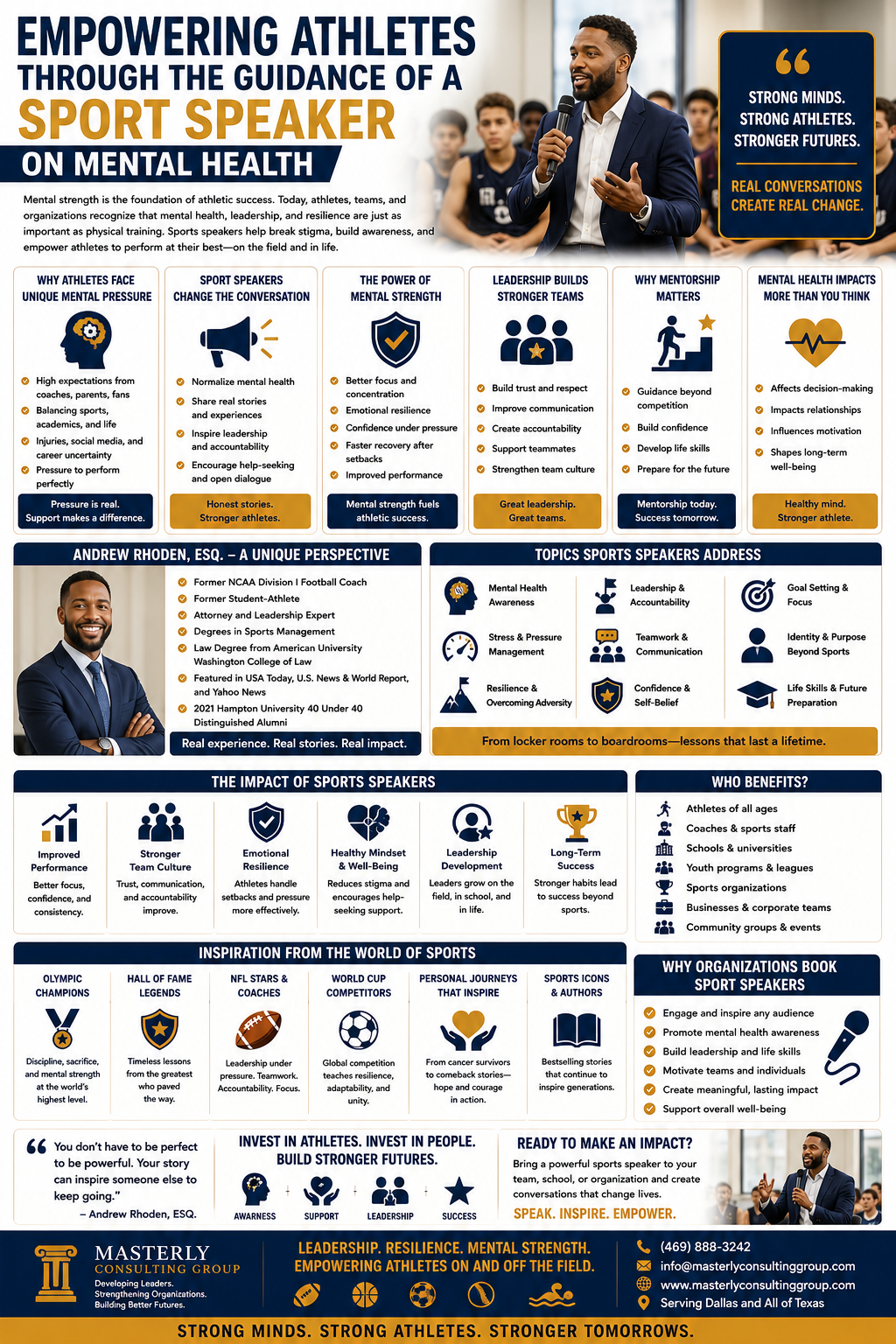
Empowering Athletes Through the Guidance of a Sport Speaker on Mental Health
The Mental Side of Sports Is Finally Receiving Attention
For years, conversations around athletics focused almost entirely on physical performance, conditioning, speed, and competition. Athletes were often praised for toughness while emotional struggles were ignored or misunderstood. Today, the conversation is beginning to change as coaches, organizations, schools, and communities recognize that mental health plays a major role in both personal wellness and athletic success. More teams are now investing in education, mentorship, and support systems that help athletes perform at a high level while also protecting emotional well-being.
Across the sports world, many organizations are bringing in experienced sports speakers to address topics involving stress, leadership, resilience, and emotional pressure. These conversations are helping athletes feel more comfortable discussing challenges that once stayed hidden behind locker room doors. Mental health discussions are no longer viewed as weakness. Instead, they are becoming an important part of long-term athletic development and personal growth.
Why Athletes Face Unique Mental Pressure
Athletes often operate under constant pressure that many people outside of sports do not fully understand. Expectations from coaches, teammates, parents, schools, fans, and social media can create emotional strain that builds quietly over time. Many young athletes feel pressure to perform perfectly while balancing academics, injuries, competition, and personal responsibilities.
Professional athletes face additional challenges involving public scrutiny, career uncertainty, and performance expectations at the highest levels of competition. Even highly successful players can struggle with stress, anxiety, burnout, or emotional exhaustion behind the scenes. This growing awareness is one reason organizations increasingly seek out experienced sports motivational speakers who can speak honestly about leadership, mental health, and overcoming adversity.
Sports Speakers Are Changing the Conversation
Modern sports speakers are helping reshape how athletes discuss emotional health and performance pressure. Instead of focusing only on motivation or competition, many speakers now address mental resilience, communication, accountability, and emotional balance. Athletes often respond positively when they hear real stories from people who understand the demands of competition firsthand.
A powerful motivational sports speaker can help athletes recognize they are not alone in their struggles. Honest conversations about stress, confidence, leadership, setbacks, and emotional wellness often create meaningful impact inside teams and organizations. Athletes frequently connect more deeply when speakers combine personal experience with practical guidance.
Andrew Rhoden Brings a Unique Perspective to Sports Leadership
Andrew Rhoden, ESQ., offers a rare combination of athletic, coaching, and legal experience that makes him highly effective as a motivational speaker for athletic organizations, schools, universities, and leadership programs. As a former college football coach, athlete, and attorney, Andrew understands the emotional demands athletes face both on and off the field. His background coaching NCAA Division I football and high school programs gives him firsthand knowledge of leadership pressure, player development, and mental resilience inside competitive sports environments.
Andrew’s professional journey has been featured in national publications including USA Today, U.S. News & World Report, and Yahoo News. A former student-athlete himself, he earned degrees in Sports Management from Hampton University and West Virginia University before receiving his law degree from American University Washington College of Law. In 2021, he was inducted into Hampton University’s 40 Under 40 Distinguished Alumni Association, recognizing his impact in athletics, leadership, and law.
Mental Health Affects Performance More Than Many Realize
Athletic performance is closely connected to mental and emotional health. Confidence, focus, emotional stability, communication, and stress management all influence how athletes perform under pressure. Even physically gifted athletes may struggle if emotional fatigue or anxiety begins affecting preparation and concentration.
Experienced sports speakers often discuss how emotional wellness influences:
- Decision-making
- Team communication
- Leadership confidence
- Motivation
- Resilience
- Recovery after setbacks
Mental preparation is now viewed as an important part of overall athletic performance.
Young Athletes Often Carry Pressure Quietly
Many younger athletes hesitate to discuss emotional struggles because they fear appearing weak or disappointing others. Some players feel pressure to always appear confident even when dealing with anxiety, fear, or emotional exhaustion internally. Without healthy support systems, these challenges may affect performance, relationships, academics, and overall well-being.
A trusted sports keynote speaker can help create a safe environment where athletes feel more comfortable discussing emotional challenges openly. Hearing experienced leaders speak honestly about adversity often encourages athletes to ask for help earlier instead of struggling silently.
Leadership Matters Inside Every Locker Room
Strong leadership can shape the emotional culture of an entire team. Coaches, captains, and veteran players influence how athletes communicate, handle pressure, and support one another during difficult moments.
A motivational sports speaker may help teams strengthen:
- Accountability
- Team communication
- Emotional resilience
- Leadership confidence
- Trust
- Team culture
Positive leadership often creates healthier and more supportive athletic environments.
Mental Resilience Helps Athletes Handle Adversity
Every athlete eventually experiences setbacks involving injuries, losses, criticism, or disappointment. Learning how to respond emotionally during difficult moments is one of the most important parts of athletic growth.
Many sports motivational speakers focus heavily on resilience because athletes frequently define themselves through competition and performance. Learning to handle setbacks constructively often improves both emotional health and long-term athletic development.
Sports Speakers Help Normalize Important Conversations
One of the biggest benefits of bringing in experienced sports speakers is the ability to normalize discussions that many athletes may otherwise avoid. Mental health, stress, identity, pressure, burnout, and emotional wellness are now becoming more accepted topics inside athletic environments.
Athletes often listen differently when speakers share authentic stories instead of generic motivational messages. Real experiences frequently create stronger emotional connection and trust with audiences.
Why Athletes Need Mentorship Beyond Competition
Athletes are often taught how to train physically but receive very little education involving emotional resilience, leadership communication, or mental preparation. Mentorship becomes especially important during periods of pressure, transition, or uncertainty.
An experienced motivational speaker may help athletes better understand:
- Emotional discipline
- Leadership responsibility
- Confidence building
- Goal setting
- Team accountability
These lessons often remain valuable long after athletic careers end.
Sports and Mental Health Are Connected Across Every Level
Mental health challenges affect athletes at every stage of competition, from youth sports to the professional level. Even professional athletes competing at the highest levels openly discuss emotional struggles involving anxiety, depression, pressure, and burnout.
The growing visibility of mental health conversations has encouraged more schools, universities, and organizations to invest in educational speaking programs designed to support athletes emotionally as well as physically.
The Influence of Hall of Fame Athletes
Many athletes admire respected figures from the hall of fame because those individuals represent perseverance, discipline, leadership, and long-term success. When respected sports figures speak openly about emotional health and leadership struggles, younger athletes often listen more carefully.
The influence of former athletes who achieved greatness while overcoming adversity can leave a lasting impact on developing players and leadership groups.
Why Team Culture Matters
Athletes often perform best inside healthy team environments where communication, trust, and emotional support exist consistently. Toxic environments may increase stress, fear, anxiety, and emotional fatigue over time.
Strong sports speakers often encourage teams to build cultures based on:
- Respect
- Accountability
- Communication
- Emotional support
- Leadership growth
Healthy team culture influences both performance and personal development.
Sports Motivational Speakers Inspire More Than Performance
The best sports motivational speakers do far more than energize crowds temporarily. Strong speakers challenge athletes to think differently about leadership, resilience, responsibility, and emotional growth.
Athletes frequently remember stories involving real adversity because those moments feel authentic and relatable. Inspiration often comes from honesty rather than perfection.
College Football Creates Unique Pressure
The environment surrounding college football can create enormous emotional pressure for student-athletes balancing academics, competition, social expectations, and future career goals. Many athletes also carry pressure involving scholarships, playing time, injuries, and public scrutiny.
Andrew Rhoden’s experience coaching college football provides valuable perspective on the emotional demands athletes face during some of the most important developmental years of their lives.
The Impact of Former NFL Players
Many former NFL athletes now use their experiences to educate younger players about leadership, emotional wellness, and life after sports. Their stories often resonate strongly because they understand the realities of elite competition firsthand.
Athletes frequently connect deeply with speakers who have personally experienced both success and adversity inside professional sports environments.
Athletes Need Tools for Peak Performance
Achieving peak performance requires more than physical conditioning alone. Mental preparation, emotional balance, leadership communication, and stress management all contribute to long-term athletic success.
A strong sports motivational program may help athletes strengthen:
- Confidence
- Focus
- Emotional control
- Leadership skills
- Team communication
Mental preparation often becomes a competitive advantage.
Sports Speakers Help Audiences Beyond Athletics
While many sports speakers focus on athletes, their lessons often resonate strongly with businesses, schools, leadership groups, and community organizations as well. Topics involving discipline, resilience, accountability, and overcoming adversity apply far beyond sports alone.
This is one reason many organizations invite sports speakers for leadership conferences, schools, and even corporate events.
Corporate Events Benefit From Sports Leadership Lessons
A strong corporate event often includes speakers who can inspire leadership, resilience, teamwork, and communication under pressure. Sports professionals frequently provide relatable examples involving preparation, adversity, accountability, and performance that apply directly to workplace environments.
Athletic leadership lessons often translate surprisingly well into business culture and organizational growth.
The Lasting Influence of Olympic Athletes
Many athletes admire olympic champions, olympic medalist competitors, and gold medalist performers because their journeys represent years of sacrifice, discipline, and emotional resilience. Stories from the olympic games often demonstrate the mental strength required to compete at the highest levels in the world.
Hearing about the emotional preparation behind an olympic gold performance often inspires athletes to think differently about preparation and perseverance.
Hall of Fame Athletes Leave an Indelible Mark
Some athletes leave an indelible mark not only because of championships or statistics, but because of the leadership and inspiration they bring to others. Many respected sports figures continue influencing younger generations long after their playing careers end.
Strong leadership messages often become more powerful when athletes understand the human struggles behind public success.
Overcoming Adversity Builds Stronger Athletes
Stories involving overcoming adversity often create the strongest emotional connection with audiences because athletes understand setbacks personally. Injuries, losses, criticism, setbacks, and emotional pressure are part of nearly every athletic journey.
An experienced motivational sports speaker helps athletes understand adversity does not define their future. How they respond often matters more than the challenge itself.
Athletes Need Positive Role Models
Younger athletes frequently look for role models who demonstrate integrity, discipline, emotional resilience, and leadership. Strong athlete speakers often become powerful influences because they combine real-world experience with authentic communication.
Positive role models may help athletes make healthier decisions both inside and outside sports environments.
Leadership Lessons Extend Beyond the Playing Field
The lessons athletes learn through competition often continue shaping their lives long after sports careers end. Communication, discipline, teamwork, accountability, and emotional resilience frequently influence professional and personal success later in life.
Many sports speakers focus heavily on helping athletes recognize how leadership habits developed during competition can benefit them throughout adulthood.
Athletes Face Mental Health Challenges Across the World
Mental health concerns affect athletes across every sport and throughout the world. From youth athletics to professional competition, emotional pressure continues increasing due to social media visibility, public expectations, and constant performance evaluation.
This global conversation is helping reduce stigma while encouraging more athletes to seek support earlier.
The Importance of Goal Setting
Healthy goal setting helps athletes stay focused while maintaining perspective during periods of pressure or adversity. Strong speakers often encourage athletes to pursue both athletic and personal growth goals instead of defining themselves entirely through competition alone.
Balanced goal setting often supports healthier emotional development and long-term confidence.
Lessons From Sports Legends Continue Inspiring Audiences
Stories involving respected sports legends, super bowl champion athletes, and nba champion leaders often inspire audiences because they reveal the discipline, sacrifice, and emotional resilience required for greatness. Many successful athletes openly discuss the emotional struggles hidden behind championships and public success.
These conversations help younger athletes understand that emotional challenges are common even among elite performers.
Why Mental Health Conversations Matter in Sports
Mental health conversations matter because athletes are human beings before they are competitors. Emotional wellness affects confidence, relationships, communication, leadership, and long-term development both inside and outside athletics.
Creating healthier conversations around mental health may help athletes feel safer seeking support while reducing the stigma surrounding emotional struggles in competitive sports environments.
Sports Speakers Create Lasting Impact
The best sports speakers leave a lasting impact because they connect deeply with audiences through honesty, leadership, and authentic storytelling. Athletes remember speakers who discuss real challenges rather than only celebrating victories.
A meaningful presentation may influence how athletes approach leadership, communication, emotional health, and resilience for years afterward.
Andrew Rhoden Connects With Athletes Authentically
Andrew Rhoden’s background as a coach, attorney, and former athlete allows him to connect naturally with athletes, coaches, schools, and organizations seeking leadership guidance and mental health education. His combination of coaching experience, leadership insight, and personal understanding of sports culture creates meaningful conversations that resonate with athletes at multiple levels of competition.
Andrew’s ability to speak honestly about pressure, leadership, discipline, and emotional wellness makes him an impactful speaker for schools, athletic programs, conferences, and leadership events.
Helping Athletes Build Stronger Futures
Athletes deserve environments that support both performance and emotional wellness. Strong mentorship, healthy leadership, and honest conversations can help athletes navigate pressure more effectively while preparing for life beyond sports.
At Masterly Consulting Group, we believe sports leadership should focus on developing the whole person, not just athletic performance alone. Emotional resilience, communication skills, leadership confidence, and mental wellness all play important roles in long-term success both on and off the field.
Learning From an Olympic Gold Medalist
Many athletes are inspired by the discipline and resilience demonstrated by an olympic gold medalist who has trained for years under enormous pressure while representing their country on the world stage. These competitors often discuss the emotional challenges that come with preparing for elite competition, managing expectations, and performing under intense public scrutiny. Their experiences help younger athletes understand that success requires both physical preparation and strong mental discipline. Hearing these stories from respected champions can motivate athletes to approach leadership, confidence, and emotional wellness more seriously.
Why Organizations Search for Top Sports Keynote Speakers
Schools, universities, businesses, and athletic programs frequently seek out the top sports keynote speakers because they bring real-world leadership lessons that connect naturally with audiences. Sports speakers often provide valuable insight into teamwork, accountability, emotional resilience, and overcoming adversity in ways that feel relatable and authentic. Organizations appreciate speakers who can combine storytelling, leadership development, and motivational guidance into presentations that create meaningful impact. Strong keynote speakers often leave audiences inspired long after the event ends.
Lessons From the National Football League
The national football league represents one of the most competitive and high-pressure environments in professional sports. Athletes competing at that level often face constant physical demands, public attention, and emotional pressure while maintaining peak performance. Former players and coaches who speak publicly about leadership and mental health can help younger athletes understand the importance of emotional resilience and discipline. Their stories often provide valuable perspective on both success and adversity inside elite competition.
The Mental Strength of a Professional Tennis Player
A professional tennis player often competes alone without teammates to rely on during difficult moments, which creates a unique type of mental pressure. Tennis athletes must remain focused, emotionally disciplined, and confident while facing constant momentum changes and public scrutiny throughout competition. Many sports speakers use tennis examples to explain how emotional control and mental resilience directly influence athletic performance. These lessons can help athletes in every sport better understand the importance of mental preparation.
What World Championships Teach About Pressure
Competing in world championships requires athletes to manage extraordinary levels of pressure while performing against the best competitors on the planet. Athletes preparing for international competition often spend years training physically and mentally for moments that may last only seconds or minutes. Sports speakers frequently discuss how emotional discipline, preparation, and resilience become critical during major championship events. These experiences often help audiences understand the deeper mental challenges behind elite competition.
Leadership Lessons From a Head Coach
An experienced head coach often plays a major role in shaping the emotional culture and leadership standards of an athletic program. Coaches influence how athletes respond to pressure, communicate with teammates, and handle both success and adversity. Strong coaches help athletes build confidence while teaching discipline, accountability, and emotional resilience throughout competition. Leadership lessons from respected coaches frequently resonate with athletes because they reflect real-world experience inside demanding sports environments.
Why Accomplished Athletes Inspire Audiences
Many accomplished athletes inspire audiences because their stories involve sacrifice, discipline, setbacks, and perseverance over long periods of time. Athletes who reach high levels of competition often understand emotional pressure in ways that many people outside sports cannot fully relate to. Their experiences provide valuable lessons about leadership, resilience, teamwork, and personal growth that apply far beyond athletics alone. Audiences frequently connect deeply with speakers who share authentic stories rather than polished public images.
The Focus Required of a Professional Golfer
A professional golfer must maintain extraordinary focus and emotional control throughout competition because even small mistakes can dramatically affect performance. Golf teaches patience, discipline, and emotional resilience under pressure, which is why many sports speakers reference golf when discussing mental preparation and leadership. Athletes in every sport can learn valuable lessons from the emotional consistency required during professional golf competition. Maintaining confidence after setbacks is often one of the most important mental skills athletes can develop.
Leadership Lessons From an NFL Quarterback
An nfl quarterback often carries enormous responsibility because they must lead teammates, communicate under pressure, and make fast decisions in high-stakes situations. Quarterbacks are frequently viewed as emotional leaders for their entire team, which requires strong confidence and resilience during both success and adversity. Sports speakers often use quarterback leadership examples to explain communication, accountability, and emotional composure under pressure. These lessons apply not only in athletics but also in leadership roles across business and life.
Finding the Right Speaker for Your Next Corporate Event
Organizations searching for the right speaker for their next corporate event often look for individuals who can connect leadership lessons from sports to real-world workplace challenges. Sports speakers frequently discuss teamwork, resilience, communication, accountability, and handling pressure in ways that resonate strongly with professional audiences. Businesses appreciate speakers who combine motivation with practical leadership insight and authentic storytelling. A strong sports speaker can help energize employees while creating meaningful discussion around performance and leadership growth.
Inspiration From the Hockey Hall of Fame
Athletes honored in the hockey hall of fame often represent decades of discipline, sacrifice, and leadership within one of the world’s toughest sports. Hockey requires emotional toughness, teamwork, communication, and resilience under physical and mental pressure. Stories from legendary hockey players frequently inspire younger athletes to develop stronger leadership habits and emotional discipline. These examples remind audiences that long-term success usually requires persistence and consistency over time.
Competing in Four Olympic Games
Athletes who compete in four olympic games often demonstrate extraordinary longevity, discipline, and emotional resilience throughout their careers. Maintaining elite-level performance over multiple Olympic cycles requires both physical preparation and exceptional mental strength. Sports speakers frequently use these examples to show how perseverance and long-term focus can help athletes overcome setbacks and continue growing over time. Their journeys often inspire athletes to remain committed even during difficult periods of competition.
Building an Impressive Career Through Discipline
An impressive career in sports is rarely built through talent alone. Athletes who achieve long-term success usually combine discipline, emotional resilience, leadership, and consistency over many years. Sports speakers often explain how setbacks, failures, and adversity helped shape their growth more than victories alone. These stories help audiences understand the deeper lessons behind athletic success and leadership development.
The Mindset of a National Champion
A national champion often understands the mental discipline required to compete under extreme pressure while maintaining confidence and focus. Athletes who reach championship levels usually develop strong emotional control and resilience during adversity. Sports speakers frequently discuss how championship mindsets are built through preparation, accountability, and consistent leadership habits over time. These lessons can inspire athletes to strengthen both performance and personal growth.
Why the Perfect Speaker Connects Emotionally With Audiences
The perfect speaker does more than deliver motivational phrases or highlight athletic accomplishments. Strong speakers connect emotionally with audiences through authenticity, honesty, and relatable life experiences. Athletes and organizations often respond best to speakers who discuss both victories and struggles in a realistic way. Genuine storytelling frequently creates deeper impact than polished presentations alone.
The Power of a Meaningful Keynote Speech
A strong keynote speech can influence how athletes, coaches, and organizations think about leadership, mental health, resilience, and accountability long after the event ends. Effective keynote speakers create conversations that continue beyond the presentation itself by addressing real challenges audiences face daily. Sports leadership stories often resonate strongly because they combine emotional honesty with practical lessons. A memorable keynote speech can inspire lasting growth and positive change inside teams and organizations.
Leadership Lessons From a PGA Tour Player
A pga tour player understands how emotional control and consistency directly affect performance during high-pressure moments. Professional golf requires athletes to stay mentally disciplined even after mistakes or setbacks during competition. Sports speakers often use golf examples to demonstrate how confidence, preparation, and focus influence long-term success. These lessons frequently apply well beyond sports into leadership and professional development.
Resilience Inspired by a Professional Surfer
A professional surfer often faces unpredictable conditions, constant adaptation, and physical risk while competing in challenging environments around the world. Surfing teaches patience, emotional resilience, and the ability to remain calm under pressure when circumstances change unexpectedly. Sports speakers frequently use surfing stories to explain how adaptability and emotional balance influence performance and leadership. These examples help audiences understand the importance of resilience during uncertainty.
Why Motivational Speeches Matter for Athletes
Strong motivational speeches can create meaningful emotional impact because athletes often connect deeply with stories involving adversity, discipline, and perseverance. Hearing real experiences from former athletes, coaches, and leaders may help athletes feel less isolated during difficult moments. Motivational presentations can encourage athletes to think differently about pressure, leadership, and emotional health. Powerful speeches often inspire athletes to continue growing both personally and professionally.
Understanding Speaking Fees for Sports Events
Organizations planning leadership conferences or athletic programs often ask about speaking fees when selecting sports speakers for upcoming events. Fees may vary depending on the speaker’s experience, professional background, audience size, travel requirements, and event format. Many organizations view experienced sports speakers as valuable investments because strong presentations can positively influence leadership culture, motivation, and team communication. Choosing the right speaker often creates long-term value far beyond the event itself.
Leadership Inspiration From the Tim Tebow Foundation
The Tim Tebow Foundation has become widely recognized for its commitment to service, leadership, and helping vulnerable communities. Athletes and speakers associated with charitable efforts often inspire audiences by demonstrating how sports leadership can extend beyond competition into meaningful social impact. These examples encourage athletes to use their platform responsibly while serving others with humility and purpose. Leadership rooted in compassion often leaves a stronger long-term influence than athletic accomplishments alone.
Why First Person Stories Create Stronger Connection
Athletes often respond more emotionally to first person stories because authentic personal experiences feel more relatable and honest. Hearing a speaker describe struggles, setbacks, victories, and emotional challenges directly from personal experience creates deeper trust with audiences. First person storytelling often makes leadership lessons more memorable and impactful. Authenticity frequently becomes one of the most important qualities in successful sports speaking.
Leadership Lessons From Magic Johnson
Many people continue to admire Magic Johnson not only because of his basketball success but also because of his leadership, resilience, and positive influence beyond sports. His ability to navigate adversity while maintaining optimism has inspired audiences around the world for decades. Sports speakers often reference Magic Johnson when discussing leadership, perseverance, and using personal challenges as opportunities for growth. His story remains one of the most recognized examples of resilience inside professional sports.
The Inspirational Story Behind Soul Surfer
The story of Soul Surfer continues inspiring athletes because it demonstrates extraordinary resilience, courage, and determination after life-changing adversity. Athletes often connect deeply with stories involving perseverance because setbacks and challenges are part of nearly every athletic journey. Sports speakers frequently reference examples like Soul Surfer to explain how mindset and emotional strength can help people overcome difficult obstacles. These stories often leave lasting emotional impact on audiences.
What Winning a Gold Medal Represents
Winning a gold medal represents years of sacrifice, discipline, emotional resilience, and relentless preparation under intense pressure. Athletes who achieve this level of success often discuss the emotional journey behind competition rather than focusing only on victory itself. Sports speakers use these examples to demonstrate how perseverance, leadership, and mental preparation contribute to long-term achievement. Gold medal stories frequently inspire athletes to remain focused during adversity.
The Mental Discipline of a Field Athlete
A field athlete competing in throwing, jumping, or technical events must combine physical preparation with strong emotional focus and confidence. Events decided by inches or fractions of a second often create enormous pressure during competition. Sports speakers frequently explain how field athletes develop resilience by learning to remain composed after mistakes or setbacks. Emotional discipline often becomes just as important as physical talent during high-level competition.
How a Cancer Survivor Inspires Athletes
A cancer survivor who shares their journey often inspires athletes because their story reflects resilience, courage, and emotional strength during extraordinary adversity. Athletes frequently connect deeply with stories involving personal struggle because sports also involve setbacks, fear, and perseverance. Speakers who overcome serious life challenges often remind audiences that strength is built through resilience rather than comfort. These conversations frequently create powerful emotional impact inside athletic communities.
The Mental Focus Behind Long Jump Competition
The long jump requires athletes to combine explosive athletic ability with precision, timing, and emotional control during competition. One small mistake in rhythm or focus can affect performance significantly. Sports speakers often use long jump examples to explain how preparation, confidence, and emotional discipline influence success under pressure. Athletes in every sport can learn from the focus required during technical athletic events.
Sports Speakers Address Such Topics With Authenticity
Experienced sports speakers often address such topics as mental health, emotional pressure, leadership, teamwork, adversity, and resilience in ways that feel relatable to audiences. Athletes appreciate honesty and authenticity, especially when speakers discuss real struggles rather than presenting unrealistic perfection. Open conversations help normalize emotional challenges while encouraging athletes to seek support earlier when needed. Honest leadership discussions often create stronger long-term influence than surface-level motivation alone.
The Influence of a Co Founder in Sports Leadership
A respected co founder of a sports organization, nonprofit, or leadership initiative often helps shape the mission and long-term vision of programs supporting athletes and communities. Many sports leaders use their platform to create mentorship programs, leadership initiatives, and educational opportunities focused on athlete development and mental wellness. Their leadership frequently extends far beyond competition into broader community impact. Athletes often admire leaders who use sports as a tool for positive change.
Lessons Learned Through Athletic Adversity
Many of the most valuable lessons learned in sports come during periods of adversity rather than victory. Injuries, losses, setbacks, and emotional challenges often shape leadership development more deeply than championships alone. Sports speakers frequently explain how difficult moments taught them resilience, accountability, and emotional discipline. These lessons often help athletes develop stronger confidence and healthier perspectives over time.
Leadership Inspiration From the Boston Celtics
The history of the Boston Celtics represents decades of teamwork, discipline, leadership, and championship culture within professional basketball. Legendary teams and players often demonstrate how trust, accountability, and communication influence long-term success. Sports speakers frequently use championship organizations like the Boston Celtics as examples of how healthy team culture contributes to sustained excellence. Athletes often learn valuable lessons by studying successful sports dynasties.
Sports Speakers Add Value to Every Trade Show
A strong sports speaker can bring energy and leadership insight to a trade show by connecting audiences through stories involving resilience, teamwork, and high performance. Businesses frequently invite sports speakers to corporate events because athletic leadership lessons often translate well into workplace environments. Presentations involving motivation, communication, and overcoming adversity can help organizations create stronger engagement during professional events. Sports leadership themes often resonate across many industries.
The Endurance Mentality of an Iron Man Competitor
An iron man athlete demonstrates extraordinary endurance, discipline, and mental toughness while competing in one of the world’s most demanding athletic events. Completing such a challenge requires emotional resilience, long-term preparation, and the ability to remain focused under extreme physical and mental fatigue. Sports speakers often reference endurance athletes to explain how perseverance and mindset influence long-term success. These stories inspire audiences to approach challenges with greater resilience and determination.
Leadership Lessons From the Denver Broncos
Organizations like the Denver Broncos often become examples of leadership, teamwork, and resilience within professional sports culture. Teams competing at the highest levels of football frequently demonstrate how preparation, communication, and emotional discipline influence performance under pressure. Sports speakers use examples from professional football organizations to illustrate how strong leadership affects team culture and long-term success. Athletes often connect deeply with leadership lessons drawn from elite sports environments.
What the World Cup Teaches About Global Competition
The World Cup represents one of the most emotionally intense sporting events in the world because athletes compete not only for themselves but also for entire countries and cultures. Competing on such a global stage requires emotional resilience, teamwork, and extraordinary mental preparation. Sports speakers frequently discuss how international competition teaches athletes leadership, adaptability, and emotional discipline under pressure. These lessons often inspire audiences to think more broadly about teamwork and perseverance.
Why Many Sports Speakers Become Bestselling Authors
Many respected sports leaders eventually become a bestselling author because their stories of resilience, leadership, and overcoming adversity resonate deeply with audiences. Athletes and coaches often share lessons learned through competition, setbacks, injuries, and personal growth in ways that inspire readers far beyond sports itself. Their writing frequently helps audiences understand the emotional side of competition and leadership. Strong storytelling allows their message to continue impacting people long after speaking events end.
Learning From an Olympic Gold Medalist
Many athletes are inspired by the discipline and resilience demonstrated by an olympic gold medalist who has trained for years under enormous pressure while representing their country on the world stage. These competitors often discuss the emotional challenges that come with preparing for elite competition, managing expectations, and performing under intense public scrutiny. Their experiences help younger athletes understand that success requires both physical preparation and strong mental discipline. Hearing these stories from respected champions can motivate athletes to approach leadership, confidence, and emotional wellness more seriously.
Why Organizations Search for Top Sports Keynote Speakers
Schools, universities, businesses, and athletic programs frequently seek out the top sports keynote speakers because they bring real-world leadership lessons that connect naturally with audiences. Sports speakers often provide valuable insight into teamwork, accountability, emotional resilience, and overcoming adversity in ways that feel relatable and authentic. Organizations appreciate speakers who can combine storytelling, leadership development, and motivational guidance into presentations that create meaningful impact. Strong keynote speakers often leave audiences inspired long after the event ends.
Lessons From the National Football League
The national football league represents one of the most competitive and high-pressure environments in professional sports. Athletes competing at that level often face constant physical demands, public attention, and emotional pressure while maintaining peak performance. Former players and coaches who speak publicly about leadership and mental health can help younger athletes understand the importance of emotional resilience and discipline. Their stories often provide valuable perspective on both success and adversity inside elite competition.
The Mental Strength of a Professional Tennis Player
A professional tennis player often competes alone without teammates to rely on during difficult moments, which creates a unique type of mental pressure. Tennis athletes must remain focused, emotionally disciplined, and confident while facing constant momentum changes and public scrutiny throughout competition. Many sports speakers use tennis examples to explain how emotional control and mental resilience directly influence athletic performance. These lessons can help athletes in every sport better understand the importance of mental preparation.
What World Championships Teach About Pressure
Competing in world championships requires athletes to manage extraordinary levels of pressure while performing against the best competitors on the planet. Athletes preparing for international competition often spend years training physically and mentally for moments that may last only seconds or minutes. Sports speakers frequently discuss how emotional discipline, preparation, and resilience become critical during major championship events. These experiences often help audiences understand the deeper mental challenges behind elite competition.
Leadership Lessons From a Head Coach
An experienced head coach often plays a major role in shaping the emotional culture and leadership standards of an athletic program. Coaches influence how athletes respond to pressure, communicate with teammates, and handle both success and adversity. Strong coaches help athletes build confidence while teaching discipline, accountability, and emotional resilience throughout competition. Leadership lessons from respected coaches frequently resonate with athletes because they reflect real-world experience inside demanding sports environments.
Why Accomplished Athletes Inspire Audiences
Many accomplished athletes inspire audiences because their stories involve sacrifice, discipline, setbacks, and perseverance over long periods of time. Athletes who reach high levels of competition often understand emotional pressure in ways that many people outside sports cannot fully relate to. Their experiences provide valuable lessons about leadership, resilience, teamwork, and personal growth that apply far beyond athletics alone. Audiences frequently connect deeply with speakers who share authentic stories rather than polished public images.
The Focus Required of a Professional Golfer
A professional golfer must maintain extraordinary focus and emotional control throughout competition because even small mistakes can dramatically affect performance. Golf teaches patience, discipline, and emotional resilience under pressure, which is why many sports speakers reference golf when discussing mental preparation and leadership. Athletes in every sport can learn valuable lessons from the emotional consistency required during professional golf competition. Maintaining confidence after setbacks is often one of the most important mental skills athletes can develop.
Leadership Lessons From an NFL Quarterback
An nfl quarterback often carries enormous responsibility because they must lead teammates, communicate under pressure, and make fast decisions in high-stakes situations. Quarterbacks are frequently viewed as emotional leaders for their entire team, which requires strong confidence and resilience during both success and adversity. Sports speakers often use quarterback leadership examples to explain communication, accountability, and emotional composure under pressure. These lessons apply not only in athletics but also in leadership roles across business and life.
Finding the Right Speaker for Your Next Corporate Event
Organizations searching for the right speaker for their next corporate event often look for individuals who can connect leadership lessons from sports to real-world workplace challenges. Sports speakers frequently discuss teamwork, resilience, communication, accountability, and handling pressure in ways that resonate strongly with professional audiences. Businesses appreciate speakers who combine motivation with practical leadership insight and authentic storytelling. A strong sports speaker can help energize employees while creating meaningful discussion around performance and leadership growth.
Inspiration From the Hockey Hall of Fame
Athletes honored in the hockey hall of fame often represent decades of discipline, sacrifice, and leadership within one of the world’s toughest sports. Hockey requires emotional toughness, teamwork, communication, and resilience under physical and mental pressure. Stories from legendary hockey players frequently inspire younger athletes to develop stronger leadership habits and emotional discipline. These examples remind audiences that long-term success usually requires persistence and consistency over time.
Competing in Four Olympic Games
Athletes who compete in four olympic games often demonstrate extraordinary longevity, discipline, and emotional resilience throughout their careers. Maintaining elite-level performance over multiple Olympic cycles requires both physical preparation and exceptional mental strength. Sports speakers frequently use these examples to show how perseverance and long-term focus can help athletes overcome setbacks and continue growing over time. Their journeys often inspire athletes to remain committed even during difficult periods of competition.
Building an Impressive Career Through Discipline
An impressive career in sports is rarely built through talent alone. Athletes who achieve long-term success usually combine discipline, emotional resilience, leadership, and consistency over many years. Sports speakers often explain how setbacks, failures, and adversity helped shape their growth more than victories alone. These stories help audiences understand the deeper lessons behind athletic success and leadership development.
The Mindset of a National Champion
A national champion often understands the mental discipline required to compete under extreme pressure while maintaining confidence and focus. Athletes who reach championship levels usually develop strong emotional control and resilience during adversity. Sports speakers frequently discuss how championship mindsets are built through preparation, accountability, and consistent leadership habits over time. These lessons can inspire athletes to strengthen both performance and personal growth.
Why the Perfect Speaker Connects Emotionally With Audiences
The perfect speaker does more than deliver motivational phrases or highlight athletic accomplishments. Strong speakers connect emotionally with audiences through authenticity, honesty, and relatable life experiences. Athletes and organizations often respond best to speakers who discuss both victories and struggles in a realistic way. Genuine storytelling frequently creates deeper impact than polished presentations alone.
The Power of a Meaningful Keynote Speech
A strong keynote speech can influence how athletes, coaches, and organizations think about leadership, mental health, resilience, and accountability long after the event ends. Effective keynote speakers create conversations that continue beyond the presentation itself by addressing real challenges audiences face daily. Sports leadership stories often resonate strongly because they combine emotional honesty with practical lessons. A memorable keynote speech can inspire lasting growth and positive change inside teams and organizations.
Leadership Lessons From a PGA Tour Player
A pga tour player understands how emotional control and consistency directly affect performance during high-pressure moments. Professional golf requires athletes to stay mentally disciplined even after mistakes or setbacks during competition. Sports speakers often use golf examples to demonstrate how confidence, preparation, and focus influence long-term success. These lessons frequently apply well beyond sports into leadership and professional development.
Resilience Inspired by a Professional Surfer
A professional surfer often faces unpredictable conditions, constant adaptation, and physical risk while competing in challenging environments around the world. Surfing teaches patience, emotional resilience, and the ability to remain calm under pressure when circumstances change unexpectedly. Sports speakers frequently use surfing stories to explain how adaptability and emotional balance influence performance and leadership. These examples help audiences understand the importance of resilience during uncertainty.
Why Motivational Speeches Matter for Athletes
Strong motivational speeches can create meaningful emotional impact because athletes often connect deeply with stories involving adversity, discipline, and perseverance. Hearing real experiences from former athletes, coaches, and leaders may help athletes feel less isolated during difficult moments. Motivational presentations can encourage athletes to think differently about pressure, leadership, and emotional health. Powerful speeches often inspire athletes to continue growing both personally and professionally.
Understanding Speaking Fees for Sports Events
Organizations planning leadership conferences or athletic programs often ask about speaking fees when selecting sports speakers for upcoming events. Fees may vary depending on the speaker’s experience, professional background, audience size, travel requirements, and event format. Many organizations view experienced sports speakers as valuable investments because strong presentations can positively influence leadership culture, motivation, and team communication. Choosing the right speaker often creates long-term value far beyond the event itself.
Leadership Inspiration From the Tim Tebow Foundation
The Tim Tebow Foundation has become widely recognized for its commitment to service, leadership, and helping vulnerable communities. Athletes and speakers associated with charitable efforts often inspire audiences by demonstrating how sports leadership can extend beyond competition into meaningful social impact. These examples encourage athletes to use their platform responsibly while serving others with humility and purpose. Leadership rooted in compassion often leaves a stronger long-term influence than athletic accomplishments alone.
Why First Person Stories Create Stronger Connection
Athletes often respond more emotionally to first person stories because authentic personal experiences feel more relatable and honest. Hearing a speaker describe struggles, setbacks, victories, and emotional challenges directly from personal experience creates deeper trust with audiences. First person storytelling often makes leadership lessons more memorable and impactful. Authenticity frequently becomes one of the most important qualities in successful sports speaking.
Leadership Lessons From Magic Johnson
Many people continue to admire Magic Johnson not only because of his basketball success but also because of his leadership, resilience, and positive influence beyond sports. His ability to navigate adversity while maintaining optimism has inspired audiences around the world for decades. Sports speakers often reference Magic Johnson when discussing leadership, perseverance, and using personal challenges as opportunities for growth. His story remains one of the most recognized examples of resilience inside professional sports.
The Inspirational Story Behind Soul Surfer
The story of Soul Surfer continues inspiring athletes because it demonstrates extraordinary resilience, courage, and determination after life-changing adversity. Athletes often connect deeply with stories involving perseverance because setbacks and challenges are part of nearly every athletic journey. Sports speakers frequently reference examples like Soul Surfer to explain how mindset and emotional strength can help people overcome difficult obstacles. These stories often leave lasting emotional impact on audiences.
What Winning a Gold Medal Represents
Winning a gold medal represents years of sacrifice, discipline, emotional resilience, and relentless preparation under intense pressure. Athletes who achieve this level of success often discuss the emotional journey behind competition rather than focusing only on victory itself. Sports speakers use these examples to demonstrate how perseverance, leadership, and mental preparation contribute to long-term achievement. Gold medal stories frequently inspire athletes to remain focused during adversity.
The Mental Discipline of a Field Athlete
A field athlete competing in throwing, jumping, or technical events must combine physical preparation with strong emotional focus and confidence. Events decided by inches or fractions of a second often create enormous pressure during competition. Sports speakers frequently explain how field athletes develop resilience by learning to remain composed after mistakes or setbacks. Emotional discipline often becomes just as important as physical talent during high-level competition.
How a Cancer Survivor Inspires Athletes
A cancer survivor who shares their journey often inspires athletes because their story reflects resilience, courage, and emotional strength during extraordinary adversity. Athletes frequently connect deeply with stories involving personal struggle because sports also involve setbacks, fear, and perseverance. Speakers who overcome serious life challenges often remind audiences that strength is built through resilience rather than comfort. These conversations frequently create powerful emotional impact inside athletic communities.
The Mental Focus Behind Long Jump Competition
The long jump requires athletes to combine explosive athletic ability with precision, timing, and emotional control during competition. One small mistake in rhythm or focus can affect performance significantly. Sports speakers often use long jump examples to explain how preparation, confidence, and emotional discipline influence success under pressure. Athletes in every sport can learn from the focus required during technical athletic events.
Sports Speakers Address Such Topics With Authenticity
Experienced sports speakers often address such topics as mental health, emotional pressure, leadership, teamwork, adversity, and resilience in ways that feel relatable to audiences. Athletes appreciate honesty and authenticity, especially when speakers discuss real struggles rather than presenting unrealistic perfection. Open conversations help normalize emotional challenges while encouraging athletes to seek support earlier when needed. Honest leadership discussions often create stronger long-term influence than surface-level motivation alone.
The Influence of a Co Founder in Sports Leadership
A respected co founder of a sports organization, nonprofit, or leadership initiative often helps shape the mission and long-term vision of programs supporting athletes and communities. Many sports leaders use their platform to create mentorship programs, leadership initiatives, and educational opportunities focused on athlete development and mental wellness. Their leadership frequently extends far beyond competition into broader community impact. Athletes often admire leaders who use sports as a tool for positive change.
Lessons Learned Through Athletic Adversity
Many of the most valuable lessons learned in sports come during periods of adversity rather than victory. Injuries, losses, setbacks, and emotional challenges often shape leadership development more deeply than championships alone. Sports speakers frequently explain how difficult moments taught them resilience, accountability, and emotional discipline. These lessons often help athletes develop stronger confidence and healthier perspectives over time.
Leadership Inspiration From the Boston Celtics
The history of the Boston Celtics represents decades of teamwork, discipline, leadership, and championship culture within professional basketball. Legendary teams and players often demonstrate how trust, accountability, and communication influence long-term success. Sports speakers frequently use championship organizations like the Boston Celtics as examples of how healthy team culture contributes to sustained excellence. Athletes often learn valuable lessons by studying successful sports dynasties.
Sports Speakers Add Value to Every Trade Show
A strong sports speaker can bring energy and leadership insight to a trade show by connecting audiences through stories involving resilience, teamwork, and high performance. Businesses frequently invite sports speakers to corporate events because athletic leadership lessons often translate well into workplace environments. Presentations involving motivation, communication, and overcoming adversity can help organizations create stronger engagement during professional events. Sports leadership themes often resonate across many industries.
The Endurance Mentality of an Iron Man Competitor
An iron man athlete demonstrates extraordinary endurance, discipline, and mental toughness while competing in one of the world’s most demanding athletic events. Completing such a challenge requires emotional resilience, long-term preparation, and the ability to remain focused under extreme physical and mental fatigue. Sports speakers often reference endurance athletes to explain how perseverance and mindset influence long-term success. These stories inspire audiences to approach challenges with greater resilience and determination.
Leadership Lessons From the Denver Broncos
Organizations like the Denver Broncos often become examples of leadership, teamwork, and resilience within professional sports culture. Teams competing at the highest levels of football frequently demonstrate how preparation, communication, and emotional discipline influence performance under pressure. Sports speakers use examples from professional football organizations to illustrate how strong leadership affects team culture and long-term success. Athletes often connect deeply with leadership lessons drawn from elite sports environments.
What the World Cup Teaches About Global Competition
The World Cup represents one of the most emotionally intense sporting events in the world because athletes compete not only for themselves but also for entire countries and cultures. Competing on such a global stage requires emotional resilience, teamwork, and extraordinary mental preparation. Sports speakers frequently discuss how international competition teaches athletes leadership, adaptability, and emotional discipline under pressure. These lessons often inspire audiences to think more broadly about teamwork and perseverance.
Why Many Sports Speakers Become Bestselling Authors
Many respected sports leaders eventually become a bestselling author because their stories of resilience, leadership, and overcoming adversity resonate deeply with audiences. Athletes and coaches often share lessons learned through competition, setbacks, injuries, and personal growth in ways that inspire readers far beyond sports itself. Their writing frequently helps audiences understand the emotional side of competition and leadership. Strong storytelling allows their message to continue impacting people long after speaking events end.
The Pressure of Being a Time Olympic Competitor
A time olympic athlete competing across multiple Olympic cycles often experiences years of pressure, sacrifice, and emotional discipline while preparing for elite international competition. Maintaining focus and motivation over such long periods requires exceptional resilience and mental strength. Sports speakers frequently discuss how long-term preparation shapes leadership habits and emotional growth throughout an athlete’s career. These stories often inspire audiences to remain patient and disciplined during difficult periods.
Leadership Lessons From Pro Bowl Selections
Athletes earning multiple pro bowl selections are often recognized not only for talent but also for consistency, preparation, and leadership within professional football. Maintaining elite performance over several seasons requires emotional discipline, accountability, and resilience under constant pressure. Sports speakers frequently use professional football examples to explain how long-term success depends heavily on mindset and preparation. These lessons often connect strongly with younger athletes striving for consistency and leadership growth.
Why Award Winning Speakers Create Lasting Impact
An award winning sports speaker often stands out because of their ability to connect authentically with audiences while delivering meaningful leadership insight and emotional inspiration. Successful speakers combine storytelling, practical guidance, and personal experience in ways that create memorable impact. Athletes and organizations often value speakers who communicate honestly about adversity, pressure, and resilience rather than focusing only on achievements. Strong presentations frequently leave audiences motivated long after the event ends.
Inspiration From the Basketball Hall of Fame
The basketball hall of fame includes some of the most respected leaders and athletes in sports history, many of whom continue inspiring audiences through their stories of perseverance and leadership. Legendary basketball figures often demonstrate how teamwork, emotional discipline, and resilience contribute to long-term success both on and off the court. Sports speakers frequently reference these athletes when discussing leadership culture, accountability, and overcoming adversity. Their stories continue motivating athletes and audiences around the world.
Book Andrew Rhoden for Your Next Event
If your organization, school, athletic program, or company is looking for experienced athlete speakers who can inspire audiences while addressing leadership, mental health, and resilience, Andrew Rhoden delivers a unique and impactful message grounded in real-world experience. His background as a former coach, athlete, attorney, and leadership professional allows him to connect with audiences authentically while providing valuable insight into the pressures athletes face today.
Whether you are planning your next event, leadership conference, school assembly, athletic program, or corporate gathering, Andrew Rhoden offers meaningful presentations designed to educate, inspire, and create long-term impact. His speaking engagements combine sports leadership experience with practical conversations involving mental wellness, discipline, accountability, and personal growth.
Contact Masterly Consulting Group today to learn more about booking Andrew Rhoden for your event. Call (888) 209-4055 to book a free consultation today.
share this
Related Articles
Related Articles